
AI and technology prices in 2026 are becoming an important concern for consumers as demand for artificial intelligence infrastructure continues to grow. AI data centers need powerful chips and memory, which may put pressure on supplies used in smartphones, laptops, and other electronic devices. However, the impact will vary by product, manufacturer, and market.
Artificial intelligence is changing how people work, communicate, shop, and use digital services. But the rapid expansion of AI data centers is also creating a challenge for the consumer technology industry: access to the memory chips needed to build smartphones, laptops, and other electronic devices.
In 2026, growing demand for AI infrastructure has contributed to pressure on memory-chip supplies and manufacturing costs. This does not mean every smartphone or laptop will automatically become more expensive. However, it raises important questions about future device prices, budget phones, and the cost of upgrading everyday technology.
Why Is AI Increasing Demand for Computer Chips?
Modern AI systems require powerful computers, large amounts of data, and specialized hardware. Technology companies are investing heavily in data centers that train and run AI models.
These facilities need advanced processors as well as high-performance memory. At the same time, smartphones, laptops, gaming devices, and other electronics depend on memory chips to store and access information quickly.
When demand grows faster than available production capacity, manufacturers can face higher component costs and tighter supplies. According to semiconductor industry research firm TrendForce, demand from AI-related applications continues to put pressure on memory supply, including products used in mobile devices.
The challenge is not simply that AI uses chips. It is that manufacturers must balance different types of memory, different customer needs, and production capacity that cannot always expand quickly.
How Could This Affect Smartphone Prices?
Memory is an important component inside a smartphone. It helps applications run, supports multitasking, and stores temporary data while a device is operating.
If memory-chip costs rise, phone manufacturers have several choices. They may increase retail prices, reduce promotional discounts, change specifications, or accept lower profit margins. Some companies may also focus more heavily on premium models rather than inexpensive devices.
A Reuters report published on October 12, 2026, said global smartphone shipments fell 20% year over year in the third quarter, according to preliminary Counterpoint Research data. The report linked the decline to rising memory costs and supply shortages, while noting that manufacturers were adjusting their product strategies.
This is evidence of pressure across the market, not proof that every phone has experienced the same price increase. Prices vary by manufacturer, model, country, currency, taxes, and retailer.
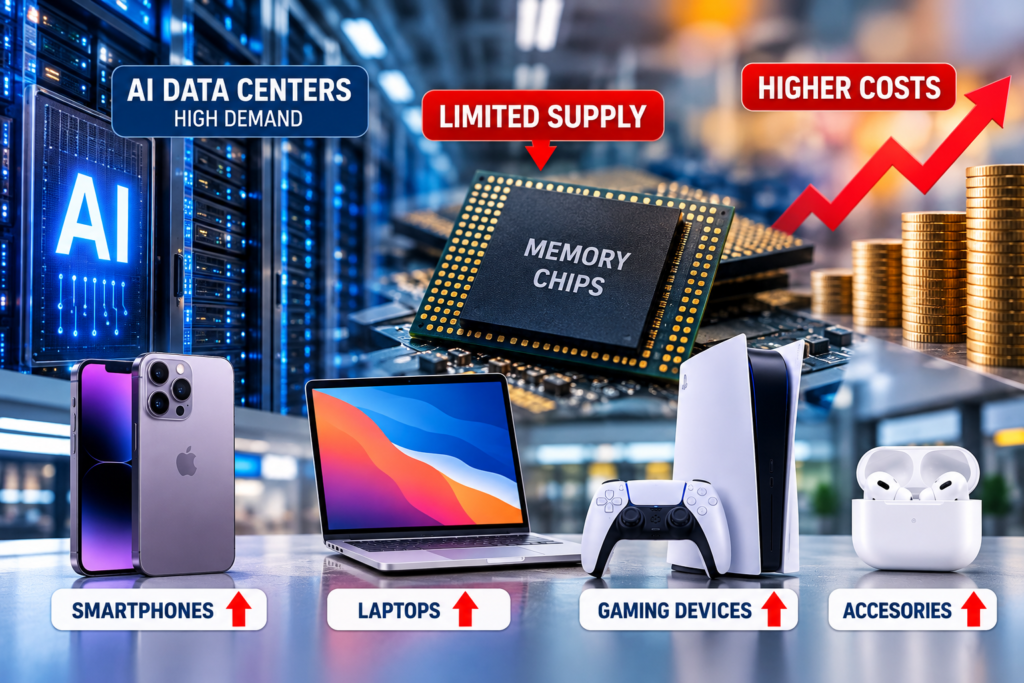
How AI and Technology Prices Could Change in 2026
AI and technology prices depend on several factors, including memory-chip availability, manufacturing costs, shipping expenses, and local taxes. Growing demand from AI data centers could increase pressure on some components, but it does not mean every smartphone or laptop will become more expensive. Buyers should compare specifications, prices, and warranty coverage before making a purchase.
Why Budget Smartphones Could Face Greater Pressure
Affordable smartphones are especially important for students, families, first-time buyers, and people who use their phones for work.
Budget devices usually operate within tight manufacturing and retail margins. If a key component becomes more expensive, a manufacturer may find it difficult to absorb the increase without affecting its business.
Possible responses include:
- Raising the price of an entry-level model.
- Offering fewer low-cost models.
- Keeping the price similar while changing specifications.
- Giving greater priority to mid-range and premium devices.
- Extending the time between product launches.
These are possible industry responses, not outcomes that will occur with every brand. Buyers should compare the actual specifications and prices of available models before making a decision.
Could Laptops, PCs, and Gaming Devices Also Be Affected?
Smartphones are not the only products that depend on memory chips. Laptops, desktop computers, gaming systems, and other electronics also use memory and storage components.
If component costs remain elevated, manufacturers may face pressure to adjust prices or specifications across some product categories. The impact will depend on the type of memory required, existing inventories, supplier contracts, and the cost of other components.
AI data centers also use specialized hardware that differs from the memory and processors found in ordinary consumer devices. Therefore, it would be misleading to assume that every shortage or price increase in the AI sector directly translates into the same increase for a laptop or gaming console.
Consumers should look for model-specific announcements and compare current retail prices rather than relying on broad predictions.
What Does This Mean for Consumers in Pakistan, the UK, and the USA?
The global semiconductor supply chain connects manufacturers, component suppliers, distributors, and retailers across many countries. Changes in production costs can therefore influence several markets, but local effects will differ.
In Pakistan, the final price of a smartphone can also depend on currency movements, import costs, taxes, and local availability. In the UK and USA, retailer competition, promotions, trade conditions, and manufacturer pricing strategies can affect what buyers pay.
A global report should not be treated as a local price list. Before purchasing a device, check its current price from reputable retailers in your country and confirm the exact model, storage capacity, warranty, and total cost.
Five Smart Ways to Buy Technology During Price Uncertainty
1. Check Whether You Really Need an Upgrade
If your current phone or laptop still performs the tasks you need, keeping it longer may be the simplest way to avoid unnecessary spending.
2. Compare Total Value, Not Just the Launch Price
Check battery life, software support, storage, performance, repair options, and warranty coverage. A slightly more expensive device may provide better long-term value, but only if its features suit your needs.
3. Consider a Reliable Previous-Generation Model
Last year’s model may offer sufficient performance at a lower price. Compare its remaining software-support period and battery condition before buying.
4. Compare New and Refurbished Options Carefully
A reputable refurbished device can sometimes offer good value. Check the seller’s return policy, battery health, warranty, and device history before paying.
5. Avoid Buying Because of an Unverified Rumour
Claims that every phone will become more expensive next month should be treated cautiously unless supported by reliable evidence. Compare actual prices and confirmed manufacturer announcements before rushing into a purchase.
Will Technology Prices Keep Rising?
The direction of future prices will depend on memory-chip production, AI infrastructure investment, demand for consumer devices, manufacturing costs, and competition between brands.
If supply remains constrained while demand stays strong, some manufacturers may continue facing higher costs. If production capacity improves or demand changes, pressure could ease. Currency movements, taxes, and retail promotions will also affect prices in individual markets.
No single forecast can guarantee what every smartphone, laptop, or gaming device will cost in the coming months. Buyers should follow credible industry reporting and compare real offers instead of treating predictions as certain outcomes.
Related Technology Guides
AI is changing how people use technology, from everyday digital tools to smartphones and computers. Read our related guides to explore more practical technology tips and understand how new developments may affect your daily life.
Why AI and Technology Prices Matter to Consumers
AI and technology prices matter to consumers because smartphones, laptops, and other electronic devices are essential for work, education, and everyday communication. When memory-chip supplies become tight, manufacturers may face higher production costs. The final effect depends on the device, brand, and market.
How to Save Money as AI and Technology Prices Change
As AI and technology prices change, buyers should compare several models before purchasing a new device. Check storage, memory, performance, warranty, and long-term software support instead of choosing a product based only on its latest features. An older model may offer better value if it meets your needs.
Will AI and Technology Prices Keep Rising?
The future of AI and technology prices depends on chip supply, manufacturing capacity, demand from AI data centers, and competition between brands. Some products could become more expensive, while others may remain stable or receive discounts. Consumers should follow reliable market updates rather than assume every device will rise in price.
Final Thoughts
AI is creating new opportunities in healthcare, education, business, and everyday computing. At the same time, the infrastructure needed to power AI is changing demand across the semiconductor industry.
The effect on consumer electronics is not identical everywhere, but memory-chip supply and manufacturing costs are important factors to watch in 2026. Budget smartphones may be particularly sensitive to cost pressures, while laptops and gaming devices could experience different effects depending on their components and manufacturers.
For consumers, the practical approach is simple: check current prices, compare specifications, consider reliable older models, and upgrade when the benefits justify the cost.
Related Technology Guides
Readers can also explore our guide to the future of artificial intelligence in Pakistan and learn about the latest 5G developments in Pakistan. These articles explain how emerging technologies may affect businesses, consumers, and everyday digital life.
AI may change how we use technology, but informed buying decisions can help consumers get better value from every device.
Sources and further reading:
- Reuters, October 12, 2026 — Global smartphone shipments record worst third quarter in 14 years amid memory shortage
- TrendForce, September 30, 2026 — AI server demand and memory pricing outlook
- Counterpoint Research — How the AI-fueled chip shortage could affect smartphone prices