Pakistan Auto Policy 2026–31 is creating new expectations among car buyers, automobile manufacturers and investors. The government’s five-year plan aims to make vehicles more affordable, promote electric vehicles (EVs), strengthen local manufacturing and increase automobile exports. But the biggest question for consumers is whether this policy will finally reduce car prices in Pakistan.
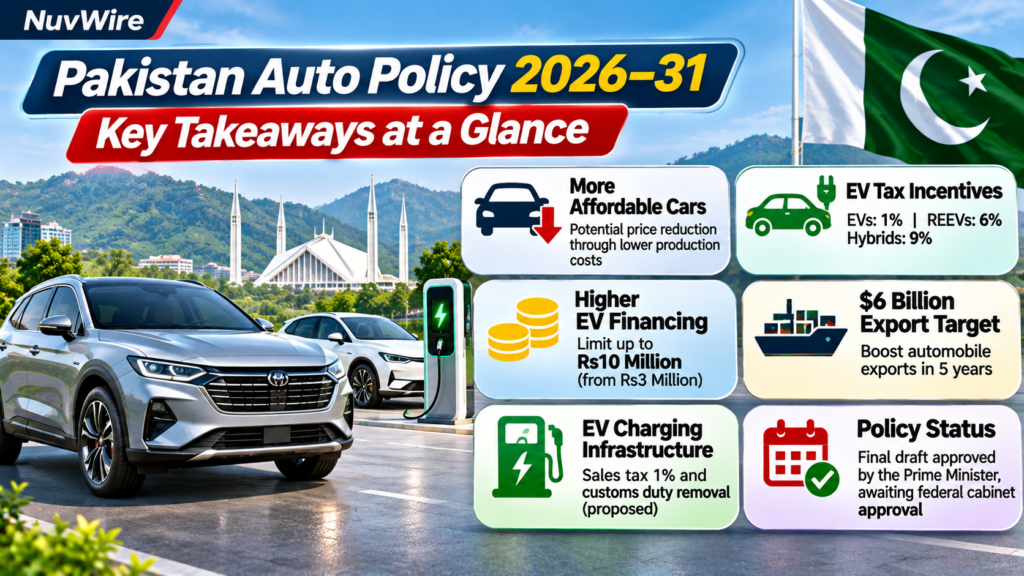
Prime Minister Shehbaz Sharif has approved the final draft, which is expected to be presented to the federal cabinet for consideration. The plan also includes a $6 billion automobile export target and proposed incentives for electric vehicle businesses.
What Is Pakistan Auto Policy 2026–31?
Pakistan Auto Policy 2026–31 is a five-year framework designed to improve the country’s automotive industry. It focuses on reducing production costs, encouraging competition and attracting investment.
The policy aims to address several problems, including expensive vehicles, limited competition, high import costs and dependence on conventional petrol-powered cars.
Its major objectives include:
- Making vehicles more affordable for consumers.
- Increasing automobile exports.
- Strengthening local manufacturing.
- Improving vehicle safety standards.
- Promoting electric vehicles and charging stations.
- Making vehicle booking practices more transparent.
The government’s long-term goal is to build an automotive industry that can compete in international markets instead of depending mainly on local customers.
Will Car Prices Decrease in Pakistan?
Lower car prices are among the biggest expectations surrounding Pakistan Auto Policy 2026.
The government plans gradual tariff changes that could reduce the cost of imported components, vehicle manufacturing and assembly. If manufacturers benefit from lower production costs, they may introduce more competitive prices.
However, consumers should not expect every vehicle to become cheaper immediately.
Actual prices will depend on several factors, including exchange rates, taxes, imported parts, manufacturing costs and competition between automobile companies.
Therefore, the policy creates an opportunity for more affordable vehicles, but actual price reductions will depend on implementation and market conditions.
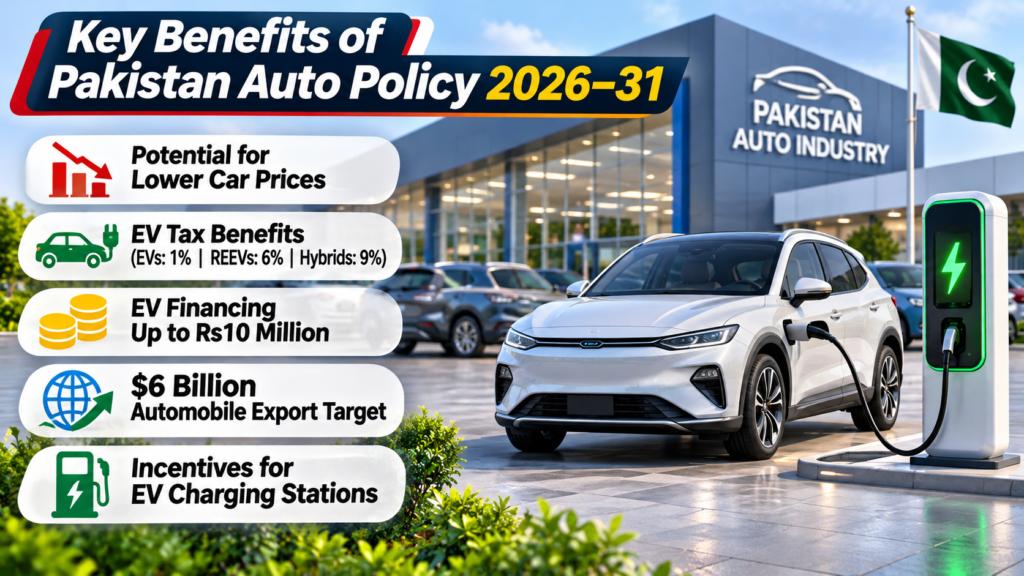
Electric Vehicles Could Receive Major Tax Benefits
Electric vehicles are a major part of https://nuvwire.com/pakistan-electric-vehicles-2026/Pakistan Auto Policy 2026–31. The government wants to encourage EV adoption and reduce dependence on imported petroleum products.
The proposed sales tax structure includes:
| Vehicle Category | Proposed Sales Tax |
|---|---|
| Fully Electric Vehicles | 1% |
| Range-Extended EVs | 6% |
| Hybrid Electric Vehicles | 9% |
The government has also announced proposed tax exemptions for eligible electric vehicles priced up to $50,000, including capital value tax, withholding tax and federal excise duty, subject to applicable approvals.
If implemented, these measures could make electric cars more attractive to Pakistani buyers and encourage investment in the EV market.
EV Financing Limit Could Increase to Rs10 Million
The high purchase price of electric vehicles remains a challenge for many families.
To improve affordability, the government has announced plans to increase the EV financing limit from Rs3 million to Rs10 million through the relevant State Bank financing framework.
The proposed changes also include extending the repayment period from three years to five years.
Longer repayment periods could make monthly instalments more manageable for eligible buyers. However, actual financing costs will depend on bank terms, interest rates and eligibility requirements.
This development could also create opportunities for banks, vehicle manufacturers and financing companies.
Pakistan Targets $6 Billion in Automobile Exports
One of the most ambitious goals of Pakistan Auto Policy 2026–31 is reaching $6 billion in automobile exports over five years.
Pakistan has traditionally focused on assembling vehicles for domestic customers. The government now wants manufacturers to improve production quality and compete in international markets.
The proposed export incentives include a 5% Duty Drawback on Local Taxes and Levies, along with additional incentives linked to export growth.
Manufacturers will need to meet prescribed export and localisation targets to qualify.
If successful, this strategy could benefit auto parts manufacturers, steel businesses, battery suppliers, engineering companies and logistics providers. Higher exports could also support employment and increase foreign exchange earnings.
New Rules to Address Vehicle Booking Problems
Vehicle booking and additional payments have remained concerns for Pakistani consumers.
Under the announced policy framework, manufacturers will not be allowed to demand more than 20% of a vehicle’s price as an advance payment at booking.
The measure aims to improve transparency and reduce financial pressure on customers.
However, its actual impact will depend on enforcement and final implementation.
EV Charging Stations Could Become a New Business Opportunity
Electric vehicles need reliable charging facilities to become a practical transportation option.
The government has proposed incentives for businesses investing in EV charging infrastructure. These include reducing sales tax on charging equipment to 1% and removing customs duty on relevant equipment.
Such measures could encourage entrepreneurs, energy companies and investors to establish charging stations.
As electric vehicle adoption increases, charging infrastructure could become an important emerging business sector in Pakistan.
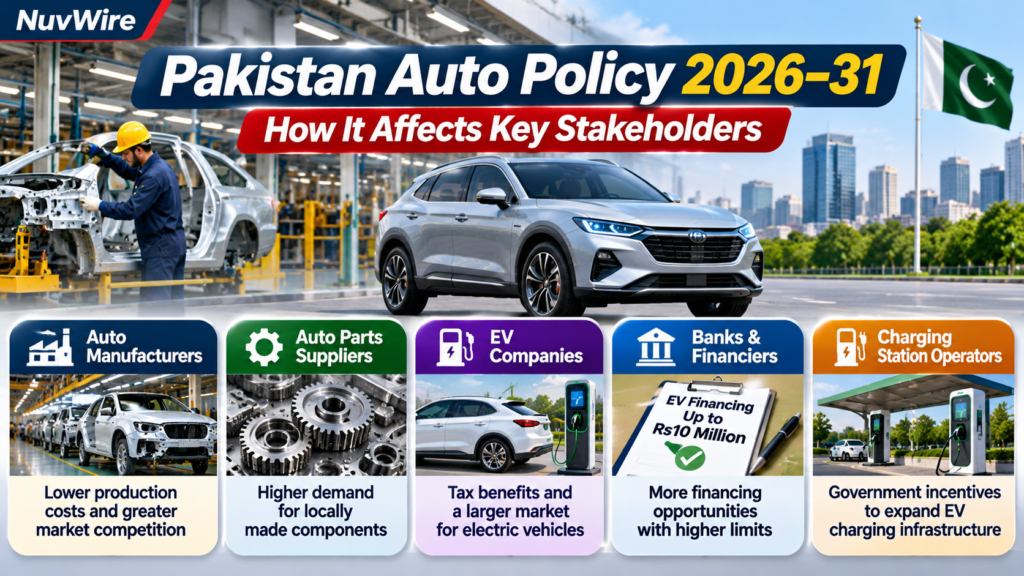
How Will the Auto Policy Affect Businesses?
The impact of Pakistan Auto Policy 2026–31 could extend beyond automobile manufacturers.
Automobile manufacturers: Lower production costs and greater competition could encourage companies to improve vehicle quality.
Auto parts suppliers: Local manufacturers could benefit from increased demand for locally produced components.
Electric vehicle companies: Proposed tax incentives could create opportunities for EV manufacturers and electric motorcycle businesses.
Charging station operators: Businesses investing in charging facilities could benefit from growing demand.
Banks and financial institutions: Expanded EV financing could create new lending opportunities.
However, local businesses must also prepare for increased competition from imported vehicles and changing market conditions.
The arrival of new international brands is also changing Pakistan’s automotive market. Read our latest coverage of the Geely Auto Pakistan launch.
What Challenges Could Affect the Policy?
Despite its ambitious targets, the automotive industry faces several challenges.
Increased competition from imported vehicles could put pressure on local manufacturers. Electric vehicle adoption also requires reliable charging facilities, affordable electricity and accessible after-sales services.
Manufacturers will need to invest in modern technology, research and development to meet international standards.
Most importantly, consistent government policies and timely implementation will be essential to attract long-term investment.
What Should Car Buyers and Investors Watch Next?
The coming weeks will be important for Pakistan’s automotive industry.
Consumers should watch for federal cabinet approval, official tax notifications and final EV financing details.
Investors should pay attention to export incentives, localisation requirements and charging infrastructure opportunities.
Until the required approvals and official notifications are issued, proposed tax benefits should not be treated as fully implemented.
Final Thoughts
Pakistan Auto Policy 2026–31 could create important opportunities for the country’s automobile and electric vehicle industries.
Its focus on affordable vehicles, local manufacturing, electric mobility and a $6 billion export target could benefit consumers, manufacturers and investors.
However, the real success of the policy will depend on practical implementation. Lower car prices and stronger exports will require consistent government support, business investment and healthy competition.
For now, Pakistani consumers and businesses will be watching closely to see how this five-year plan develops.
Frequently Asked Questions (FAQs)
1. What is Pakistan Auto Policy 2026–31?
It is a five-year government framework designed to improve automobile manufacturing, promote electric vehicles, encourage exports and make vehicles more affordable.
2. Will car prices decrease in Pakistan under the new policy?
Car prices could become more competitive if proposed tariff reductions lower production costs. However, actual prices will depend on taxes, exchange rates and implementation.
3. What is the export target of Pakistan Auto Policy 2026?
The government aims to increase automobile exports to $6 billion over five years.
4. What are the proposed EV sales tax rates in Pakistan?
The proposed rates are 1% for fully electric vehicles, 6% for range-extended EVs and 9% for hybrid vehicles, subject to approval.
5. Will EV financing increase to Rs10 million?
The government has announced plans to increase the financing limit from Rs3 million to Rs10 million and extend repayment to five years.
6. Does the policy support EV charging stations?
Yes. It proposes tax and customs duty incentives for charging equipment to encourage investment in charging infrastructure.
7. How will the policy benefit local businesses?
Automobile manufacturers, parts suppliers, EV companies, charging station operators and financial institutions could benefit from new investment opportunities.
8. Has Pakistan Auto Policy 2026–31 been officially implemented?
The Prime Minister has approved the final draft, but federal cabinet approval and relevant official notifications are still required before proposed measures can be treated as fully implemented.
Stay connected with NuvWire for the latest Pakistan business news, automotive updates and economic developments.