Pakistan Minerals Investment Forum 2026 is attracting international attention as Pakistan prepares to showcase its copper, gold and other mineral resources to global investors. Scheduled for November 12–13 in Islamabad, the two-day event aims to connect international mining companies, financial institutions, technology providers and government representatives.
The forum comes at a time when global demand for copper, lithium, gold and rare earth elements is increasing. These minerals are important for electric vehicles, renewable energy, advanced manufacturing and modern technology.
Pakistan hopes to use this international platform to attract investment, develop its mining industry and create new business opportunities. But can the country’s mineral resources become a major source of economic growth?
What Is Pakistan Minerals Investment Forum 2026?
The Pakistan Minerals Investment Forum 2026, also known as PMIF26, is a government-organised international event designed to promote investment in Pakistan’s mining and minerals sector.
The forum will take place at the Jinnah Convention Centre in Islamabad on November 12 and 13.
It is organised by the Government of Pakistan, endorsed by the Special Investment Facilitation Council (SIFC), with Oil and Gas Development Company Limited (OGDCL) as its founding partner.
The event will bring together:
- International mining companies.
- Global investors and financial institutions.
- Government officials and policymakers.
- Geological experts and researchers.
- Mining technology and equipment providers.
The main objective is to encourage investment, improve international cooperation and explore opportunities across Pakistan’s mineral industry.
Why Is Pakistan’s Mineral Wealth Attracting Global Investors?
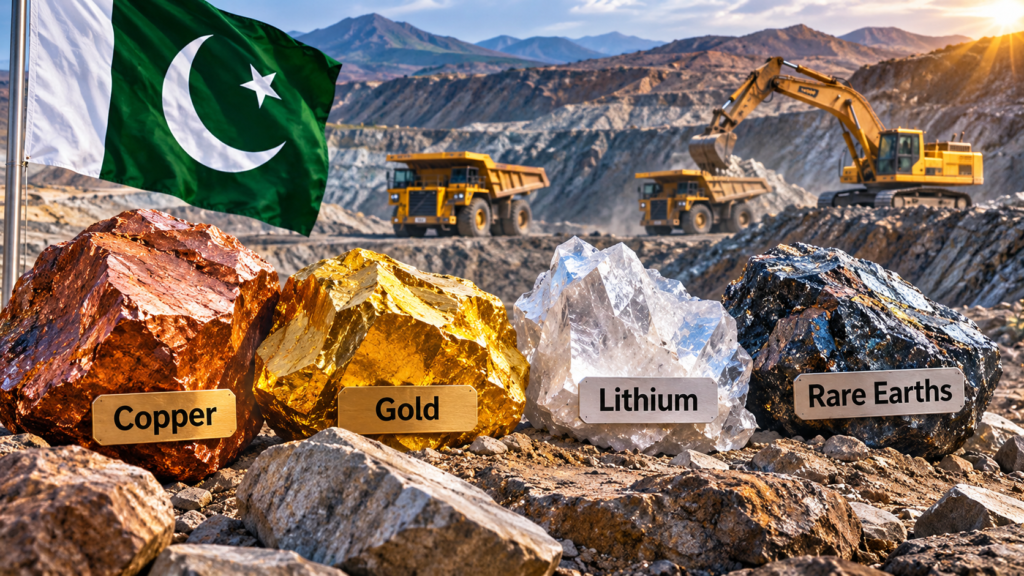
Pakistan has considerable mineral resources, including copper, gold, coal, chromite, limestone and other commercially valuable materials.
According to estimates cited by the Institute of Cost and Management Accountants of Pakistan (ICMA), the country’s mineral wealth is valued at approximately $8 trillion. Pakistan has 92 identified minerals, of which 52 are commercially exploited.
However, the mining industry still has significant room for development.
International demand for critical minerals is creating new opportunities for countries with suitable resources.
For example:
Copper: Used in electricity networks, electric vehicles, renewable energy systems and industrial equipment.
Gold: Important for jewellery, financial markets and electronic components.
Lithium: A key material used in rechargeable batteries and energy storage systems.
Rare Earth Elements: Important for electronics, advanced manufacturing and certain clean-energy technologies.
Developing these resources could help Pakistan attract investment and participate more actively in international mineral supply chains.
Pakistan’s mining sector is part of a wider economic transformation. Explore our related coverage of the Pakistan Auto Policy 2026 and Pakistan’s Electric Vehicle Developments to learn about other industries attracting investment and supporting industrial growth.
Reko Diq Project: A Major Part of Pakistan’s Mining Future
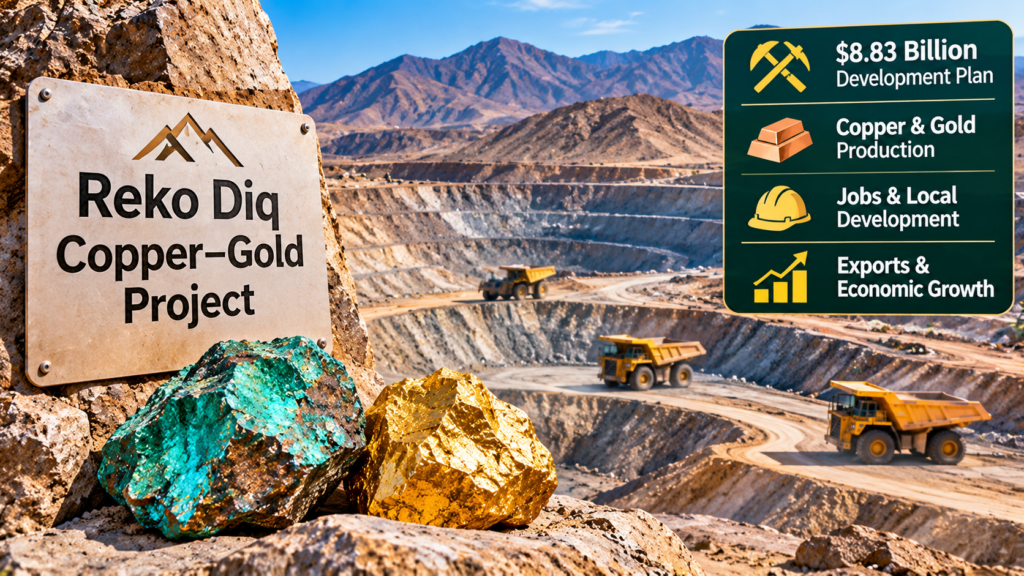
One of the most important developments in Pakistan’s mining industry is the Reko Diq copper and gold project in Balochistan.
The project is being developed by Reko Diq Mining Company, in which Barrick Mining Corporation is a major partner alongside Pakistani stakeholders.
Its development plan is valued at approximately $8.83 billion.
The project is expected to become a significant source of copper and gold production. Current development plans target the start of production by the end of 2028.
Reko Diq is important because it could support exports, create employment and encourage investment in infrastructure and related industries.
The project also highlights the importance of international partnerships, technical expertise and long-term financing in large-scale mining operations.
What Will Happen at PMIF26 on November 12–13?
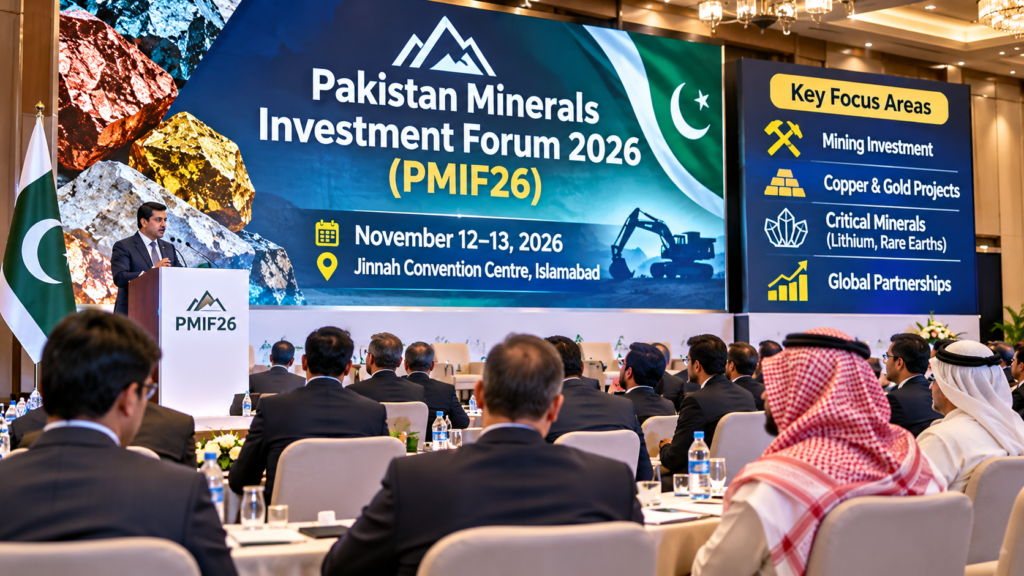
Pakistan Minerals Investment Forum 2026 will include strategic discussions, technical sessions and an international exhibition.
The first day will focus on financing mineral exploration, developing mining projects, improving geological research and building a skilled workforce.
The second day will include discussions about government policies, investment conditions, infrastructure, export routes and sustainable mining.
More than 50 technical papers are also expected to cover areas such as mineral exploration, geological mapping, resource assessment and mineral processing.
The international exhibition will provide opportunities for mining companies, investors and equipment manufacturers to showcase their services and explore partnerships.
The event is expected to feature senior industry representatives, including leaders from Barrick Mining Corporation, Ivanhoe Mines and other international organisations.
New Mining Investment Incentives Could Attract Overseas Capital
Another important development is the government’s proposed tax incentive package for the mining industry.
Reports published in early November indicate that Pakistan is considering long-term tax concessions to encourage international investment in copper and gold projects.
Proposals include possible exemptions on certain project-related purchases, reduced taxes and customs duty relief on mining equipment.
Other measures under consideration include changes to the taxation of mining exports and long-term tax stability arrangements.
However, these proposals should not be treated as approved incentives. Finance Division approval and the relevant government notifications are still required.
If implemented, such measures could influence investment decisions by international mining companies.
How Could Pakistan Benefit From Mining Investment?
Successful development of the mining sector could create opportunities across several industries.
1. Employment: Mining projects require engineers, geologists, technicians, drivers and skilled workers.
2. Foreign investment: International mining companies could bring capital, equipment and technical knowledge.
3. Exports: Commercial mineral production could increase Pakistan’s export earnings.
4. Infrastructure: Large mining projects require roads, electricity, water systems and transportation facilities.
5. Local businesses: Equipment suppliers, construction companies, logistics providers and engineering firms could benefit from new projects.
The wider economic impact will depend on how effectively these investments are converted into operational mining projects.
Challenges Facing Pakistan’s Mining Industry
Despite its mineral potential, Pakistan faces several challenges in developing large-scale mining operations.
These include infrastructure limitations, security concerns, regulatory complexity, environmental protection and the need for skilled workers.
Mining projects also require substantial capital and can take many years to move from exploration to commercial production.
Investors need clear regulations, reliable infrastructure and confidence in long-term government policies.
Environmental standards and cooperation with local communities will also be important for sustainable mining development.
What Should Investors Watch After PMIF26?
The November forum could provide important information about Pakistan’s future mining projects and investment plans.
Investors and business owners should watch for:
- New mining investment agreements.
- Announcements involving international companies.
- Updates on Reko Diq and other mineral projects.
- Official decisions on proposed tax incentives.
- New partnerships involving mining technology and infrastructure.
The actual value of the forum will become clearer through the agreements, investments and projects that move forward after the event.
Final Thoughts
Pakistan Minerals Investment Forum 2026 represents an important opportunity to connect the country’s mineral resources with international investors and mining expertise.
With copper, gold, lithium and other critical minerals attracting global demand, Pakistan has opportunities to develop its mining industry and strengthen its export potential.
However, mineral resources alone cannot guarantee economic success. Transparent regulations, responsible mining, infrastructure development and long-term investment will be essential.
The November 12–13 forum will be an important event to watch as Pakistan works to turn its mineral potential into practical economic opportunities.
Stay connected with NuvWire for the latest Pakistan business news, international investment updates and economic developments.
Frequently Asked Questions (FAQs)
1. What is Pakistan Minerals Investment Forum 2026?
PMIF26 is an international government-organised event designed to attract investment, promote mining projects and connect Pakistan’s minerals sector with global companies and investors.
2. When will Pakistan Minerals Investment Forum 2026 take place?
The event is scheduled for November 12–13, 2026, at the Jinnah Convention Centre in Islamabad.
3. Why are global investors interested in Pakistan’s mineral resources?
Pakistan has deposits of copper, gold, lithium and other minerals that are important for modern manufacturing, electric vehicles and energy technologies.
4. What is the Reko Diq project?
Reko Diq is a major copper and gold mining development in Balochistan involving Barrick Mining Corporation and Pakistani stakeholders.
5. What minerals are found in Pakistan?
Pakistan has identified minerals including copper, gold, lithium, chromite, coal, limestone and rare earth elements.
6. Will PMIF26 bring foreign investment to Pakistan?
The forum aims to attract international investment and encourage partnerships. Actual investment will depend on agreements, financing and project implementation.
7. What industries could benefit from mining investment?
Mining, construction, engineering, transportation, equipment manufacturing and logistics businesses could benefit from new projects.
8. Are new tax incentives for mining companies approved?
Tax concessions are under consideration, but proposed incentives require the necessary government approvals before implementation.