
The COP31 climate summit in Antalya, Türkiye, became one of the most closely watched international climate meetings of 2026. Although the conference was scheduled to run from November 9 to 20, negotiations continued beyond the deadline as countries struggled to agree on fossil fuels, climate finance and the future of global climate action.
The summit brought together governments, climate experts, campaigners and international organisations to discuss how the world can respond to rising temperatures and increasingly severe environmental challenges. However, disagreements over the final draft exposed major differences between countries.
The COP31 climate summit also highlighted the growing pressure on governments to turn climate promises into measurable results.
What Happened at the COP31 Climate Summit?
The 31st United Nations Climate Change Conference, known as COP31, took place in Antalya, Türkiye. Türkiye hosted the conference, while Australia played a leading role in the negotiations.
The main objective was to turn previous climate promises into practical action. Discussions covered clean energy, reducing greenhouse gas emissions, protecting vulnerable communities and increasing financial support for developing countries.
According to the United Nations, the conference focused on accelerating the transition away from fossil fuels, strengthening climate resilience and improving international cooperation.
However, reaching a common position proved difficult. Negotiators continued discussions after the planned closing date, showing how challenging global climate agreements can be.
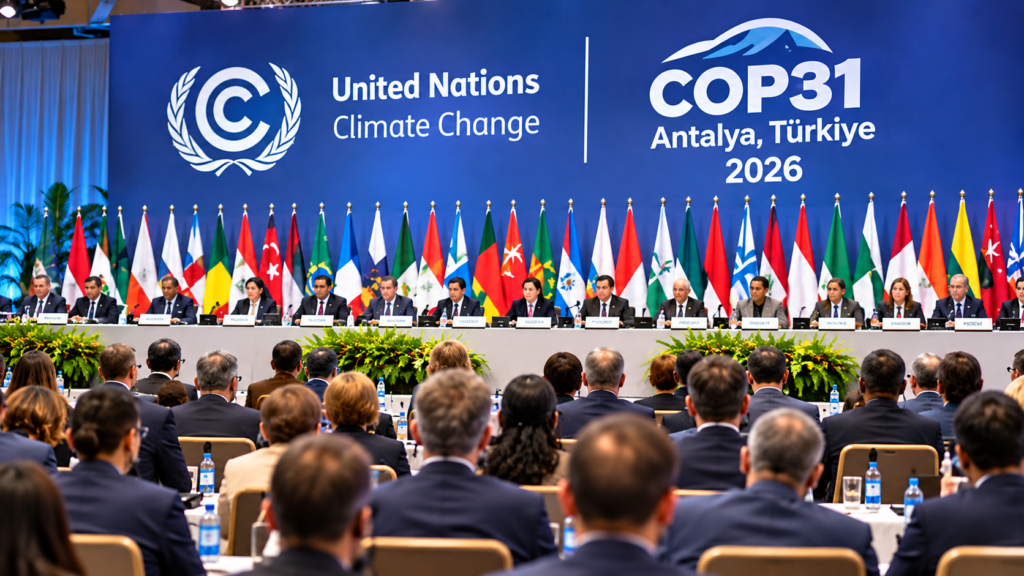
The COP31 climate summit brought together international leaders to discuss practical solutions to the global climate crisis.
Why Did COP31 Climate Negotiations Face Controversy?
One of the biggest disagreements involved the wording of the proposed final agreement.
Many countries wanted a clear commitment to move away from coal, oil and natural gas. Other countries resisted stronger language, making it difficult to find wording acceptable to all participants.
Reports on November 21 said the talks had failed to reach consensus on a final deal, with the European Union and other countries rejecting the draft.
On November 22, a revised proposal was presented as negotiators continued trying to reach an agreement. However, concerns remained about whether the language was strong enough to address the climate crisis.
Reuters reported that the earlier draft could not be adopted because some parties opposed it. The situation remained developing as negotiations continued.
The COP31 climate summit negotiations revealed how difficult it remains for countries to agree on a common climate strategy.
Fossil Fuels Dispute: The Biggest Challenge
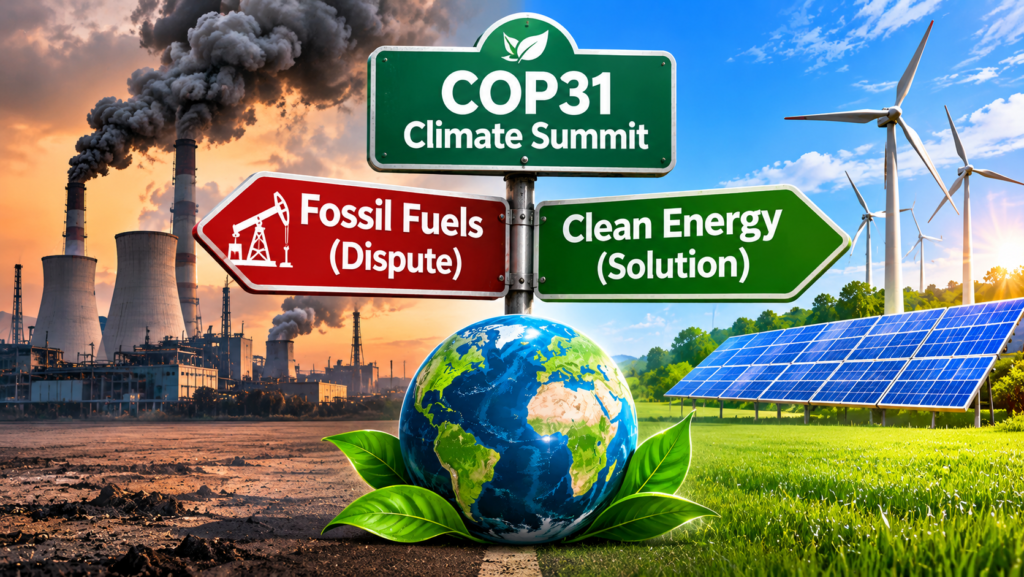
The fossil fuels debate became a central issue at COP31.
Coal, oil and natural gas are major sources of greenhouse gas emissions. Many governments and environmental organisations believe that reducing dependence on these fuels is essential to limiting global warming.
However, countries that depend heavily on fossil fuel production and exports have concerns about how quickly their economies can make the transition.
The latest draft agreement attracted criticism because it did not clearly establish a new commitment to phase out fossil fuels. The Associated Press also reported objections to the draft’s limited language on coal, oil and gas.
The COP31 climate summit also renewed global attention on the future of fossil fuels and the transition to cleaner energy.
Read the Associated Press report on the COP31 draft for further details.
Climate Finance and Developing Countries
Climate finance was another major source of disagreement.
Developing countries often face serious climate risks, including floods, droughts, extreme heat and rising sea levels. Many have limited financial resources to prepare for these challenges or rebuild after disasters.
They want wealthier nations to provide stronger financial support for:
- Flood protection and disaster preparedness.
- Climate-resilient roads, buildings and infrastructure.
- Clean energy projects and technology.
- Water management and agricultural protection.
- Support for communities affected by climate disasters.
A major concern during COP31 was whether the proposed financial arrangements would provide enough support and clear commitments.
For countries such as Pakistan, climate finance is particularly important because extreme weather events can damage homes, agriculture, infrastructure and livelihoods.
For developing nations, the COP31 climate summit raised important questions about financial support and climate justice.
Readers can explore more economic developments through NuvWire Business News.
Clean Energy and Climate Action
Despite disagreements over the final agreement, COP31 also highlighted practical progress in clean energy and electrification.
On November 19, the UN Climate Change initiative announced an electrification delivery package involving more than 150 countries and the European Union, alongside businesses and cities.
The initiative highlighted efforts involving electricity networks, renewable energy, transport and industrial electrification.
These developments show that climate action is not limited to government negotiations. Businesses, investors and local authorities also have an important role in reducing emissions and expanding cleaner technologies.
More information is available in the official UNFCCC announcement.
What Does COP31 Mean for Pakistan?
Pakistan has a strong interest in international climate negotiations because it faces serious environmental and economic risks.
Flooding, extreme temperatures, water shortages and pressure on agriculture can affect millions of people. Climate-related disasters can also increase government spending and create additional challenges for economic development.
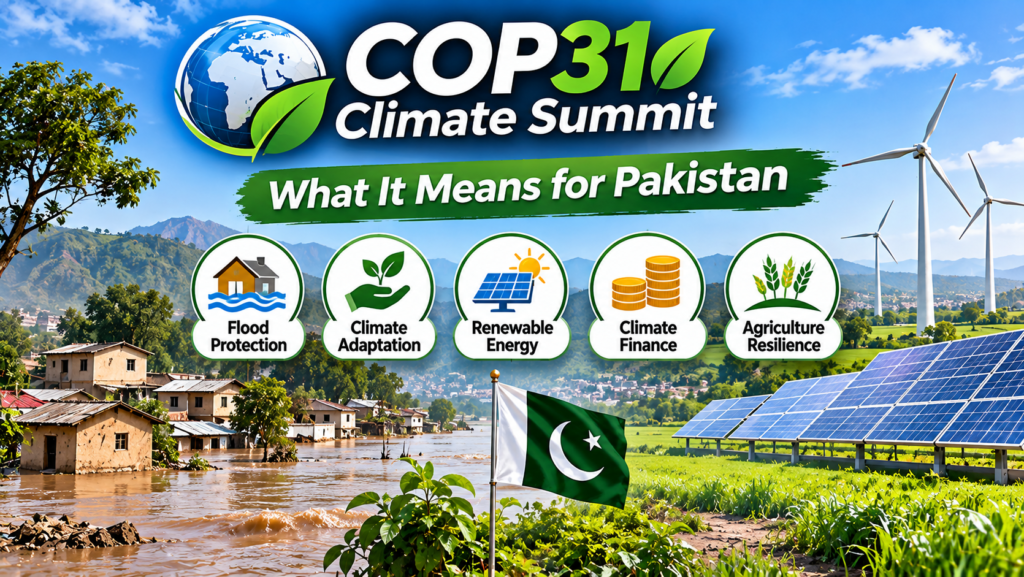
The outcomes of COP31 could matter to Pakistan in several ways:
- Climate funding: Better financial support could help Pakistan strengthen disaster preparedness and recovery.
- Flood protection: Investment could improve drainage, water management and protective infrastructure.
- Agriculture: Climate-resilient farming could help protect food production.
- Renewable energy: International investment may support solar, wind and other cleaner energy projects.
- Adaptation planning: Stronger cooperation could help vulnerable communities prepare for future climate risks.
For Pakistan, the key issue is whether international climate commitments translate into accessible funding and practical support.
The COP31 climate summit is particularly relevant to Pakistan because of its vulnerability to floods, heatwaves and other climate-related disasters.
What Happens After COP31?
The next steps depend on whether countries can agree on the disputed issues and approve a final outcome.
Even when negotiations face difficulties, international climate cooperation continues through existing agreements, national policies and practical initiatives.
Governments will still need to work on emissions reduction, climate adaptation, renewable energy investment and financial assistance for vulnerable countries.
The biggest test will be whether promises made during international meetings lead to measurable progress in the years ahead.
The long-term success of the COP31 climate summit will depend on whether participating countries deliver meaningful action after the negotiations.
Frequently Asked Questions (FAQs)
1. What is the COP31 climate summit?
COP31 is the 31st United Nations Climate Change Conference, where countries discuss global warming, greenhouse gas emissions, climate finance and environmental protection.
2. Where was COP31 held in 2026?
COP31 was held in Antalya, Türkiye, from November 9 to 20, 2026, although negotiations continued beyond the scheduled closing date.
3. Why did COP31 negotiations face difficulties?
Countries disagreed over fossil fuel commitments, climate finance and the wording of the proposed final agreement.
4. What was the main fossil fuels dispute at COP31?
Many countries wanted stronger language supporting a transition away from coal, oil and gas, while others resisted more explicit commitments.
5. Why is climate finance important for developing countries?
Climate finance helps developing countries prepare for floods, droughts, extreme heat and other climate impacts while investing in cleaner technologies.
6. How could COP31 affect Pakistan?
Pakistan could benefit from stronger international support for flood protection, climate adaptation, renewable energy and resilient infrastructure.
7. Was a final COP31 climate agreement approved?
As of November 22, 2026, reports described continued efforts to reach agreement after earlier drafts faced objections. The final approval status should be checked against the latest official UNFCCC announcement.
Final Thoughts
The COP31 climate summit highlighted both the importance and difficulty of international climate cooperation. Disagreements over fossil fuels and climate finance showed that countries still have different priorities.
For vulnerable nations such as Pakistan, the real value of the summit will depend on practical support, accessible funding and stronger climate protection. The world needs more than promises; it needs action that produces measurable results.