
Flight delays and cancellations can turn an exciting journey into a stressful experience. Whether you are travelling for business, a family holiday, education or an important event, an unexpected flight disruption can affect your entire schedule. Understanding flight delays and cancellations in 2026 can help you protect your travel plans, manage unexpected expenses and understand what options may be available to you.
Flight disruptions happen in countries around the world. Weather conditions, technical problems, airport congestion, air traffic restrictions and operational difficulties can all affect airline schedules. Knowing what to do before and during a disruption can make a significant difference.
Flight delays and cancellations can affect both short domestic journeys and long international trips, making advance preparation important for every traveller. For more travel information, explore our latest travel guides and updates on NuvWire.
Why Are Flights Delayed or Cancelled?
There is rarely just one reason behind a disrupted flight. Airlines and airports operate complex systems, and a problem in one area can affect several flights.
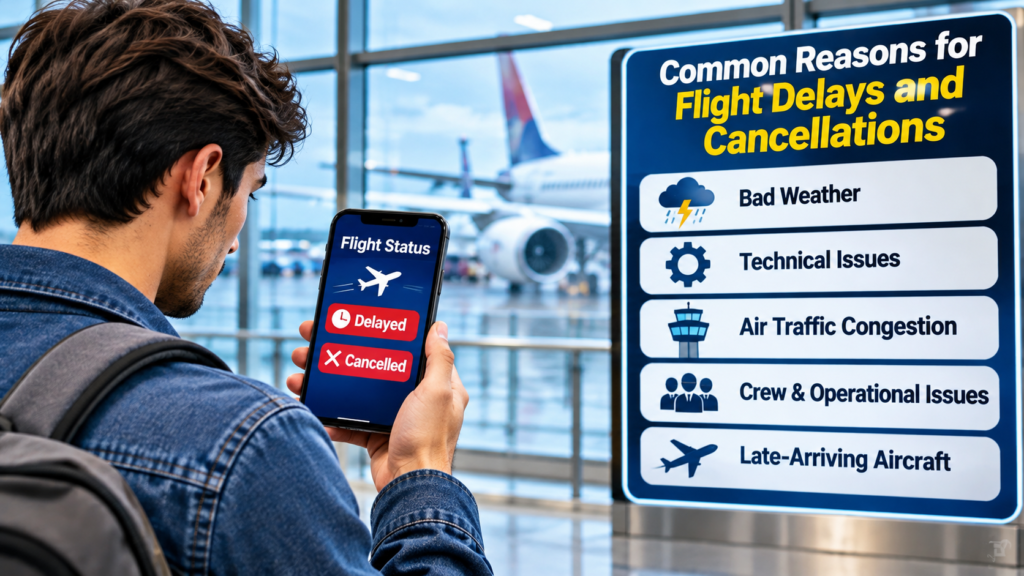
Here are some common causes.
Understanding the common causes of flight delays and cancellations can help passengers make better decisions when their travel plans change.
1. Bad Weather Conditions
Severe weather is one of the major reasons flights may be delayed or cancelled. Heavy rain, thunderstorms, snow, fog, strong winds and poor visibility can make flying or airport operations difficult.
Even when the weather is clear at your departure airport, conditions at your destination or connecting airport may affect your flight.
During extreme weather, flight delays and cancellations may occur even when an airline initially expects its schedule to operate normally.
2. Technical and Aircraft Maintenance Problems
Aircraft must meet strict safety requirements before every flight. If engineers identify a technical problem, the airline may need to inspect or repair the aircraft before it can operate.
Although this can be frustrating for passengers, safety checks should never be rushed.
Airlines may announce flight delays and cancellations when an aircraft cannot safely continue its scheduled service.
3. Air Traffic Congestion
Busy airports and crowded air routes can create delays. Air traffic controllers may need to manage the number of aircraft taking off and landing to maintain safe operations.
During peak travel periods, even a small disruption can affect many flights.
4. Crew and Airline Operational Issues
Airlines must ensure that qualified pilots and cabin crew are available and meet duty-time requirements. Crew scheduling problems, staff shortages and operational difficulties can sometimes delay departures.
5. Late-Arriving Aircraft
An aircraft may be scheduled to operate several flights during the same day. If its earlier journey is delayed, the next flight may also depart late.
This creates a chain reaction that can affect passengers travelling on completely different routes.
What Should You Do When Your Flight Is Delayed?
A delay does not automatically mean your journey is cancelled. However, passengers should take practical steps as soon as they receive an update.
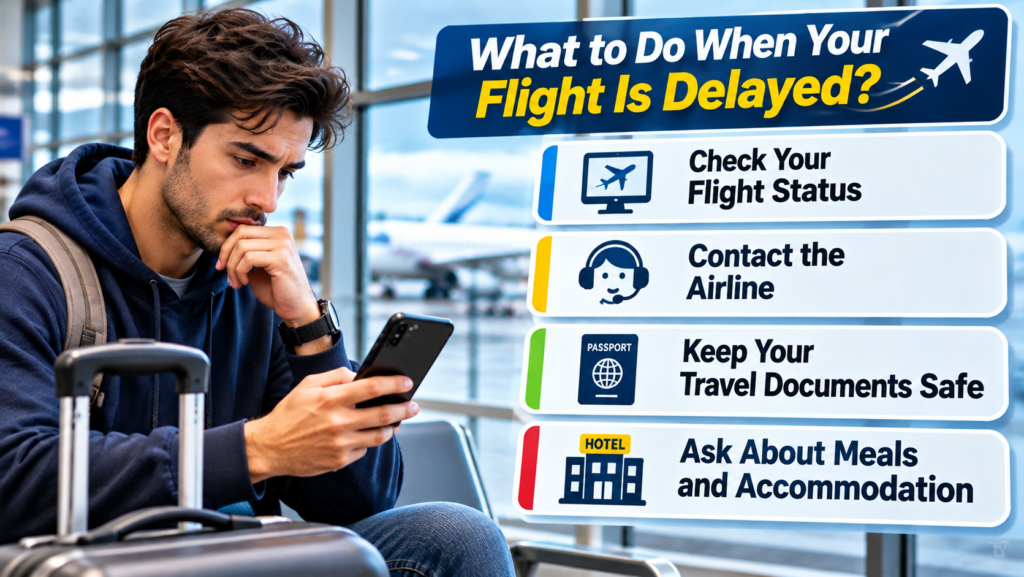
When flight delays and cancellations affect your journey, staying informed is one of the most useful ways to reduce travel stress.
1. Check Your Flight Status
Check the airline’s official website or mobile application. You can also review departure information displayed at the airport.
Look for:
- Updated departure time
- Boarding gate changes
- New flight information
- Cancellation announcements
- Messages from the airline
Avoid relying entirely on unofficial social media posts.
2. Contact the Airline
If the delay becomes significant, contact the airline through its customer service desk, telephone number or official app.
Ask for the reason for the disruption and whether the estimated departure time has changed.
Keep your communication polite and save any written responses.
Clear communication with airline staff can help you understand your options during flight delays and cancellations.
3. Keep Your Travel Documents Safe
Keep your passport, boarding pass, booking confirmation and baggage receipts accessible.
Take screenshots of important flight updates and save airline notifications. These records may help if you later need to submit a complaint or claim.
4. Ask About Meals and Accommodation
Depending on the country, airline policy and reason for the disruption, passengers may be entitled to meals, refreshments, communication facilities or hotel accommodation.
Ask airline staff what assistance is available before paying for additional services yourself.
What Happens When an Airline Cancels Your Flight?
A cancellation can be more complicated than a delay, particularly when you have connecting flights or important arrangements at your destination.
Flight delays and cancellations can create additional problems for passengers with hotel reservations, connecting flights and scheduled activities.
In many cases, airlines may offer one or more of the following options:
- Rebooking on another available flight
- A refund under applicable rules or ticket conditions
- An alternative route to your destination
- Information about accommodation or other assistance
Read the airline’s cancellation message carefully before accepting an alternative arrangement.
If you booked through a travel agency or online booking platform, contact both the airline and the booking provider when necessary. Your available options may depend on who issued the ticket and the applicable booking conditions.
Can You Get Compensation for Flight Delays and Cancellations?
This is one of the most important questions for travellers. The answer depends on the country, route, airline, length of delay and reason for the disruption.
There is no single worldwide compensation rule.
The rules covering flight delays and cancellations vary significantly, so passengers should check the regulations that apply to their particular journey.
European Union
Under EU air passenger rights, eligible passengers may receive compensation when a flight arrives more than three hours late or is cancelled less than 14 days before departure, subject to the applicable conditions and exceptions.
The compensation amounts can be:
- €250 for flights of 1,500 kilometres or less
- €400 for certain longer flights within the EU and other qualifying routes
- €600 for certain flights over 3,500 kilometres
Extraordinary circumstances may affect compensation eligibility. Passengers should check the European Commission’s official air passenger rights guidance for their particular journey.
United Kingdom
UK261 provides protections for eligible passengers. Depending on the circumstances, passengers may receive care during a delay and may qualify for compensation if they arrive at their destination more than three hours late.
For qualifying delays of more than five hours, passengers may have the option to choose not to travel and request a refund.
The UK Civil Aviation Authority’s flight delays and cancellations guidance explains the applicable rules and exceptions.
United States
The rules in the United States are different. For a cancelled flight or a significant schedule change, passengers who choose not to travel may generally be entitled to a refund under applicable Department of Transportation rules.
However, passengers should not assume that every ordinary domestic flight delay automatically qualifies for financial compensation.
For official information, visit the US Department of Transportation’s Fly Rights guide.
Other Countries
Canada, Australia, Pakistan and other countries have their own aviation regulations and passenger protection arrangements.
International travellers should check the aviation authority’s rules for the country and route involved. The airline’s conditions of carriage may also explain available assistance and complaint procedures.
The International Air Transport Association’s passenger information can also help travellers understand airline-related passenger information.
How to Avoid or Reduce the Risk of Travel Disruption
No traveller can completely prevent a flight delay. However, careful planning can reduce the impact.

Although travellers cannot control flight delays and cancellations, a few smart booking decisions can reduce their impact.
Book Earlier Flights When Possible
Early flights may offer more alternative travel options if something goes wrong later in the day. However, no departure time guarantees an on-time journey.
Allow Enough Time for Connecting Flights
Avoid extremely short connections, particularly when changing airports or travelling internationally.
Allow additional time for immigration, security checks, baggage collection and terminal transfers where required.
Monitor Weather Forecasts
Check weather conditions at your departure airport, destination and connecting airports before leaving home.
If severe weather is expected, monitor airline notifications for schedule changes.
Choose Suitable Travel Insurance
Read the policy carefully before purchasing travel insurance. Check whether it covers eligible delays, cancellations, missed connections, additional accommodation and emergency expenses.
Some policies have waiting periods, exclusions and maximum claim limits.
Keep Essential Items in Your Hand Luggage
Pack important medicines, travel documents, phone chargers, valuables and essential personal items in your cabin baggage, subject to airline security rules.
This can be helpful if your checked luggage is delayed or you need to stay overnight unexpectedly.
How Flight Disruptions Are Affecting Travellers in 2026
Flight disruption remains a practical concern for international travellers in 2026.
Airline operations depend on several interconnected systems, including airport technology, aircraft availability, weather information and air traffic management. A problem in one area can sometimes affect passengers across multiple routes.
As airlines become increasingly dependent on digital systems, maintaining reliable technology, communicating clearly with passengers and preparing alternative arrangements remain important.
Airline communication and reliable airport systems will remain important in managing flight delays and cancellations around the world.
Final Thoughts
Flight delays and cancellations are an unavoidable possibility of modern air travel, but passengers can prepare for them.
Check your flight status regularly, keep important documents accessible, understand your passenger rights and contact your airline when a disruption occurs. Most importantly, remember that compensation and assistance rules differ between countries and routes.
A little preparation before departure can help you handle unexpected changes with greater confidence and avoid unnecessary stress.
Being prepared for flight delays and cancellations can help travellers protect their time, money and peace of mind.
For more useful information, travel advice and international updates, visit NuvWire.
Frequently Asked Questions (FAQs)
1. What should I do first if my flight is delayed?
Check the airline’s official flight status, read any notifications and contact the airline for updated departure information and available assistance.
2. Can I get a refund if my flight is cancelled?
You may be entitled to a refund depending on the applicable passenger rights, airline policy and ticket conditions. Check the options offered by your airline before making a decision.
3. Do airlines have to provide hotel accommodation during long delays?
Some passenger protection rules require airlines to provide accommodation in qualifying circumstances. The conditions depend on the country, route and reason for the disruption.
4. Can I claim compensation for a flight delay?
Possibly. Eligibility depends on the relevant passenger rights law, arrival delay, flight distance and reason for the disruption. Not every delay qualifies.
5. What happens if I miss my connecting flight because of a delay?
If both flights are part of the same booking, contact the airline immediately. It may arrange an alternative connection under the applicable ticket conditions and passenger protection rules. Separate bookings may offer less protection.
6. Does travel insurance cover flight delays?
Some travel insurance policies cover qualifying delays and additional expenses. Check the waiting period, exclusions, documentation requirements and maximum benefit before buying a policy.
7. How can I check whether my flight is cancelled?
Use the airline’s official website or app, check airport departure boards and look for messages sent to your registered email address or phone number.
8. Are flight delay compensation rules the same worldwide?
No. The EU, UK, United States, Canada and other countries have different passenger protection laws. Always check the rules that apply to your specific journey.