
The COP31 climate summit 2026 has ended in Antalya, Türkiye, without an agreement on its proposed overarching climate deal, known as the Antalya Pact. The two-week United Nations climate conference concluded on November 22 after difficult negotiations over fossil fuels, climate finance and the responsibilities of developed and developing countries. Although governments made progress on several individual climate issues, deep political disagreements prevented them from reaching consensus on the summit’s main political agreement.
The outcome has raised fresh questions about international climate cooperation, the future of fossil fuels and whether countries can deliver meaningful action to limit global warming. However, the conference was not a complete failure. Several decisions on climate adaptation, financing, technology and a just transition were also advanced.
What Happened at the COP31 Climate Summit 2026?

COP31 brought together government representatives, climate negotiators, scientists, environmental organizations and business leaders in Antalya, Türkiye.
The annual conference is part of the United Nations climate process, where countries discuss ways to reduce greenhouse gas emissions, prepare for climate-related disasters and support nations facing the effects of global warming.
The central objective of COP31 was to move beyond previous climate promises and focus more strongly on implementation. Governments were expected to strengthen cooperation on clean energy, climate finance and the transition away from fossil fuels.
However, negotiations became increasingly difficult as countries disagreed over the wording and commitments included in the proposed Antalya Pact.
The COP31 climate summit 2026 also highlighted the importance of cooperation between governments, international organizations and private businesses. Their combined efforts will be necessary to turn climate commitments into practical solutions.
After extended discussions, the summit officially concluded on November 22, 2026, without a consensus on the overarching agreement.
Anchor text: official COP31 climate summit outcomes
Best for summit results, adaptation, climate finance and electrification.Visit UNFCCC.
Why Did COP31 Fail to Reach the Antalya Pact?
The main reason behind the breakdown was the lack of agreement on how governments should address fossil fuels and provide financial support for climate action.
Countries have different energy systems, economic priorities and levels of responsibility for historical greenhouse gas emissions. These differences made it difficult to establish a common position.
The COP31 climate summit 2026 highlighted the growing differences between countries over fossil fuel reduction, climate finance and international environmental commitments. These disagreements made it difficult for negotiators to approve a common political agreement.
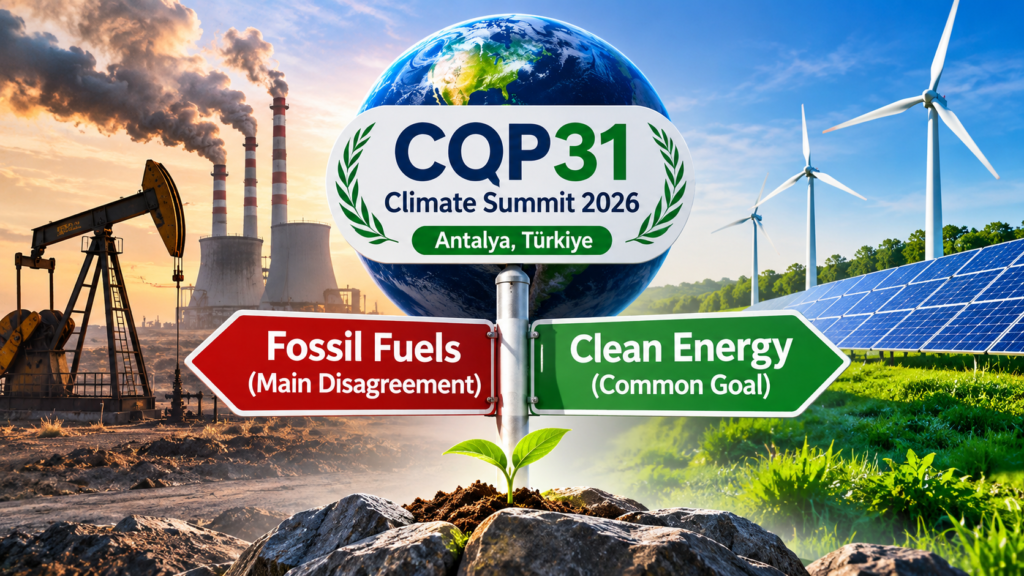
1. Disagreement Over Fossil Fuels
Fossil fuels, including coal, oil and natural gas, remain central to energy production in many parts of the world.
Several countries wanted the final agreement to include stronger language about moving away from fossil fuels. They argued that previous climate commitments needed clearer implementation plans.
However, governments differed over how quickly this transition should happen and what responsibilities individual countries should accept.
The absence of sufficiently strong fossil-fuel language became one of the major obstacles to approving the Antalya Pact.
2. Climate Finance Disputes
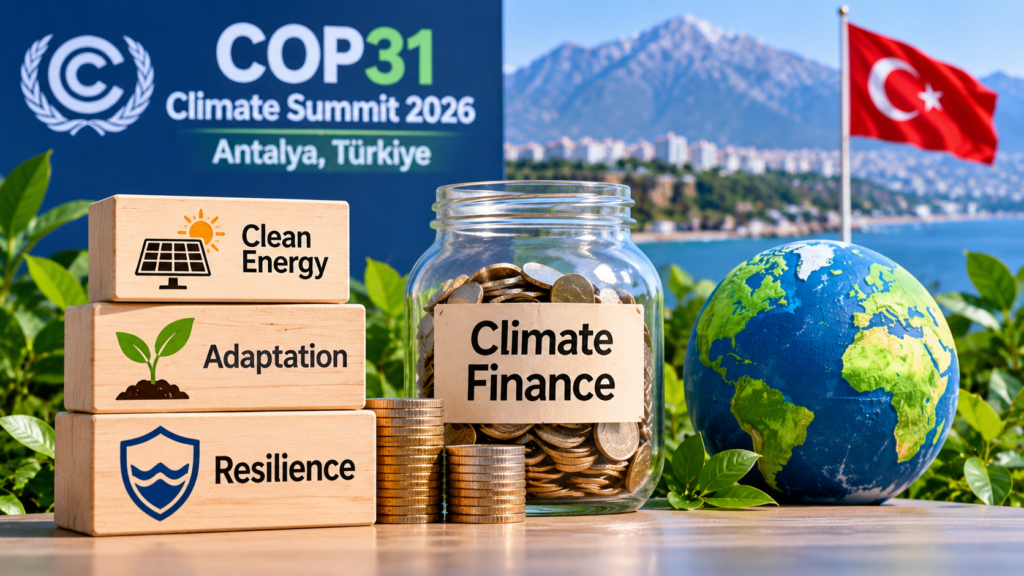
Climate finance was another major issue during the negotiations.
Developing countries argued that they need reliable financial assistance to protect communities, strengthen infrastructure and move towards cleaner energy systems.
Many vulnerable nations also face increasing costs from floods, droughts, extreme temperatures and other climate-related disasters.
The disagreement was not simply about how much money should be provided. Governments also differed over funding sources, delivery mechanisms, responsibilities and the transparency of financial commitments.
Without a clear understanding of how climate funding will reach vulnerable countries, turning international promises into practical action remains difficult.
3. Different Priorities Between Developed and Developing Nations
Developed and developing countries often approach climate negotiations from different economic perspectives.
Wealthier nations generally have greater financial and technological resources to invest in clean energy. Meanwhile, developing economies must balance climate commitments with employment, industrial growth, energy security and poverty reduction.
Countries facing these challenges argued that climate action must consider their economic circumstances.
This disagreement made it harder for negotiators to find language acceptable to all participating governments.
2. United Nations – COP31 Ends Without Climate Pact
Anchor text: United Nations report on COP31 negotiations
Supports the explanation of disagreements over fossil fuels.Read UN report.
What Climate Decisions Were Achieved at COP31?
Although the Antalya Pact was not approved, several separate outcomes were achieved during the conference.
According to the United Nations climate body’s official account, negotiations advanced on several important areas.
Despite disagreements, the COP31 climate summit 2026 provided an opportunity for countries to discuss renewable energy investment, climate adaptation and financial support for vulnerable communities.
1. Progress on Climate Adaptation
Climate adaptation remained an important part of the discussions.
Countries continued work on measuring progress towards global adaptation goals, improving resilience and identifying the needs of communities exposed to climate risks.
This is particularly important for countries experiencing extreme weather, water shortages, coastal threats and agricultural challenges.
2. Climate Finance Discussions Continued
COP31 moved forward discussions about improving access to climate finance.
Governments also continued work on financial arrangements intended to support climate-resilient development and help vulnerable communities prepare for climate impacts.
However, several major financial questions remain unresolved, meaning that further negotiations will be necessary.
3. Progress on a Just Transition
A just transition means moving towards a cleaner economy while protecting workers, communities and people whose livelihoods depend on traditional energy industries.
COP31 advanced work on the international just transition programme and agreed to continue discussions on its implementation.
The aim is to ensure that the transition to cleaner energy does not leave vulnerable workers and communities behind.
4. Greater Attention to Clean Electricity
Electrification was another important theme at the conference.
Around 80 countries supported a global target aimed at increasing electricity’s share of final energy consumption to 35% by 2035.
The initiative highlights the growing importance of electricity in transport, industry, buildings and other areas of the economy.
However, achieving this goal will require investment in power generation, electricity networks, storage and clean energy infrastructure.
Why Does the COP31 Outcome Matter for Developing Countries?
The results of COP31 are particularly important for developing countries because they often face serious climate risks while having fewer financial resources to respond.
Many developing economies depend on agriculture, natural resources and climate-sensitive industries. Extreme weather can affect food production, employment, infrastructure and economic stability.
For these countries, climate finance is not simply an international policy issue. It can determine whether communities receive better flood protection, whether farmers can adapt to changing weather conditions and whether governments can rebuild after disasters.
Pakistan is one example of a country where climate resilience is an important national priority.
Flooding, extreme heat, water management challenges and agricultural vulnerability make international climate cooperation particularly relevant to Pakistan.
A stronger international financial system could help developing countries invest in early-warning systems, resilient infrastructure, water conservation and climate-smart agriculture.
However, the practical impact will depend on whether financial commitments become accessible funding and whether countries can implement effective climate programmes.
Anchor text: Pakistan at COP31 2026Pakistan at COP31 2026: Shehbaz Sharif’s Climate Finance Push.
The COP31 climate summit 2026 was closely watched by governments, environmental organizations and energy companies around the world. Its outcome matters because future climate policies could influence international investment, renewable energy development and economic planning. For developing economies, the COP31 climate summit 2026 demonstrated why international climate cooperation must include accessible funding, modern technology and realistic implementation plans.
What Happens Next After COP31?
The conclusion of COP31 does not mean international climate negotiations have ended.
Countries will continue discussions through the United Nations climate process and prepare for the next major conference, COP32, scheduled to take place in Ethiopia in 2027.
Developing nations entered the COP31 climate summit 2026 seeking stronger financial assistance, better access to clean technologies and practical support for climate adaptation. These priorities remain important for countries dealing with floods, droughts and extreme temperatures.
Several issues from Antalya are expected to remain important during the next round of negotiations.
These include:
- Stronger international commitments on fossil fuel transition.
- More predictable climate finance for developing countries.
- Better access to clean energy technologies.
- Support for communities affected by climate disasters.
- Practical arrangements for a fair energy transition.
- Improved cooperation between developed and developing economies.
The next conference will provide another opportunity for governments to address unresolved disagreements and strengthen implementation of the Paris Agreement.
Can the World Still Achieve Its Climate Goals?
The challenges exposed at COP31 show that international climate cooperation remains complicated.
Countries have different economic systems, energy requirements and political priorities. Reaching a common agreement among more than 190 participating governments is therefore difficult.
However, the absence of one overarching agreement does not stop individual countries from taking climate action.
Governments can continue investing in renewable energy, improving energy efficiency, protecting forests, developing public transport and strengthening climate-resilient infrastructure.
Businesses and private investors also have an important role in supporting clean technologies and reducing emissions.
The biggest challenge is ensuring that national policies, international funding and practical projects move in the same direction. The COP31 climate summit 2026 showed that reaching global climate targets requires more than political statements. Countries must introduce measurable policies and maintain long-term cooperation.
Final Thoughts
The COP31 climate summit 2026 ended without the proposed Antalya Pact, highlighting the continuing divisions between countries over fossil fuels, climate finance and the pace of the global energy transition.
Nevertheless, the conference delivered progress on several individual issues, including adaptation, climate technology and just transition discussions.
For vulnerable countries such as Pakistan, the most important question is whether international climate commitments will translate into real financial assistance and practical protection for communities.
As attention turns towards COP32 in Ethiopia, governments will face renewed pressure to turn climate promises into measurable results.
The future of global climate cooperation will depend not only on what countries agree during international conferences but also on what they actually deliver after returning home.
One major lesson from the COP31 climate summit 2026 is that international climate promises need practical implementation. Governments must work together to turn negotiations into measurable progress on emissions reduction, clean energy and climate resilience.
Frequently Asked Questions (FAQs)
1. What is COP31 Climate Summit 2026?
COP31 is the 31st United Nations Climate Change Conference. It brought governments and international organizations together in Antalya, Türkiye, to discuss climate change, emissions reduction, climate finance and environmental protection.
2. When did COP31 end?
COP31 officially concluded on November 22, 2026, following extended negotiations in Antalya, Türkiye.
3. Why did COP31 fail to reach an agreement?
Countries could not reach consensus on the proposed Antalya Pact because of disagreements over fossil fuels, climate finance and the responsibilities of developed and developing nations.
4. What was the Antalya Pact?
The Antalya Pact was a proposed overarching political agreement intended to summarize the main direction and commitments of COP31. Governments failed to reach consensus on its adoption.
5. Did COP31 achieve anything despite the failed agreement?
Yes. Governments advanced separate decisions on climate adaptation, climate finance, technology and just transition, even though the main political agreement was not adopted.
6. How does COP31 affect Pakistan?
Pakistan has significant climate adaptation needs, including flood protection, water management, agricultural resilience and early-warning systems. International climate finance and technology cooperation could help support these priorities.
7. What is a just transition in climate policy?
A just transition means shifting towards cleaner energy and environmentally sustainable industries while protecting workers, communities and businesses affected by economic changes.
8. Where will COP32 take place?
COP32 is scheduled to take place in Ethiopia in 2027, where countries will continue discussions on international climate commitments and unresolved issues from previous conferences.
9. What was the 35×35 electrification target discussed at COP31?
It was a global initiative supported by around 80 countries to increase electricity’s share of final energy consumption to 35% by 2035.
10. Does the failure of the Antalya Pact mean the Paris Agreement has failed?
No. The failure to adopt the Antalya Pact does not end the Paris Agreement or the wider UN climate process. Countries remain committed to continuing international climate cooperation.