Planning a trip to Europe in October 2026? International travellers should understand the latest border procedures before booking flights, preparing documents, or leaving for the airport. Europe has introduced a new digital border system, while another travel authorisation system is expected to launch later in 2026.
The most important development is the European Union’s Entry/Exit System (EES), which became fully operational on 10 April 2026. The European Travel Information and Authorisation System (ETIAS) is a separate system scheduled to begin in the last quarter of 2026. As of this article’s publication, the official EU website says ETIAS is not yet accepting applications. <Cite refs={[“turn813401search2″,”turn813401search4”]}/>
This Europe Travel October 2026 guide explains the key changes and what travellers from Pakistan, the UK, the USA, and other countries should know.
1. Europe Travel October 2026: What Has Changed?
The EU is moving towards more digital border management. Instead of relying only on traditional passport stamps, the EES electronically records entries, exits, and certain refusals of entry for eligible non-EU travellers visiting participating European countries for short stays.
The system records relevant passport information and biometric data, including a facial image and fingerprints where required. It helps border authorities verify identities and monitor permitted stays.
Travellers should allow enough time for airport and border procedures, particularly if they are using the system for the first time. Actual waiting times vary by airport, time of day, and passenger volume.
2. What Is the Entry/Exit System (EES)?
The Entry/Exit System is a digital border system used by 29 European countries participating in the scheme. It generally applies to non-EU nationals travelling for short stays of up to 90 days within a 180-day period, subject to the applicable rules and exemptions.
Under EES, eligible travellers’ entry and exit information is recorded electronically. At the first registration, travellers may need to provide a facial image and fingerprints in addition to presenting their travel document.
Here are three important points:
- Passport stamping: EES replaces manual passport stamping for covered crossings.
- Biometric checks: Travellers may be asked to complete biometric registration and identity verification.
- Stay monitoring: Electronic records help authorities check whether a visitor has exceeded the permitted short-stay period.
EES does not itself introduce a new visa requirement for every traveller. Existing visa and entry rules still apply. <Cite refs={[“turn813401search2″,”turn813401search5”]}/>
3. What Is ETIAS, and When Will It Start?
ETIAS stands for the European Travel Information and Authorisation System. It is designed for eligible travellers who can visit participating European countries for short stays without obtaining a visa in advance.
Unlike EES, ETIAS is an electronic travel authorisation that eligible visa-exempt travellers will need before their journey once the system begins operating.
As of October 2026, the official EU website states that ETIAS is scheduled to start in the last quarter of 2026. The exact launch date has not yet been announced on the official website, and applications are not currently being collected. Travellers do not need to submit an ETIAS application at this point. <Cite refs={[“turn813401search0″,”turn813401search6”]}/>
Do not trust unofficial websites claiming they can issue an ETIAS authorisation before the official system opens.
4. EES vs ETIAS: What Is the Difference?
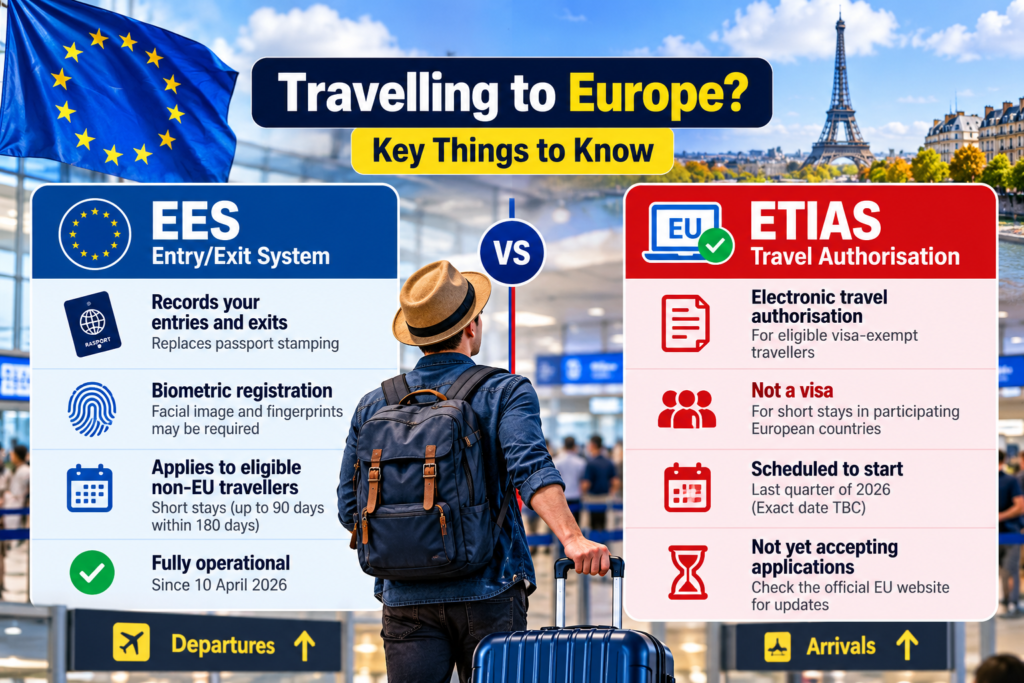
Although both systems are part of Europe’s border modernisation, they serve different purposes.
EES — Entry/Exit System
- Records the entries and exits of eligible non-EU short-stay visitors.
- Includes passport details and biometric information where required.
- Is fully operational in participating countries.
ETIAS — Travel Authorisation
- Will apply to eligible visa-exempt nationals travelling for short stays.
- Requires an online travel authorisation once the system launches.
- Is not yet operational as of this article’s publication.
A key distinction is that ETIAS is not a replacement for a visa. Travellers whose nationality requires a Schengen visa must continue to follow the relevant visa application process. <Cite refs={[“turn813401search16″,”turn813401search11”]}/>
5. What Should Pakistani Passport Holders Know?
Pakistani travellers planning a holiday or short visit to the Schengen Area should check the visa requirements for their nationality before making travel arrangements.
A Pakistani ordinary passport holder generally needs a Schengen visa for a short visit unless a specific exemption applies. ETIAS is intended for eligible visa-exempt travellers, so it should not be treated as a replacement for the Schengen visa required by Pakistani nationals.
Before departure, check:
- Whether you need a valid Schengen visa for your destination.
- Whether your passport meets the destination’s validity requirements.
- Whether you have accommodation details, a return or onward travel plan, and evidence of sufficient funds if requested.
- Whether your travel insurance and supporting documents meet the applicable requirements.
- Whether the destination country’s official guidance lists any additional entry conditions.
A visa does not automatically guarantee entry. Border authorities may ask questions about the purpose of a visit and supporting documents.
6. What About Travellers from the UK and USA?
British and American citizens generally benefit from visa-exempt short-stay travel to participating Schengen countries, subject to the applicable conditions. Once ETIAS becomes operational, eligible travellers from these countries will generally need the authorisation for covered trips.
Travellers should not apply through unofficial websites or assume that a planned launch date means the system is already accepting applications.
Before travelling, check the official EU ETIAS website for the confirmed start date, eligibility, application process, and fee. Also check your passport validity and the rules for the specific destination.
7. How Can Travellers Prepare for Airport Border Checks?
A little preparation can make international travel more straightforward, although it cannot guarantee shorter queues or entry.
Follow these practical tips:
- Check official requirements: Review the latest guidance for your destination before departure.
- Keep your passport accessible: Make sure your travel document is valid and easy to present.
- Allow extra time: Airport procedures and queues can vary, so avoid planning an unnecessarily tight connection.
- Keep supporting documents ready: Have your accommodation information, return journey details, and relevant visa documents available.
- Follow border officers’ instructions: Complete any required biometric registration and identity checks.
- Use official websites: Avoid unofficial services that promise guaranteed visas or travel authorisations.
These steps can help travellers prepare for the journey and reduce avoidable problems.
Europe Travel October 2026: Essential Tips for Visitors
Planning Europe Travel October 2026 requires checking the latest entry requirements before departure. Travellers should confirm their visa status, passport validity, and any applicable border procedures. This Europe Travel October 2026 guide can help international visitors understand EES checks and follow official ETIAS updates before travelling. Always use official European Union sources for the latest information.
8. Will the New Systems Affect Every European Country?
Not every European country uses the same border arrangements. EES applies to participating countries, while Ireland and Cyprus have different arrangements. Europe also includes countries outside the Schengen Area, each with its own entry requirements.
Travellers should therefore check the specific country they intend to visit rather than assuming one rule applies throughout Europe.
If an itinerary includes several countries, confirm the requirements for each destination and understand where external Schengen border checks will take place.
Plan Your Europe Travel October 2026 Trip Carefully
Before booking your journey, research Europe Travel October 2026 entry requirements for your destination. This Europe Travel October 2026 update explains why travellers should check passport validity, visa requirements, EES border procedures, and official ETIAS announcements. Careful planning can help you prepare your documents and avoid relying on outdated travel information.
Choosing Europe Travel October 2026 information from reliable sources helps travellers prepare for border checks, understand entry requirements, and plan their journeys with greater confidence. Always confirm the latest rules before departure.
Conclusion: Check the Latest Europe Travel Rules Before Departure
The biggest confirmed change for Europe Travel October 2026 is the fully operational Entry/Exit System. ETIAS is a separate travel authorisation system scheduled for the last quarter of 2026, but the official EU website has not yet announced its exact launch date or begun accepting applications.
For travellers from Pakistan, the UK, the USA, and elsewhere, the safest approach is to verify visa eligibility, passport requirements, and official border guidance before booking or departing.
Travel rules can change, so rely on official sources rather than social media rumours or unofficial application websites.
Planning a trip to Europe? Share this guide with fellow travellers and visit NuvWire for more international travel updates.
Official Sources
- European Commission — Entry/Exit System: https://home-affairs.ec.europa.eu/news/entryexit-system-will-become-fully-operational-10-april-2026-2026-03-30_en
- Official EU ETIAS website: https://travel-europe.europa.eu/etias
- Official ETIAS FAQs: https://travel-europe.europa.eu/etias/faq
- NuvWire: https://nuvwire.com/