
The Iran attacks Kuwait reports have raised fresh concerns about security across the Middle East. On November 18, 2026, Iran said its forces targeted US drone and missile installations at Kuwait’s Ali Al Salem Air Base. Kuwait confirmed that its air defence systems were responding to hostile drone attacks, while Bahrain also reported intercepting further aerial threats.
The latest developments followed a US strike on a missile-launch site on Iran’s Qeshm Island in the Strait of Hormuz. The exchange has increased pressure on an already tense region, where military activity, shipping disruptions, and diplomatic efforts are unfolding at the same time.
According to reporting by Reuters, the events mark a renewed escalation between Iran and US-allied Gulf countries.
What Happened in the Iran Attacks on Kuwait?
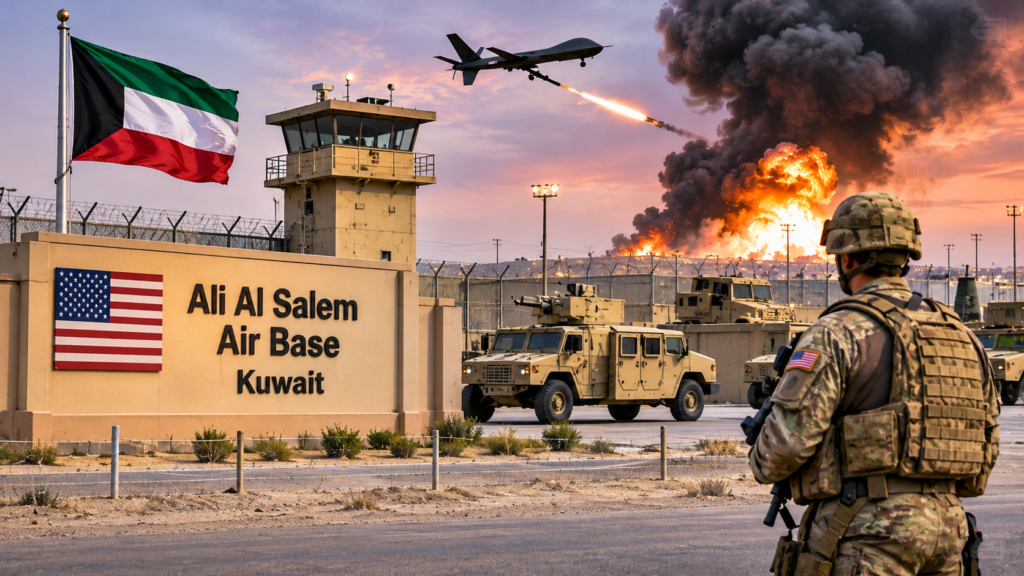
Iran’s army said it had targeted US drone and missile facilities at Ali Al Salem Air Base in Kuwait during overnight operations on November 18.
Kuwait’s military separately announced that its air defence systems were countering hostile drone attacks. It said explosions heard in some areas were linked to air defence interceptions. At the time of the initial reports, Kuwaiti authorities had not announced confirmed damage or casualties from the incident.
Kuwait’s Foreign Ministry strongly condemned the attacks, describing them as a violation of the country’s sovereignty and a threat to its security and stability.
The incident is particularly significant because Ali Al Salem is an important military installation used by US forces in the Gulf region.
The Iran attacks Kuwait reports have drawn attention from governments across the Gulf. The Iran attacks Kuwait incident also raises questions about the security of military installations and regional air defence systems.
Readers can follow the latest reporting through Dawn’s coverage of the Kuwait attacks.
Why Did Iran Target Ali Al Salem Air Base?
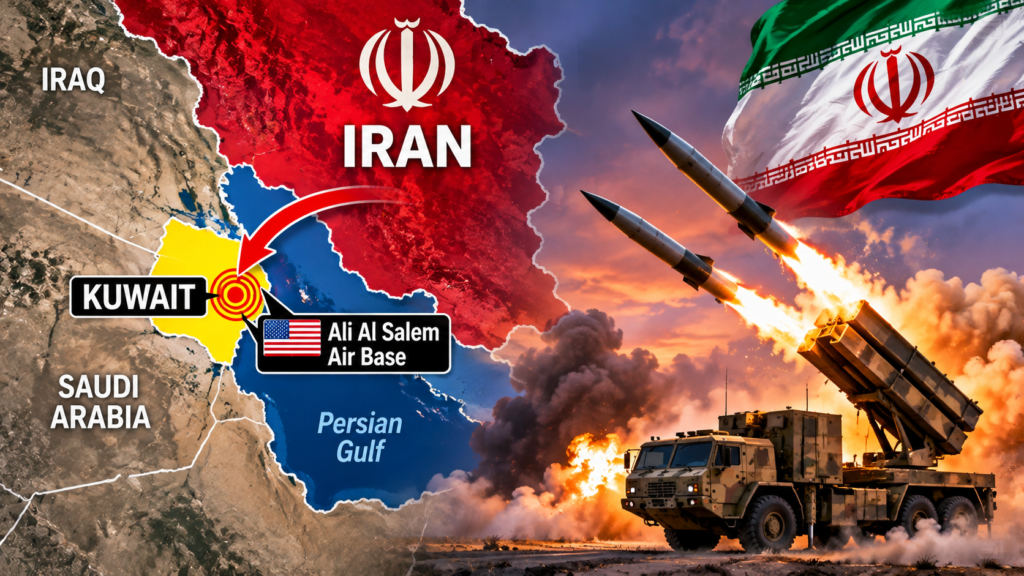
The latest incident came amid a series of military exchanges involving Iran, the United States, and other countries in the region.
A US military official told Reuters that American fighter aircraft had struck a missile-launch site on Qeshm Island on November 17. The US described the operation as a response to Iranian attacks on American personnel and assets.
Iranian media, citing an Iranian official, said the US strike did not damage infrastructure. Iran also said its recent military actions were connected to US drone surveillance operations and attacks on Iranian communications facilities.
The competing explanations show how both sides are presenting the escalation differently. Independent confirmation of every military claim remains limited.
The Iran attacks Kuwait developments should be viewed in the context of rising tensions between Tehran and Washington. The Iran attacks Kuwait story highlights the risks facing US military facilities across the Middle East.
For a wider account of the sequence of events, see Reuters’ report on Iran’s attacks across the Gulf.
Bahrain Also Reports Iranian Aerial Attacks
Kuwait was not the only Gulf country reporting military activity. Bahrain said its air defence forces intercepted further Iranian aerial attacks on November 18.
Bahrain hosts the US Navy’s Fifth Fleet, making it an important location for American military operations in the region. Its authorities issued public alerts advising people to take shelter before later announcing that the immediate danger had passed.
The latest incident followed several reported attacks or interceptions involving Bahrain in the same week.
These developments have increased concern among neighbouring countries, particularly because military facilities, shipping routes, and energy infrastructure are all exposed to regional instability.
The latest developments are part of wider regional tensions involving Gulf countries. Read our coverage of Saudi Arabia-Yemen Tensions for more background on the security challenges affecting the region.
Al Jazeera’s report on attacks involving Kuwait and Bahrain provides further details about the regional response.
Strait of Hormuz Shipping Faces More Pressure
The military escalation is also creating concern for international shipping. The Strait of Hormuz is one of the world’s most important energy corridors, connecting major oil and gas producers in the Gulf with international markets.
Any prolonged disruption in this waterway can affect tanker movements, shipping costs, insurance rates, and energy prices.
On November 18, UAE state energy company ADNOC said one crew member was missing after a vessel was struck in the Strait of Hormuz the previous night. The company said 11 other crew members had been injured and evacuated where necessary. Search and rescue operations were continuing.
The company did not establish in its public statement who was responsible for the incident.
The situation demonstrates why the Iran attacks Kuwait story matters beyond military bases. Continued instability around the Gulf’s shipping routes could have consequences for energy markets and international trade.
Could the Iran-Kuwait Escalation Affect Oil Prices?
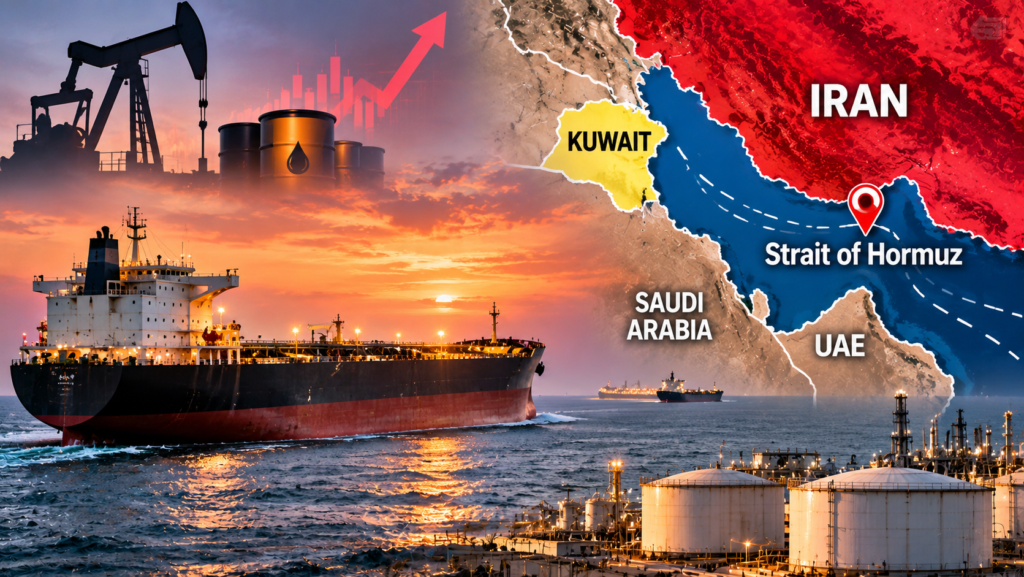
The Gulf region plays a major role in global oil and gas supplies. As a result, rising tensions can influence market expectations even before a major disruption to exports occurs.
Traders and energy companies watch developments around the Strait of Hormuz closely. Concerns about tanker safety, naval operations, and possible restrictions can increase uncertainty in energy markets.
The possible economic effects include:
- Higher shipping and insurance costs for vessels operating in the region.
- Increased uncertainty for international oil and gas supplies.
- Pressure on fuel prices if disruptions become more serious.
- Delays to cargo deliveries and commercial shipping.
- Greater financial risk for companies operating across the Gulf.
However, military tensions do not automatically mean that global oil supplies will stop. Actual price movements depend on the scale and duration of disruptions, available supplies, and market conditions.
The economic impact of Iran attacks Kuwait could extend beyond the immediate security situation. If Iran attacks Kuwait lead to further regional escalation, shipping costs and energy-market uncertainty could increase.
Regional tensions are also raising concerns about Saudi Arabia’s energy infrastructure. Read our report on the Saudi Aramco Building Attack in Riyadh to understand the wider security risks facing Gulf energy facilities.
Kuwait Condemns the Attacks and Defends Its Sovereignty
Kuwait has described the reported drone attacks as a serious violation of its sovereignty. Its government has reaffirmed its right to take necessary measures to protect its territory, people, and important facilities.
The country’s position reflects a wider concern among Gulf governments that the conflict could spread beyond its existing fronts.
Regional leaders have repeatedly called for restraint and diplomatic solutions. A wider confrontation could place military installations, civilian infrastructure, energy facilities, and commercial shipping at greater risk.
Are Diplomatic Efforts Still Underway?
Despite the latest military incidents, diplomatic contacts have not completely stopped.

Qatari and Iranian officials held discussions aimed at narrowing differences, while Iran’s foreign minister also visited Oman for talks concerning maritime corridors and regional security.
Qatar and Oman have played important roles in regional mediation efforts. Their involvement highlights the continued interest among several governments in preventing the conflict from expanding further.
The latest developments nevertheless show how difficult it may be to achieve a lasting agreement while military operations and economic pressure continue.
The conflict involving Iran is also an important issue for major world powers. Our report on the China-US-Russia Trilateral Summit explores the diplomatic discussions that could influence international relations.
What Could Happen Next?
The next stage will depend on decisions made by Iran, the United States, Kuwait, and other Gulf governments.
The coming days will be important for understanding the consequences of Iran attacks Kuwait. Further developments involving Iran attacks Kuwait could influence regional security, diplomatic negotiations, and international markets.
Several developments will be important to watch:
- Further military activity: Any additional attacks or interceptions could increase the risk of a wider confrontation.
- Kuwait’s security response: Authorities may strengthen protection around military and strategic facilities.
- US military decisions: Washington’s response to attacks involving its regional assets could influence the direction of the conflict.
- Shipping security: Developments in the Strait of Hormuz will remain important for international trade and energy supplies.
- Diplomatic negotiations: Mediation by Qatar, Oman, and other regional partners could help prevent further escalation.
At this stage, it is too early to predict whether the latest incidents will lead to another major military confrontation or create pressure for renewed negotiations.
Final Thoughts
The Iran attacks Kuwait developments represent another serious moment in the growing tensions between Iran, the United States, and their regional partners. Iran said it targeted US installations at Ali Al Salem Air Base, while Kuwait confirmed that its air defences were responding to hostile drone activity.
With Bahrain also reporting interceptions and shipping concerns continuing around the Strait of Hormuz, the consequences extend well beyond one military installation.
For now, the region faces two competing possibilities: further escalation or renewed diplomatic efforts. The coming days will be important in determining which direction the crisis takes.
Frequently Asked Questions (FAQs)
1. Did Iran attack Kuwait in November 2026?
Iran said it targeted US drone and missile installations at Kuwait’s Ali Al Salem Air Base on November 18, 2026. Kuwait confirmed that its air defences were responding to hostile drone attacks.
2. Which US military base was targeted in Kuwait?
The reported target was Ali Al Salem Air Base, an important military installation used by US forces in Kuwait.
3. Did Kuwait confirm the Iranian attack?
Kuwait confirmed that its air defence systems were countering hostile drone attacks and strongly condemned the incidents. Iran separately said it had targeted US installations at the base.
4. Why did Iran attack Kuwait?
Iran described its operation as targeting US drone and missile installations. The incident followed US strikes on a missile-launch site on Iran’s Qeshm Island.
5. Was Bahrain also attacked?
Bahrain reported intercepting Iranian aerial attacks on November 18, adding to concerns about military escalation across the Gulf.
6. Was anyone killed in the Kuwait attack?
The initial reports did not confirm casualties from the Kuwait drone incident. Authorities had not announced confirmed damage or deaths at the time of reporting.
7. Could the Iran-Kuwait conflict affect oil prices?
Yes. Prolonged instability around the Gulf and the Strait of Hormuz could affect shipping costs, energy supplies, and international oil markets.
8. Why is the Strait of Hormuz important?
The Strait of Hormuz is a major international shipping route used to transport oil and gas from Gulf producers to global markets.
9. Is the United States involved in the Iran-Kuwait tensions?
The United States is directly involved because the reported Iranian target was a US-used military installation in Kuwait. US forces also carried out a strike on a missile-launch site on Qeshm Island.
10. Are diplomatic talks continuing?
Yes. Regional diplomatic contacts involving Qatar, Oman, and Iran have continued, although the latest military incidents have made efforts to reduce tensions more difficult.