
A beautiful garden does not have to demand hours of work every week. With the right plants, a thoughtful layout, and a few simple habits, you can create an attractive outdoor space without spending all your free time watering, pruning, and pulling weeds.
Whether you live in a small apartment, rent a house, own a family home, or have a spacious backyard, the right low-maintenance garden ideas can help you make the most of your available space. You do not need an expensive landscape designer or a collection of rare plants to get started.
In 2026, practical gardening is all about creating spaces that look good, work with local conditions, and remain manageable throughout the year. Small gardens, useful plants, water-conscious designs, and wildlife-friendly planting are all worth considering when planning your outdoor space.
In this guide, you will discover nine easy garden ideas, learn how to choose suitable plants, and find simple ways to reduce gardening work while keeping your home welcoming.
Why Choose a Low-Maintenance Garden?
Gardening should be enjoyable rather than another exhausting responsibility. A low-maintenance garden is designed to reduce unnecessary work while giving plants the conditions they need to grow.
Instead of filling every corner with plants that require constant attention, you focus on suitable varieties, healthy soil, sensible spacing, and efficient watering.
Here are some advantages:
- Less daily work: Choose plants that suit your climate and require limited pruning.
- Better use of space: Make balconies, patios, courtyards, and small yards more attractive.
- Smarter water use: Reduce waste by watering according to plant needs and local weather.
- More manageable costs: Propagate suitable plants, reuse containers safely, and avoid unnecessary purchases.
- A more personal outdoor space: Combine greenery, flowers, seating, and useful plants to suit your lifestyle.
The goal is not to create a garden that never needs attention. Every living plant requires some care. The goal is to make that care simpler and more predictable.
Low-maintenance garden ideas can help you create a relaxing outdoor space without spending hours on daily garden care.
These low-maintenance garden ideas help homeowners create attractive outdoor spaces while keeping regular garden care manageable.
9 Low-Maintenance Garden Ideas That Work in Different Homes
1. Choose Easy-Care Plants That Suit Your Climate
One of the most effective low-maintenance garden ideas is to start with plants that naturally suit your local environment.
A plant that thrives in a warm, dry climate may struggle in a cold, damp garden. Likewise, a variety that grows well in shade may become stressed in strong afternoon sunlight.
Before buying plants, observe how much sunlight your space receives, how quickly the soil dries, and whether your area experiences frost, intense heat, or heavy rainfall.
Depending on your climate and growing conditions, you might consider:
- Snake plants for suitable indoor spaces.
- Pothos for bright, indirect light indoors.
- Lavender for sunny, well-drained outdoor locations where the climate suits it.
- Sedum varieties for appropriate sunny, well-drained garden areas.
- Locally native perennial flowers that are adapted to regional conditions.
Remember that no plant is completely maintenance-free. Even hardy varieties need suitable light, drainage, and occasional care.
Among the most practical low-maintenance garden ideas is choosing plants that naturally thrive in your local climate.
Smart tip: Visit a reputable local nursery and ask which plants thrive naturally in your area. The right choice at the beginning can save you considerable effort later.
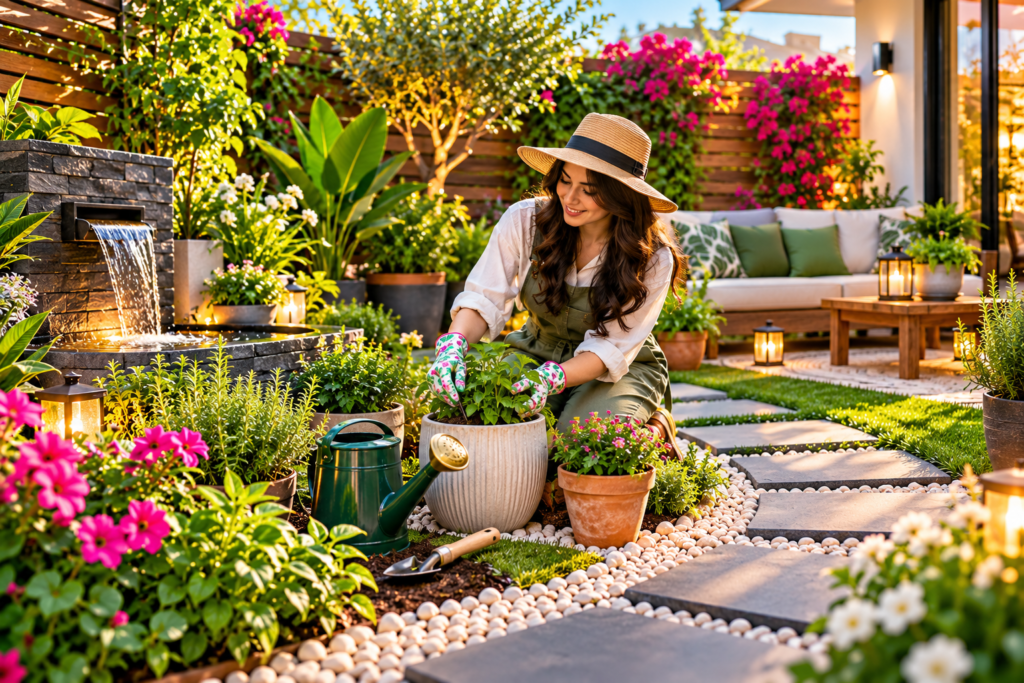
2. Create a Beautiful Garden With Pots and Containers
You do not need a large backyard to enjoy gardening. Containers can transform a balcony, doorstep, patio, or small courtyard into a welcoming green space.
Container gardening is especially useful for renters because pots can often be moved when you change homes. It also allows you to grow plants in locations where the existing ground soil is unsuitable.
Start with a few containers rather than buying dozens at once. Choose pots with drainage holes and enough room for the plants’ mature roots.
You can grow herbs, compact flowering plants, leafy vegetables, or small ornamental plants, depending on the available light and climate.
For a coordinated appearance, select containers in two or three complementary colors. Group plants with similar watering and sunlight needs together.
Avoid placing containers where excess water can damage floors, walls, or neighboring properties. Make sure the location can safely support their weight, especially when pots are filled with wet soil.
Smart tip: Use a suitable commercial potting mix rather than heavy garden soil alone. Container plants generally need a growing medium that provides both moisture retention and adequate drainage.
3. Make the Most of Vertical Gardening
When floor space is limited, look upward.
Vertical gardening uses walls, railings, shelves, and suitable supports to display plants without occupying the entire ground area. It is one of the most practical low-maintenance garden ideas for apartments, narrow patios, and compact urban homes.
You can use a sturdy trellis for climbing plants, wall-mounted planters for herbs, or a freestanding plant shelf for smaller pots.
For an attractive arrangement, place taller plants at the back and shorter plants toward the front where possible. Keep enough space between containers for air circulation and easy watering.
Choose the planting system carefully. A vertical garden can dry out faster than plants growing in the ground, so check moisture regularly. Use secure fixings and waterproof protection where needed, especially indoors or on balconies.
If you are a beginner, start with a simple shelf or trellis before investing in a complicated living wall.
These low-maintenance garden ideas make small outdoor spaces more attractive while keeping the layout simple and organized.
Smart tip: Grow herbs you regularly use in the kitchen, provided they receive the light they need. This turns an attractive display into a useful part of everyday life.
4. Use Mulch to Reduce Weeds and Water Loss
Mulching is a simple technique that can make garden care easier.
A layer of suitable organic mulch, such as shredded leaves or clean, untreated bark, can reduce evaporation, moderate soil temperature, and help suppress some weeds.
This is particularly useful in sunny gardens where the soil surface dries quickly.
To apply mulch, first remove existing weeds and water the soil if it is dry. Spread a suitable layer over the soil surface while keeping mulch away from plant stems and tree trunks.
The right material and depth depend on your plants, climate, and soil conditions. Avoid piling mulch against stems, and do not cover plant crowns that need to remain exposed.
Organic mulch gradually breaks down, so you may need to replenish it from time to time.
For containers, use a thin layer of an appropriate material if it suits the plants and growing conditions.
Smart tip: Reuse healthy fallen leaves from your own garden where practical, provided they are free from serious disease and contamination. This can reduce waste while supporting soil care.
5. Install a Simple and Efficient Watering Routine
Watering every plant on the same schedule is not always effective. Different species, container sizes, soil types, and weather conditions all affect how much water a garden needs.
A better approach is to check the soil and water when necessary.
For many outdoor plants, watering near the soil surface helps deliver moisture to the root zone while keeping foliage drier. Early morning can be a useful time because it allows plants to take up water before the hottest part of the day.
However, the ideal schedule depends on your climate, rainfall, plant type, and local water restrictions.
To make watering easier:
- Check soil moisture before watering instead of following a rigid calendar.
- Use a watering can, hose attachment, or drip irrigation system suited to your space.
- Water containers thoroughly when needed, allowing excess water to drain.
- Empty standing water from saucers when it risks leaving roots waterlogged.
- Group plants with similar moisture requirements together.
- Consider collecting rainwater where permitted and safe to do so.
Avoid assuming that brown leaves always mean a plant needs more water. Both underwatering and overwatering can cause similar symptoms.
Smart tip: A basic soil-moisture check can prevent unnecessary watering and help you understand your plants’ needs over time.
6. Create a Small Herb Garden for Everyday Use
A home herb garden is an excellent choice for anyone who wants a garden that is both attractive and practical.
Fresh herbs can add flavor to everyday meals, and many are suitable for pots or small garden beds. Depending on your region, common choices include mint, basil, parsley, coriander, thyme, and rosemary.
However, these herbs do not all have identical growing requirements. Mint generally prefers more consistent moisture and is often best grown in its own container because it can spread aggressively. Rosemary and thyme typically prefer excellent drainage and conditions suited to their climate.
Basil often benefits from warmth and protection from cold, while coriander may struggle in prolonged hot weather.
Choose herbs based on your local climate, available sunlight, and cooking habits. There is little benefit in growing a dozen varieties if you only use two regularly.
Harvest carefully, avoid removing too much growth at once, and inspect plants for pests before bringing harvested leaves into the kitchen.
Smart tip: Begin with two or three herbs that you use frequently. Expand your collection only after you understand their watering, light, and harvesting needs.
7. Replace High-Maintenance Areas With Practical Garden Features
Not every part of a garden needs to contain flowers or grass.
If a small lawn requires frequent mowing and struggles in your climate, consider whether part of it could become a mulched planting bed, a seating area, or a suitable path.
You can also create a compact gravel feature, add a few containers, or introduce ground-cover plants suited to the local conditions.
The best design depends on how you use the space. A family garden may need an open area for children to play, while a small courtyard may benefit more from comfortable seating and a few carefully chosen plants.
Be mindful of drainage. Excessive paving or poorly designed hard surfaces can send rainwater toward buildings or neighboring properties. Choose permeable materials where appropriate and maintain safe access routes.
Avoid covering every outdoor surface simply to eliminate weeding. A balanced design with planting areas can look attractive while supporting local wildlife.
Smart tip: Before changing your garden, identify the areas that take the most time to maintain. Improving just one troublesome section may provide a noticeable benefit without a major renovation.
8. Grow Native and Wildlife-Friendly Plants
A beautiful garden can also provide useful habitat for local wildlife.
Native plants are species that occur naturally in a particular region. When selected for the right location, many native plants can grow well with relatively little intervention once established.
Depending on your local ecosystem, you might include native flowering plants, shrubs, grasses, or other suitable species that provide food and shelter for insects and birds.
Choose plants that match your soil, sunlight, and water conditions. A plant being native does not automatically mean it will thrive in every garden or require no maintenance.
Avoid invasive species and check local guidance before introducing unfamiliar plants. Some plants that are harmless in one country can spread aggressively in another.
You can also leave a small area of suitable leaf litter, provide a shallow source of clean water where appropriate, or reduce unnecessary pesticide use.
Smart tip: Ask a local botanical garden, native-plant society, or extension service for recommendations. Locally appropriate plants are often a better starting point than copying a garden designed for a different climate.
9. Follow a Simple Seasonal Garden Maintenance Plan
Even the easiest garden benefits from occasional attention. A small, regular routine can prevent minor problems from becoming major tasks.
Rather than spending an entire weekend trying to fix everything, divide maintenance into manageable activities.
Weekly checks:
- Look for dry soil, wilting plants, or standing water.
- Remove weeds before they become established.
- Inspect leaves for signs of pests or disease.
- Harvest herbs and vegetables when they are ready.
Monthly checks:
- Review plant growth and remove dead or damaged material when appropriate.
- Check containers, supports, and irrigation equipment.
- Replenish mulch if necessary.
- Look for plants that have outgrown their containers or available space.
Seasonal checks:
- Adjust planting choices to local growing conditions.
- Protect sensitive plants from expected frost or extreme heat.
- Prune only when appropriate for the species and season.
- Refresh planting arrangements and review water use.
You do not need to follow every task on this list every week. Adapt the schedule to your climate and the plants you actually grow.
The aim is to make garden care predictable, not to create another demanding to-do list.
How to Start a Low-Maintenance Garden on a Budget
Budget-friendly low-maintenance garden ideas allow you to improve your outdoor space gradually without buying everything at once.
Creating an attractive garden does not require a large upfront investment.
Begin by evaluating the space you already have. Existing containers, healthy plants, and suitable materials may be reusable. You can also expand gradually by growing plants from seeds or propagating varieties that are suitable for that method.
Follow these practical steps:
Step 1: Measure your space. Identify sunny, shaded, dry, and damp areas before purchasing plants.
Step 2: Choose a simple layout. Decide where containers, seating, planting beds, and paths should go.
Step 3: Buy fewer, better-suited plants. Select varieties that match your conditions instead of purchasing plants simply because they look attractive in the nursery.
Step 4: Improve the growing environment. Use an appropriate growing medium, provide drainage, and prepare the soil according to the plants’ needs.
Step 5: Add useful features gradually. Start with mulch, a watering can, or a basic trellis before investing in expensive equipment.
Step 6: Track what works. Notice which plants thrive, which require excessive care, and which locations need improvement.
A smaller garden that suits your lifestyle is often more rewarding than an elaborate design that becomes difficult to maintain.
Explore our other helpful articles for more practical tips on improving your home, managing everyday expenses, and making smarter lifestyle choices.
Common Gardening Mistakes to Avoid
Some gardening problems begin with good intentions. Fortunately, many are preventable.
- Buying plants before checking sunlight: A shade-loving plant may struggle in intense sun, while a sun-loving plant may fail in a dark corner.
- Overwatering: Constantly wet soil can deprive roots of oxygen and encourage root problems.
- Choosing plants only for appearance: Attractive varieties may need more care than you can realistically provide.
- Overcrowding containers: Plants need adequate room, light, and airflow.
- Ignoring mature plant size: A small nursery plant may eventually outgrow a narrow walkway or container.
- Using unsuitable soil: Heavy garden soil can perform poorly in containers, while the wrong soil amendment can damage garden structure.
- Copying designs from another climate: Water needs, seasonal timing, and plant survival differ by location.
The easiest way to prevent these mistakes is to plan around your actual conditions rather than trying to recreate a garden you saw online.
Following suitable low-maintenance garden ideas can help you avoid unnecessary work and choose plants that fit your growing conditions.
Frequently Asked Questions
What are the best low-maintenance garden ideas for beginners?
The best low-maintenance garden ideas for beginners include choosing climate-appropriate plants, using containers with good drainage, applying mulch where suitable, and following a simple watering routine. Start with a few easy-care plants and expand your garden as you gain experience.
How can I make a small garden look beautiful?
Use vertical space, group containers thoughtfully, combine different plant heights, and keep the layout uncluttered. A small seating area or a clear path can make the garden feel more intentional.
Which plants need the least maintenance?
The best choices depend on your climate, soil, sunlight, and available water. Some locally adapted native plants, suitable perennial flowers, and certain hardy houseplants may require less intervention once established.
How can I save water in my home garden?
Check soil moisture before watering, use mulch where appropriate, choose plants suited to local rainfall, and consider efficient irrigation. Rainwater collection may also help where permitted and practical.
Can I create a low-maintenance garden in an apartment?
Yes. A balcony, bright window, patio, or indoor shelf can support a small garden. Select plants according to the available light, container size, ventilation, and safe drainage arrangements.
Are low-maintenance gardens expensive to create?
They do not have to be. Start small, reuse suitable containers, propagate appropriate plants, and focus on improving growing conditions. You can add new features as your budget allows.
How often should I maintain my garden?
There is no universal schedule. Some container plants may need frequent watering in hot weather, while established plants in suitable ground conditions may need much less. Check plants regularly and adapt your routine to their needs.
Helpful Gardening Resources
For more reliable gardening advice, explore these trusted resources:
- Royal Horticultural Society — practical gardening advice, plant care, and garden design.
- University of Minnesota Extension — research-based guidance on plants, soil, watering, and gardening problems.
- USDA Plants Database — information about plants, including native species in the United States.
Final Thoughts
A beautiful garden should make your home feel more welcoming, not leave you exhausted.
The best low-maintenance garden ideas focus on choosing suitable plants, using space wisely, managing water carefully, and keeping garden care simple. Whether you have a spacious backyard or a small balcony, these practical approaches can help you create a beautiful outdoor space that fits your lifestyle.
The best low-maintenance garden ideas focus on simple decisions: choosing suitable plants, using space wisely, improving soil conditions, managing water carefully, and maintaining a realistic routine.
You do not need to transform your entire outdoor space in one weekend. Start with one corner, learn what grows well, and make gradual improvements.
The best low-maintenance garden ideas are the ones that match your climate, available space, budget, and daily routine.
With the right low-maintenance garden ideas, even a small balcony or patio can become a welcoming green space without an unnecessarily complicated routine.
Whether you have a spacious backyard or only a few pots on a balcony, a little thoughtful planning can help you create a garden that looks good and fits your daily life.
Start small, choose wisely, and let your garden grow at its own pace.