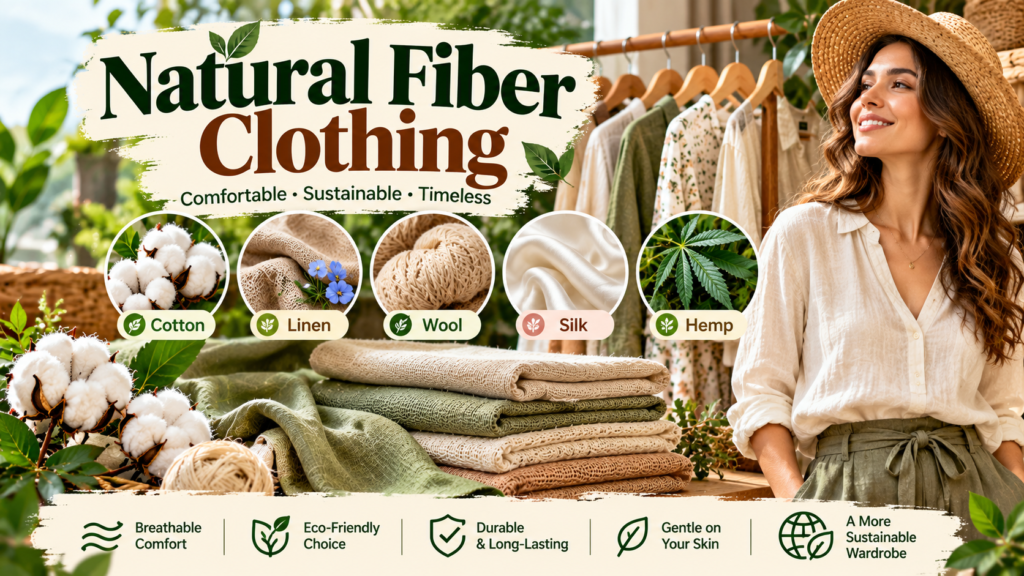
Natural fiber clothing is becoming a popular choice for people who want comfortable, breathable, and versatile fabrics for everyday wear. Made from materials obtained from plants or animals, natural fibers include cotton, linen, wool, silk, and hemp. These materials have different textures, properties, and care requirements, making them suitable for everything from summer outfits to warm winter clothing. Understanding their benefits can help you choose garments that fit your lifestyle, personal style, and sustainability goals.
What Is Natural Fiber Clothing?
Natural fiber clothing refers to garments made wholly or partly from fibers that come from natural sources. Plant-based fibers are obtained from materials such as cotton plants, flax, and hemp, while animal-based fibers include wool and silk.
Unlike synthetic fibers such as polyester and acrylic, natural fibers originate from biological sources. However, their environmental impact depends on how they are grown or produced, processed, dyed, transported, and eventually discarded.
Some garments contain 100% natural fibers, while others combine natural and synthetic materials to improve durability, stretch, or wrinkle resistance. Checking the fabric label is the easiest way to understand what your clothing contains.
If you want to explore more fabric choices, read our guide to natural clothing to learn about natural materials and everyday clothing options.
1. Cotton: A Comfortable Everyday Fabric
Cotton is one of the most widely used natural fibers in the clothing industry. It is valued for its softness, versatility, and ability to absorb moisture.
Cotton clothing is available in many forms, including T-shirts, shirts, dresses, underwear, pajamas, and casual trousers. Lightweight cotton fabrics are particularly popular in warm weather because they feel comfortable against the skin.
However, cotton can retain moisture and may take time to dry. Conventional cotton production can also require significant amounts of water and agricultural chemicals, depending on the growing conditions and farming methods.
Best for: Everyday outfits, casual wear, sleepwear, and lightweight summer clothing.
2. Linen: A Practical Choice for Warm Weather
Linen is made from the fibers of the flax plant. Its distinctive texture, lightweight feel, and natural breathability make it a popular fabric for spring and summer wardrobes.
Linen shirts, trousers, dresses, and suits are often chosen for warm climates because the fabric allows air to circulate and can help moisture evaporate. Linen is also known for its strength and characteristic creases, which give it a relaxed appearance.
One consideration is that linen wrinkles more easily than many synthetic fabrics. Some people appreciate this natural texture, while others prefer linen blends that wrinkle less.
Best for: Summer shirts, loose-fitting trousers, dresses, and relaxed formal outfits.
3. Wool: Natural Warmth for Cooler Weather
Wool is an animal-based natural fiber commonly obtained from sheep. Its structure helps trap air, providing insulation that makes wool useful for colder conditions.
Wool is used in sweaters, coats, scarves, suits, socks, and other winter garments. Certain wool fabrics can also help manage moisture, although their comfort depends on the fiber type, yarn construction, and garment design.
Merino wool is especially popular for its relatively fine fibers, which can feel softer than traditional coarse wool. Nevertheless, some people find wool irritating, and delicate garments may require careful washing to prevent shrinkage or felting.
Best for: Winter clothing, warm layers, sweaters, and cold-weather accessories.
4. Silk: A Smooth and Elegant Natural Fiber
Silk is a natural protein fiber produced by silkworms. It is known for its smooth texture, lightweight feel, and distinctive sheen.
Silk is commonly used in blouses, dresses, scarves, sleepwear, and special-occasion clothing. Its ability to drape elegantly makes it a popular option for garments that require a fluid, refined appearance.
However, silk can be more expensive than many everyday fabrics. Some silk garments are sensitive to sunlight, friction, and certain cleaning methods, so following the care label is important.
Because conventional silk production involves silkworms, shoppers who avoid animal-derived materials may prefer plant-based alternatives.
Best for: Elegant outfits, lightweight scarves, special occasions, and premium clothing.
5. Hemp: A Strong Plant-Based Fabric
Hemp fabric is produced from fibers obtained from the stalks of the hemp plant. It is valued for its strength and can develop a softer feel through processing and repeated wear.
Hemp clothing is available in shirts, trousers, jackets, dresses, and casual basics. Hemp plants can grow with relatively low pesticide requirements in suitable conditions, although environmental performance varies by location and farming practices.
Hemp fabrics may initially feel firmer or rougher than soft cotton, depending on how the fibers are processed. Blending hemp with cotton or other fibers can change the texture and drape.
Best for: Durable everyday clothing, casual styles, and shoppers interested in plant-based textiles.
6. Natural Fibers Can Offer Different Comfort Benefits
One important reason people choose natural fiber clothing is the variety of comfort characteristics these materials offer.
- Breathability: Linen and many lightweight cotton fabrics allow air to move through the fabric.
- Moisture absorption: Cotton and linen can absorb moisture, although they may become damp during heavy sweating.
- Insulation: Wool can help retain warmth in colder conditions.
- Softness: Fine cotton and silk can feel smooth against the skin, while fine wool may suit some people who dislike coarser fibers.
- Texture and appearance: Linen, wool, cotton, and silk each have distinctive finishes that suit different clothing styles.
Keep in mind that fiber content is only one factor. Fabric thickness, weave, knit structure, fit, and finishing treatments also affect comfort. A loose, lightweight garment may feel cooler than a thick garment made from the same fiber.
7. Natural Fiber Clothing Can Support More Thoughtful Fashion Choices
Choosing natural fibers can be one part of building a more considered wardrobe. Plant-based and animal-based fibers differ in how they are produced, and their environmental effects depend on several factors.
For example, organic cotton is grown according to organic agricultural standards, while conventional cotton may use different farming inputs. Linen and hemp may have useful environmental advantages under certain growing conditions, but processing and manufacturing still matter.
Natural does not automatically mean sustainable. Some natural fibers require considerable water, energy, land, or chemical processing. Similarly, a durable synthetic garment that is worn for many years may have a different overall impact from a short-lived natural-fiber garment.
To make more responsible choices, consider the entire garment rather than focusing on a single label.
8. How to Choose High-Quality Natural Fiber Clothing
Finding good-quality clothing involves more than checking whether a garment is made from natural materials. Use these practical tips before purchasing.
Check the Fabric Composition
Read the product label to see whether the garment contains cotton, linen, wool, silk, hemp, or a blend. A product described as cotton-rich may still contain polyester or elastane.
Examine the Fabric Construction
Look closely at the weave or knit. Check for loose seams, uneven stitching, weak buttons, and areas that appear likely to wear out quickly.
Consider Your Climate
Lightweight cotton and linen can be practical for hot weather, while wool and heavier fabrics are useful for cooler conditions. In humid climates, consider garment weight, ventilation, fit, and how quickly the material dries.
Choose the Right Fit
Loose-fitting garments may provide better airflow, while fitted clothing can be suitable for layering. The best fit depends on the garment, activity, and your personal preference.
Read the Care Instructions
Some natural fabrics are machine washable, while others require gentle washing, low-temperature drying, or professional cleaning. Choose clothing that you can realistically maintain.
Prioritize Durability
A well-constructed garment that lasts for years can offer better value than a cheaper item that quickly loses its shape. Look for sturdy seams, reliable closures, and fabric appropriate for the intended use.
9. How to Care for Natural Fiber Clothing
Proper care can help extend the life of your clothes and reduce unnecessary replacement.
Wash according to the label: Cotton, linen, wool, and silk do not all respond to washing in the same way. Use the recommended temperature and cycle.
Avoid excessive washing: Airing garments between wears may be enough when they are not visibly dirty or sweaty.
Use gentle methods for delicate fabrics: Wool and silk may need specialized detergents or gentle cleaning methods. Always follow the garment’s instructions.
Dry carefully: High heat can shrink some fabrics or damage delicate fibers. Air-drying is often a useful option when the care label permits it.
Store clothing properly: Keep garments clean and dry. Fold heavy knitwear to reduce stretching, and protect wool items from clothes moths.
Repair small problems early: Replacing a button, fixing a loose seam, or repairing a small tear can help keep a garment wearable for longer.
These habits can save money over time while helping you get more use out of your existing wardrobe.
Natural Fiber Clothing vs. Synthetic Clothing
Both natural and synthetic fabrics have advantages, and the right choice depends on how you plan to use a garment.
| Feature | Natural Fibers | Synthetic Fibers |
|---|---|---|
| Common examples | Cotton, linen, wool, silk, hemp | Polyester, nylon, acrylic |
| Comfort | Varies by fiber and construction | Varies by fiber and construction |
| Moisture behavior | Some absorb moisture readily | Many absorb little moisture, although some are engineered to wick it |
| Durability | Depends on the fiber and garment | Often durable, depending on the material |
| Care requirements | Range from easy-care to delicate | Many are easy to wash, but care varies |
| Environmental impact | Depends on sourcing, processing, use, and disposal | Depends on production, durability, shedding, and disposal |
Neither category is automatically superior in every situation. A useful approach is to select a fabric that performs well for its intended purpose and to choose garments that you will wear regularly.
Are Natural Fibers Always Better for the Environment?
Natural fibers can be a good option, but their environmental benefits depend on how they are produced and used. Cotton farming may involve substantial water use, wool production has land-use and animal-related considerations, and silk production involves animal-derived materials.
Synthetic fabrics, meanwhile, are generally made from manufactured polymers and can release microplastic fibers during washing. Natural fibers may also shed fibers, and their biodegradability depends on dyes, finishes, blends, and disposal conditions.
Shoppers can make more informed choices by looking for credible certification, transparent sourcing, durable construction, and clear information about fabric composition. Buying fewer, better-used garments and repairing clothes when possible are also practical steps toward reducing textile waste.
To better understand textile materials and their environmental impact, explore Textile Exchange’s materials resources. You can also review the FTC Green Guides for guidance on environmental marketing claims.
Final Thoughts
Natural fiber clothing offers a wide range of choices for everyday comfort, personal style, and different weather conditions. Cotton is versatile, linen is well suited to many warm-weather outfits, wool provides insulation, silk offers an elegant finish, and hemp provides another strong plant-based option.
The best fabric depends on your needs, budget, climate, and preferences. Rather than assuming that every natural material is automatically sustainable, check the composition, assess the garment’s quality, and follow the care instructions.
With thoughtful shopping and proper maintenance, natural fiber clothing can become a useful and long-lasting part of a practical wardrobe.
Frequently Asked Questions
What is the best natural fiber for everyday clothing?
Cotton is a versatile choice for everyday clothing because it is available in many styles and weights. Linen is also useful for warm weather, while the best option ultimately depends on comfort and intended use.
Is natural fiber clothing good for summer?
Lightweight cotton and linen are popular summer fabrics because they can provide good airflow. Loose-fitting garments may improve comfort further, especially in hot weather.
Is natural fiber clothing sustainable?
It can be, but sustainability depends on farming or production methods, processing, garment durability, care, and disposal. Natural fiber content alone does not guarantee a lower environmental impact.
Which natural fibers are suitable for winter?
Wool is a common choice because it provides insulation. Cotton can also be used for layering, but its performance in cold, wet conditions differs from wool and other insulating materials.
How can I identify natural fiber clothing?
Check the garment’s fiber composition label. Look for materials such as cotton, linen, wool, silk, and hemp, and check whether the garment includes synthetic fibers in a blend.
Does natural fiber clothing cost more?
Not always. Basic cotton clothing can be affordable, while premium linen, fine wool, and silk garments may cost more. Quality, brand, construction, and sourcing all influence the price.