
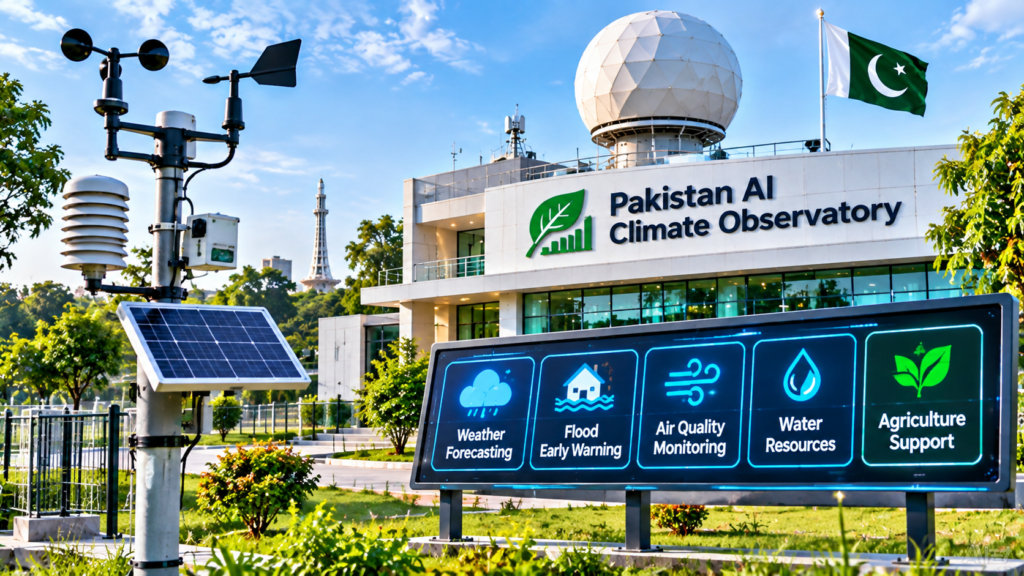
Pakistan is taking an important step towards modern climate monitoring with the development of the Pakistan AI climate observatory in Lahore. The Punjab government is building a dedicated facility designed to monitor air quality, water, soil and weather conditions using an artificial intelligence-powered climate intelligence system.
The Pakistan AI climate observatory initiative could mark an important development in the country’s approach to climate research and environmental protection.
Punjab Chief Minister Maryam Nawaz Sharif highlighted the project on November 15, 2026, describing it as Pakistan’s first facility of its kind. The observatory is expected to strengthen weather forecasting, improve flood predictions and support better preparation for climate-related emergencies.
The initiative comes at a time when Pakistan is facing growing environmental challenges, including extreme rainfall, flooding, rising temperatures, water shortages and dangerous air pollution.
But how will this new facility work, and what difference could it make to people’s everyday lives?
Let’s take a closer look.
What Is Pakistan’s AI Climate Observatory?
The Punjab Climate Observatory is an under-construction environmental monitoring and research facility in Lahore.
Its main purpose is to bring important environmental information together in one place. Instead of treating air pollution, water conditions, soil health and weather patterns as completely separate issues, the centre aims to connect these areas through a modern climate intelligence system.
According to the government’s announcement, artificial intelligence will play a central role in analysing environmental information and supporting more effective forecasting.
The facility is also expected to include environmental data resources, specialised research laboratories and learning opportunities for young climate scientists.
The project received approval in May 2025 after officials reviewed its feasibility, including budget requirements, equipment procurement and land acquisition. The University of Engineering and Technology (UET) Lahore also submitted a technical report on the project.
Construction is now underway, although a confirmed opening date has not yet been announced.
The Radio Pakistan report on the Punjab Climate Observatory explains its expected role in climate forecasting and disaster preparedness.
7 Ways Pakistan AI Climate Observatory Could Transform Weather Forecasting
1. Better Weather Forecasting
The Pakistan AI climate observatory could help researchers analyse weather information more effectively by combining different environmental data sources.
Accurate weather information can make a major difference for millions of people.
Traditional forecasting relies on weather observations, satellite information, atmospheric measurements and computer-based models. AI can help analyse large amounts of this information and identify patterns that might otherwise be difficult to detect.
The new observatory is expected to strengthen this process by combining environmental information through an advanced climate intelligence system.
More reliable forecasts could help people prepare for heavy rainfall, heatwaves, storms and changing weather conditions.
For another update on changing weather conditions, read our report on the Pakistan Weather Alert for November 12–14, 2026.

2. Earlier Flood Warnings
Through improved environmental monitoring, the Pakistan AI climate observatory could support authorities in identifying potential flood risks and preparing timely warnings.
Flooding remains one of Pakistan’s most serious climate-related challenges.
Heavy monsoon rainfall, overflowing rivers and sudden changes in weather can create dangerous situations for communities, particularly in vulnerable areas.
The Punjab Climate Observatory is expected to support flood forecasting and early warning systems.
By analysing weather and environmental information, AI-based systems could help authorities identify potential risks earlier and improve emergency planning.
However, effective flood warnings will also depend on reliable monitoring networks, accurate forecasts and timely communication with affected communities.
3. Real-Time Air Quality Monitoring
The Pakistan AI climate observatory is also expected to strengthen environmental research by helping scientists understand air pollution patterns and changing atmospheric conditions.
Air pollution is another major concern, particularly during winter.

Cities such as Lahore frequently experience severe smog, which affects visibility and makes outdoor activities difficult.
The observatory is expected to monitor air quality and help authorities understand changing pollution conditions.
AI could assist in analysing pollution data, identifying patterns and supporting predictions about worsening air quality.
This information may help government departments plan environmental measures and communicate pollution risks more effectively.
4. Improved Water Resource Management
The Pakistan AI climate observatory could help researchers study changing water conditions and identify environmental patterns that affect water availability.
Water availability is becoming increasingly important for Pakistan’s growing population and agricultural sector.
Changing rainfall patterns, groundwater pressure and inefficient water management create additional challenges.
The observatory is expected to monitor water conditions and provide environmental information that can support better planning.
With AI-assisted analysis, authorities may be able to identify changing water patterns and improve decisions about conservation and resource management.
This could become particularly valuable during periods of drought or unusually low rainfall.
5. Better Support for Farmers and Agriculture
Agriculture is an essential part of Pakistan’s economy, and millions of people depend on farming for their livelihoods.
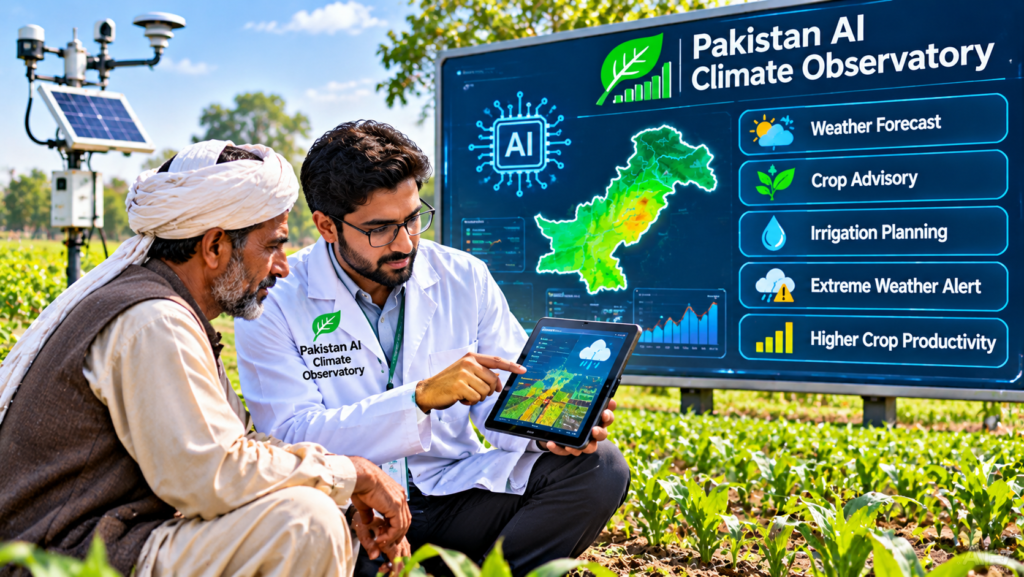
Unpredictable weather can damage crops, reduce agricultural production and increase financial pressure on farmers.
Improved weather information could help farmers make better decisions about planting, irrigation and harvesting.
For example, earlier warnings about heavy rainfall could give farmers more time to protect crops and agricultural equipment.
The observatory’s environmental monitoring capabilities are also expected to support climate-resilient agriculture.
6. New Opportunities for Young Climate Scientists
The Pakistan AI climate observatory could also encourage young researchers to explore artificial intelligence, climate science and environmental data analysis.
Pakistan needs skilled researchers who can understand environmental changes and develop practical solutions.
The planned observatory will include research facilities and specialised laboratories intended to provide learning opportunities for young climate scientists.
Students and researchers could benefit from access to environmental information, scientific equipment and opportunities for collaboration.
The project also aims to encourage international scientific partnerships, which could help strengthen Pakistan’s climate research capabilities.
7. Stronger Preparation for Climate Emergencies
Climate-related disasters can affect homes, roads, businesses, agriculture and essential public services.
Preparing before an emergency is often more effective than responding after damage has already occurred.
The observatory is expected to support disaster preparedness by improving access to environmental information and strengthening early warning capabilities.
Government departments could use this information to plan emergency responses, identify vulnerable areas and make more informed decisions.
Over time, better climate intelligence could contribute to stronger disaster resilience across Punjab and potentially support wider national climate planning.
Why Does Pakistan Need an AI Climate Observatory?
The Pakistan AI climate observatory is designed to bring different environmental monitoring activities together through a modern technology-based approach.
For the Pakistan AI climate observatory to deliver meaningful results, consistent funding, reliable data and skilled technical professionals will be essential.
Pakistan is particularly vulnerable to climate-related risks.
The country experiences extreme weather conditions, including intense monsoon rainfall, heatwaves, droughts and flooding. Environmental pressures also affect agriculture, water resources and public health.
These challenges require more than short-term emergency responses.
Governments need reliable information to understand changing environmental conditions, identify potential risks and develop long-term strategies.
An AI-powered climate observatory could help bring different types of environmental information together, making it easier for researchers and policymakers to study these challenges.
The real benefit will depend on how effectively the facility collects, analyses and shares accurate information.
Pakistan is also working to strengthen its position in international climate discussions. Read our related report on Pakistan at COP31 2026: Shehbaz Sharif’s Climate Finance Push and What’s Coming Next.
What Is the Current Status of the Punjab Climate Observatory?
The Punjab Climate Observatory project was approved in May 2025 following a review of its feasibility and technical requirements.
The University of Engineering and Technology Lahore also contributed a technical assessment.
In June 2025, the chief minister directed relevant authorities to accelerate work on the facility.
On November 15, 2026, Maryam Nawaz shared an update highlighting construction progress and the project’s expected role in climate monitoring and research.
As of November 16, 2026, the facility is under construction. An official opening date and full operational timeline have not been confirmed in the reports reviewed for this article.
This means its proposed benefits should be understood as future capabilities rather than services that are already fully available.
Challenges That Could Determine the Project’s Success
Although the initiative has significant potential, building an advanced facility is only the beginning.
Several factors will determine whether it delivers meaningful results.
Reliable environmental data: AI systems need accurate information. Poor-quality measurements can lead to misleading forecasts.
Modern monitoring equipment: Sensors and monitoring stations must be properly installed, maintained and regularly calibrated.
Skilled professionals: Experienced scientists, engineers and data specialists will be necessary to operate the facility effectively.
Public access to information: Sharing useful environmental information could help researchers, universities, journalists and ordinary citizens understand climate risks.
Long-term funding: Equipment maintenance, software improvements and scientific research require continued financial support.
Addressing these challenges will be essential if the observatory is to become a trusted source of climate intelligence.
Read this analysis of Pakistan’s planned AI climate observatory for further discussion of data accuracy, transparency and long-term maintenance.
What Could This Mean for Pakistan’s Future?
In the long term, the Pakistan AI climate observatory could become a valuable resource for climate researchers, policymakers and environmental experts across the country.
The Punjab Climate Observatory represents an important opportunity to strengthen Pakistan’s environmental research and monitoring capabilities.
If successfully developed and operated, it could help improve weather forecasting, support flood preparedness, monitor air pollution and provide valuable information for agricultural and water management decisions.
It could also create opportunities for young scientists and encourage cooperation with international research institutions.
However, the project’s success should ultimately be measured by practical results: more reliable forecasts, timely warnings, better environmental information and stronger protection for vulnerable communities.
For Pakistan, where climate-related challenges affect millions of people, investing in scientific research and modern monitoring technology could become an important part of long-term national planning.
Frequently Asked Questions (FAQs)
1. What is Pakistan’s AI Climate Observatory?
The Punjab Climate Observatory is an under-construction facility in Lahore designed to monitor air quality, water, soil and weather conditions using an artificial intelligence-powered climate intelligence system.
2. Where is the Punjab Climate Observatory being built?
The observatory is being developed in Lahore, Punjab, Pakistan.
3. Who announced the AI Climate Observatory project?
Punjab Chief Minister Maryam Nawaz Sharif highlighted the project and its expected benefits in a statement shared on November 15, 2026.
4. How will artificial intelligence help weather forecasting?
AI can analyse large amounts of environmental and weather information to identify patterns, support forecasting and help improve early warning systems.
5. Will the observatory help predict floods?
The facility is expected to support flood forecasting and early warning capabilities, helping authorities improve preparation for potential flooding.
6. Is the Punjab Climate Observatory operational?
As of November 16, 2026, the facility is under construction. A confirmed opening date has not been announced in the reports reviewed.
7. Will students and researchers benefit from this project?
Yes. The planned facility includes research resources and specialised laboratories intended to provide learning and research opportunities for young climate scientists.
Final Thoughts
Pakistan’s AI-powered climate observatory could become an important addition to the country’s environmental research infrastructure.
Its planned combination of artificial intelligence, real-time environmental monitoring and scientific research offers opportunities to improve climate preparedness.
But technology alone cannot solve every environmental problem. Accurate data, qualified researchers, proper maintenance and effective government action will all be necessary.
If these elements come together, the Punjab Climate Observatory could help Pakistan make better-informed decisions and prepare more effectively for the climate challenges ahead.