Pakistan’s mineral sector has received fresh attention after two major exploration developments in Balochistan’s Chagai district. The latest Pakistan gold and copper discoveries announced by Mari Energies Limited and National Resources Limited (NRL) have highlighted the region’s potential as an important mineral exploration area.
The announcements were made during the Pakistan Minerals Investment Forum 2026, where companies shared encouraging results from their exploration programmes. Mari Energies reported a copper-gold discovery at East Siah Diq, while NRL identified copper and gold mineralisation across eight sites in Chagai.
These developments could create new opportunities for Pakistan’s mining industry, attract investment and support future industrial growth. However, further exploration, technical assessments and formal resource estimates will be necessary before the commercial value of these discoveries can be established.
The latest Pakistan gold and copper discoveries have increased interest in Balochistan’s geological potential and future mining opportunities.
What Are the Latest Pakistan Gold and Copper Discoveries?
Two companies have announced important exploration results in Balochistan.
Mari Energies Limited announced a significant copper-gold discovery at the East Siah Diq (ESD-1) target through its wholly owned subsidiary, Mari Minerals.
Meanwhile, National Resources Limited reported copper and gold mineralisation at eight sites in Chagai district after completing approximately 25,000 metres of exploration drilling.
Both developments are significant because they add to the growing exploration activity in one of Pakistan’s best-known mineral-rich regions.
The announcements also demonstrate increasing interest in identifying and evaluating mineral resources beyond existing major mining projects.
The Pakistan gold and copper discoveries are attracting attention from investors interested in the country’s growing mineral exploration sector.
Mari Energies Announces Copper-Gold Discovery Near Reko Diq
Mari Energies Limited announced its discovery at the East Siah Diq target in Chagai district, Balochistan.
The discovery was made through Mari Minerals, the company’s wholly owned subsidiary responsible for its mineral exploration activities.
The East Siah Diq site is located approximately 50 kilometres east of the Reko Diq copper-gold mine development project and around 25 kilometres northwest of Nokkundi in the Koh-i-Sultan area.
According to the company’s disclosure to the Pakistan Stock Exchange, approximately 25,000 metres of exploration drilling have been completed in two phases.
The drilling identified porphyry copper-style mineralisation beneath approximately 100 metres of overburden, across an area of around 1.4 square kilometres.
This finding is an important milestone for the company’s exploration programme. However, additional drilling, laboratory analysis, geological interpretation and technical studies will be required to determine the discovery’s actual scale and development potential.
The company has also stated that laboratory analysis of samples from the second drilling phase is ongoing, with results expected during the first quarter of 2027.
These Pakistan gold and copper discoveries could encourage further exploration around the mineral-rich areas of Chagai district.
National Resources Limited Reports Discoveries at Eight Sites
Another important development came from National Resources Limited.
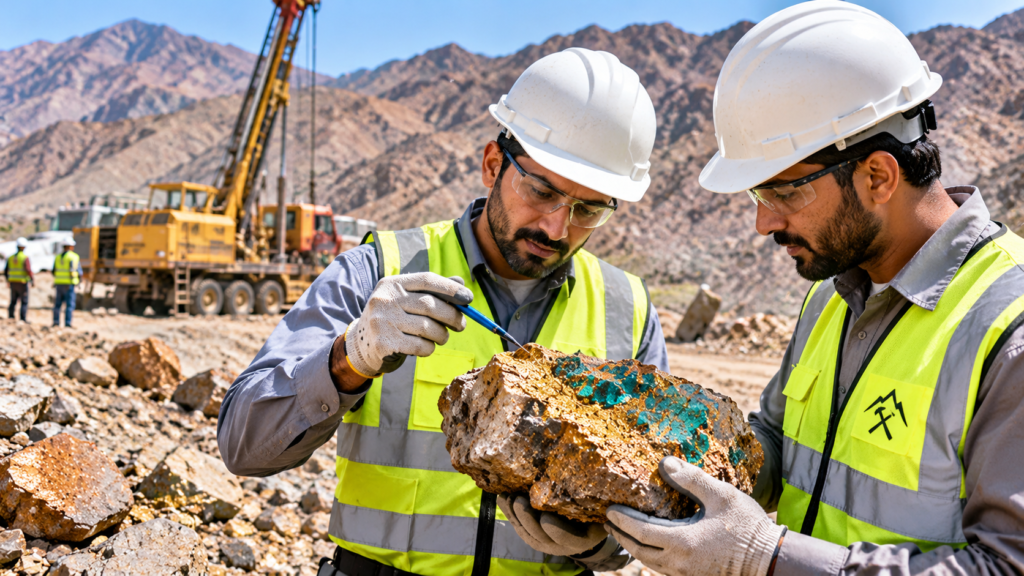
The company announced copper and gold mineralisation across at least eight exploration sites in Chagai district following nearly 25,000 metres of drilling.
One of its drill holes identified a 295-metre interval containing an average of 0.43% copper and 0.13 grams of gold per tonne.
Within that interval, a 132-metre section recorded a higher copper concentration of 0.83%.
The reported discoveries cover approximately 5.6 square kilometres in Darigwan, adjoining the company’s earlier Tang Kaur copper-gold discovery.
NRL is now working towards its first formal mineral resource estimate. The company has indicated that further exploration and assessment will be necessary before the size and economic significance of the deposits can be established.
This distinction is important: encouraging drilling results do not automatically mean that a commercially viable mine is ready for development.
The Pakistan gold and copper discoveries reported by NRL provide additional information about the region’s mineral exploration potential.
Why Is Chagai District Important for Pakistan’s Mining Industry?
Chagai district is located in Balochistan and has attracted considerable attention because of its geological potential.
The region is associated with copper and gold exploration projects, including the well-known Reko Diq development.
Its mineral potential could support Pakistan’s efforts to expand domestic mining, develop industrial supply chains and attract international investment.
Copper is particularly important for modern industries because it is widely used in electrical equipment, power infrastructure, construction, manufacturing and renewable energy technologies.
Gold also has significant industrial, financial and commercial applications.
If exploration projects eventually establish economically viable resources, they could contribute to a wider mining and processing industry in Pakistan.
However, geological potential must be supported by reliable resource estimates, feasibility studies, financing, infrastructure and responsible project development.
What Is Reko Diq and Why Does It Matter?
Reko Diq is one of Pakistan’s most significant copper-gold development projects.
Located in Balochistan’s Chagai district, the project is being developed as a major mining operation with the potential to support exports, investment and industrial activity.
The government has previously highlighted its importance for Pakistan’s future mineral economy.
The latest East Siah Diq discovery is located approximately 50 kilometres east of the Reko Diq project. Its geographical proximity has attracted attention, although it remains a separate exploration target.
Reko Diq also demonstrates the scale of planning and investment required to develop a major mining project.
Exploration is only the beginning. Companies must establish the resource size, evaluate extraction methods, assess environmental impacts and demonstrate that a project can operate commercially.
The latest Pakistan gold and copper discoveries have also drawn attention to the wider mineral potential surrounding the Reko Diq region.
How Could the New Discoveries Benefit Pakistan’s Economy?

The latest Pakistan gold and copper discoveries could create several opportunities if further studies confirm commercially viable mineral resources.
The government has also invited international investors to participate in Pakistan’s mineral sector, with greater emphasis on domestic processing, refining and value addition.
1. Attracting Foreign and Local Investment
Mining projects require substantial investment in exploration, equipment, engineering, infrastructure and processing facilities.
Successful exploration results may encourage domestic and international companies to examine additional opportunities in Pakistan.
The Pakistan Minerals Investment Forum 2026 also provided a platform for companies and investors to discuss partnerships in the country’s mineral sector.
2. Creating Employment Opportunities
Mining projects can create jobs at different stages of development.
These may include opportunities for:
- Geologists and mining engineers
- Drilling and exploration specialists
- Laboratory technicians
- Construction workers
- Equipment operators
- Environmental professionals
- Transport and logistics companies
Local employment and professional training will be especially important for communities in Balochistan.
These Pakistan gold and copper discoveries may also encourage new training programmes and technical employment opportunities for local workers.
3. Supporting Industrial Development
Pakistan could gain greater economic value by developing domestic mineral processing facilities instead of relying only on the export of unprocessed materials.
Copper processing, refining and related manufacturing activities could support industries involved in electrical equipment, cables, construction materials and energy infrastructure.
This approach could help create a more integrated mineral value chain.
4. Increasing Export Potential
If future studies establish commercially recoverable deposits and projects become operational, mineral production could contribute to Pakistan’s export earnings.
Copper and gold are internationally traded commodities, and responsible development could help diversify the country’s export base.
However, export revenue would depend on production costs, international prices, processing capacity and the final scale of each project.
Stronger regional economic partnerships can also support Pakistan’s future export ambitions. Read our coverage of [Pakistan’s regional trade opportunities] through the ECO Summit 2026.
5. Developing Local Expertise
Exploration and mining projects can provide opportunities for Pakistani universities, researchers, contractors and technical professionals.
NRL has also announced work with Lahore University of Management Sciences (LUMS) on a predictive artificial intelligence model intended to support mineral exploration.
Such partnerships could help strengthen geological research and develop local technical capabilities.
If commercially viable resources are established, Pakistan gold and copper discoveries could become an important part of the country’s long-term economic development.
Pakistan’s $100 Million Mineral Exploration Commitment
National Resources Limited has reaffirmed its previously announced commitment of $100 million towards mineral exploration in Pakistan.
The Pakistan Minerals Investment Forum 2026 also brought together international mining companies and investors to explore new opportunities in the country’s mineral sector.
The company is a joint venture involving Fatima Fertiliser, Liberty Mills and Lucky Cement.
Its exploration portfolio in Balochistan includes copper-gold, lead-zinc and antimony projects.
NRL’s exploration activities are important because mineral development requires long-term investment before a project can reach the production stage.
The company’s latest drilling results provide additional information about the region’s geological potential.
However, the next stage will involve formal resource estimation and technical assessment to understand whether the discoveries can support future mining operations.
What Happens Next for the Newly Discovered Deposits?
The latest exploration announcements are an important starting point, but several steps remain before commercial mining can be considered.
Further Exploration and Drilling
Companies may need additional drilling to understand the depth, size and continuity of mineralisation.
More geological information can help determine whether the identified deposits extend beyond the areas already explored.
Further drilling will help determine the geological extent and potential value of the Pakistan gold and copper discoveries.
Laboratory Testing and Resource Estimation
Samples must undergo laboratory analysis to establish their mineral content and quality.
Companies also need formal resource estimates prepared according to recognised international reporting standards.
These assessments help investors understand the potential scale of a mineral project.
Environmental and Technical Studies
NRL plans to begin environmental, hydrogeological, metallurgical and geotechnical studies in 2027.
These studies will help evaluate water resources, environmental conditions, processing requirements and the technical feasibility of future development.
The company aims to complete a bankable feasibility study by the end of the decade.
Investment and Project Development
Even when a deposit is confirmed, developing a mine requires financing, infrastructure, regulatory approvals, security arrangements and long-term planning.
The companies will need to demonstrate that future projects can operate safely, responsibly and commercially.
Environmental and Community Responsibilities
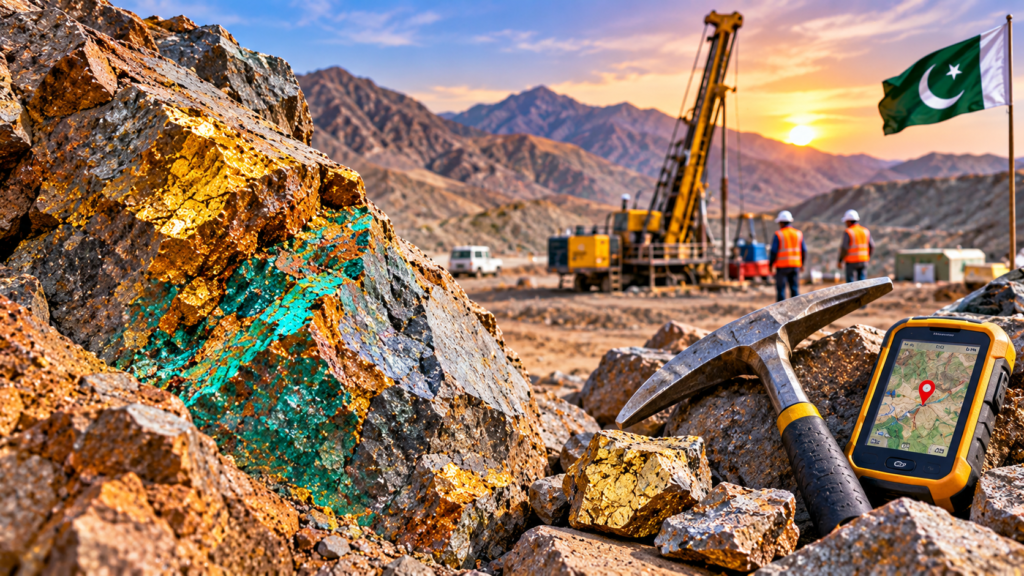
Mineral exploration and mining can bring economic opportunities, but they also create responsibilities.
Mining activities also require effective regulation and oversight. Read our report on the [Kohat attack and illegal gold mining] to understand the security challenges associated with illegal mining activities.
Balochistan’s water resources, local communities and natural environment must be considered throughout project development.
Responsible mining requires careful water management, environmental monitoring, worker safety and transparent engagement with communities.
Local people should also benefit from employment, education, training, infrastructure and business opportunities.
The long-term success of Pakistan’s mineral industry will depend not only on the value of underground resources but also on how fairly and responsibly those resources are developed.
What Do the Latest Discoveries Mean for Pakistan’s Future?
The new exploration results have strengthened interest in Balochistan’s copper and gold potential.
Mari Energies’ East Siah Diq discovery and NRL’s findings across eight Chagai sites demonstrate that exploration activity is continuing in the region.
For Pakistan, the opportunity extends beyond identifying mineral deposits. The country needs investment in modern technology, skilled workers, processing facilities, transport infrastructure and responsible mining practices.
The government and private sector will also need to maintain transparent policies and provide a stable environment for long-term investment.
The coming years will be important as companies complete additional exploration and technical assessments.
Frequently Asked Questions (FAQs)
1. Where were the latest gold and copper discoveries announced in Pakistan?
The latest discoveries were announced in Chagai district, Balochistan. Mari Energies reported a discovery at East Siah Diq, while National Resources Limited identified mineralisation across eight exploration sites.
2. Which companies announced the new discoveries?
Mari Energies Limited, through its subsidiary Mari Minerals, announced the East Siah Diq discovery. National Resources Limited reported copper and gold mineralisation at eight sites in Chagai.
3. How far is the East Siah Diq discovery from Reko Diq?
The East Siah Diq exploration target is located approximately 50 kilometres east of the Reko Diq copper-gold mine development project.
4. How much drilling has been completed at East Siah Diq?
Mari Minerals reported approximately 25,000 metres of exploration drilling in two phases.
5. What did National Resources Limited discover?
NRL reported copper and gold mineralisation across at least eight sites in Chagai. One drill hole recorded a 295-metre mineralised interval containing 0.43% copper and 0.13 grams of gold per tonne.
6. Does this mean Pakistan has confirmed new commercial gold reserves?
No. The reported results indicate encouraging mineralisation, but formal resource estimates and additional technical assessments are still required to establish the size and commercial potential of the deposits.
7. When will further results from Mari Energies’ exploration be available?
The company indicated that laboratory analysis of samples from the second drilling phase is expected to be completed during the first quarter of 2027.
8. How could these discoveries benefit Pakistan?
If future studies establish commercially viable resources, the projects could support investment, employment, mineral processing, industrial development and export opportunities.
9. What is National Resources Limited’s exploration investment commitment?
NRL has reaffirmed its previously announced commitment of $100 million towards mineral exploration in Pakistan.
10. When could the new discoveries become operational mines?
No confirmed production date has been announced for these newly reported exploration targets. Further drilling, resource estimation, feasibility studies, approvals and investment decisions are required before mining can begin.
Conclusion
The latest Pakistan gold and copper discoveries in Balochistan have created fresh interest in the country’s mineral potential.
For Pakistan, these gold and copper exploration results represent a promising opportunity, although further technical work is still needed.
Mari Energies’ East Siah Diq discovery and National Resources Limited’s exploration results across eight sites in Chagai represent important developments for Pakistan’s mining sector.
However, the real economic value of these discoveries will depend on further exploration, formal resource estimates, feasibility studies and responsible project development.
If these efforts succeed, Balochistan could play an increasingly important role in Pakistan’s future mining and industrial growth.
The future success of Pakistan gold and copper discoveries will depend on transparent resource assessments, investment and responsible mining practices.
For now, the discoveries offer encouraging exploration results rather than confirmed commercial reserves. The next phase of technical work will determine how much of this potential can eventually be converted into sustainable economic value.