
Pakistan’s public debt remains one of the country’s most important economic challenges. New figures for the financial year ending June 2026 show that the country’s public and publicly guaranteed debt increased by approximately Rs6.2 trillion in one year, reaching Rs90.98 trillion.
The increase highlights the government’s continued reliance on borrowing to meet financial requirements, manage existing obligations and support public spending. However, the latest figures also reveal a more complicated picture: although the total debt increased in rupee terms, the debt-to-GDP ratio declined.
The latest Pakistan public debt figures have raised important questions about the country’s financial stability and long-term economic growth.
So, what caused Pakistan’s debt to rise? How much of it is domestic and external borrowing? And what could these figures mean for ordinary citizens, businesses and the wider economy?
Here is a closer look at the latest Pakistan public debt figures and their economic implications.
For more updates on Pakistan’s economy, business developments and financial news, visit NuvWire Business News.
Pakistan Public Debt: Latest Figures for 2026

According to the Ministry of Finance’s Debt Sustainability Analysis for FY2027–FY2029, Pakistan’s public and publicly guaranteed debt reached Rs90.98 trillion by the end of June 2026.
This compares with approximately Rs84.8 trillion at the end of June 2025.
The key figures are:
| Indicator | Latest Reported Figure |
|---|---|
| Public and publicly guaranteed debt | Rs90.98 trillion |
| Previous year’s figure | Rs84.8 trillion |
| Annual increase | Rs6.2 trillion |
| Annual growth | Approximately 7.3% |
| Public debt alone | Rs86.7 trillion |
| Publicly guaranteed debt | Rs4.28 trillion |
| PPG debt-to-GDP ratio | Approximately 72% |
It is important to understand that public debt and public and publicly guaranteed debt are not exactly the same measure. Public debt alone stood at Rs86.7 trillion, while the broader figure of Rs90.98 trillion also includes government-guaranteed obligations.
This distinction matters when comparing economic reports because different publications may use different debt definitions.
According to the Ministry of Finance’s Debt Sustainability Analysis Report, Pakistan’s public and publicly guaranteed debt reached Rs90.98 trillion by June 2026. The increase in Pakistan public debt shows why careful borrowing and responsible financial planning remain important.
Why Is Pakistan’s Debt Increasing?
There is no single reason behind the increase in Pakistan’s debt. Government borrowing is influenced by several financial pressures, including budget deficits, interest payments, development spending and the need to repay existing loans.
The rise in Pakistan public debt reflects the financial challenges facing the country and the need for sustainable economic policies.
When government revenue is insufficient to cover expenditure and debt obligations, borrowing becomes one way to manage the gap.
Several factors help explain the latest figures.
1. Government Borrowing to Finance Expenditure
The government needs funds to operate public institutions, maintain infrastructure, finance development projects and meet other national expenses.
When tax and non-tax revenues are not enough to cover these requirements, the government may borrow from domestic or international sources.
2. Interest Payments on Existing Loans
Interest payments are a major part of Pakistan’s fiscal burden. A significant amount of government revenue is used to service existing debt rather than finance new public services or development projects.
However, there was an improvement in FY2026: reported federal interest payments declined to approximately Rs6.95 trillion from Rs8.88 trillion in FY2025.
This reduction helped ease some pressure on the federal budget.
3. Changes in Interest Rates
Domestic government borrowing includes instruments with different interest-rate structures. When rates change, the cost of servicing floating-rate debt can also change.
The maturity and refinancing structure of government borrowing therefore play an important role in determining future financial pressure.
4. External Financing and Currency Movements
Pakistan also borrows from international lenders and other external sources. Changes in the exchange rate can affect the rupee value of foreign-currency obligations.
A weaker rupee can make external debt more expensive when measured in local currency, even if the amount owed in foreign currency has not changed.
Domestic and External Debt: Where Does Pakistan Stand?
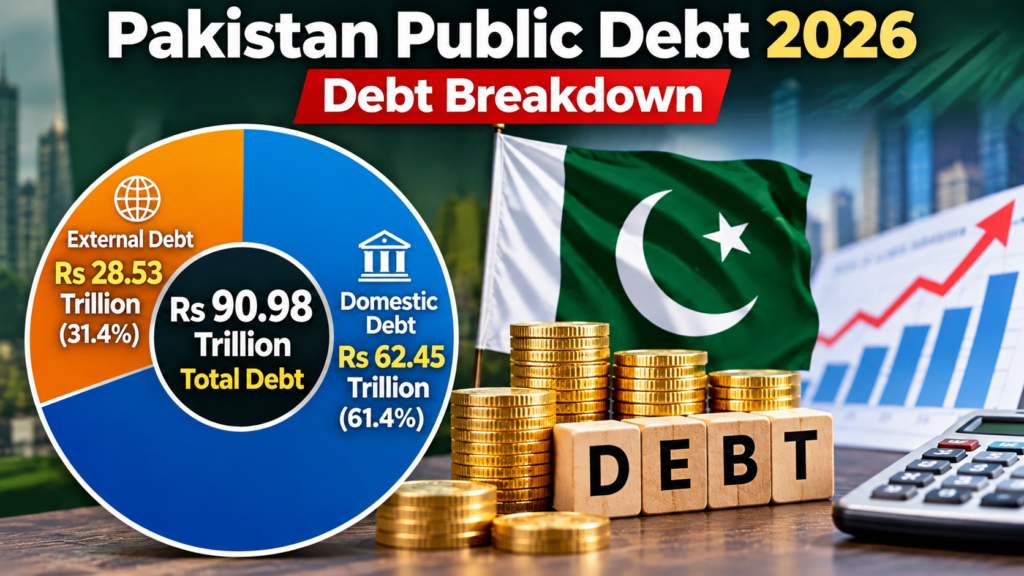
Pakistan’s borrowing is divided between domestic and external sources. Understanding this breakdown helps explain where the country’s financial obligations are concentrated.
According to the reported FY2026 figures, public debt alone was approximately Rs86.7 trillion.
Its composition was:
| Debt Category | Amount |
|---|---|
| Domestic public debt | Rs59.4 trillion |
| External public debt | Rs27.3 trillion |
| Total public debt | Rs86.7 trillion |
Domestic borrowing represents the larger share of public debt. It includes government securities and other obligations raised within Pakistan.
External public debt consists of obligations owed to foreign creditors and international sources.
A larger domestic share can reduce direct exposure to exchange-rate movements compared with foreign-currency borrowing. However, it does not eliminate financial risks. Domestic borrowing can still put pressure on interest costs, government finances and the availability of funds for private businesses.
Pakistan public debt includes both domestic and external obligations, making debt management an important economic priority.
Why Did the Debt-to-GDP Ratio Decline?
One of the more interesting details in the latest report is that Pakistan’s debt increased in rupee terms while its debt-to-GDP ratio declined.
The public and publicly guaranteed debt-to-GDP ratio fell from approximately 74.3% in June 2025 to around 72% in June 2026.
This does not mean that the country borrowed less. Instead, the ratio compares the amount of debt with the total value of economic activity produced by the country.
If nominal GDP grows faster than the debt stock, the debt-to-GDP ratio can decline even when the total amount of debt increases.
In simple terms, the economy’s measured size increased relative to the debt burden.
However, a lower ratio does not automatically mean that debt is no longer a concern. The government’s ability to collect revenue, control spending and make timely payments remains essential.
How Could Rising Debt Affect Ordinary Pakistanis?
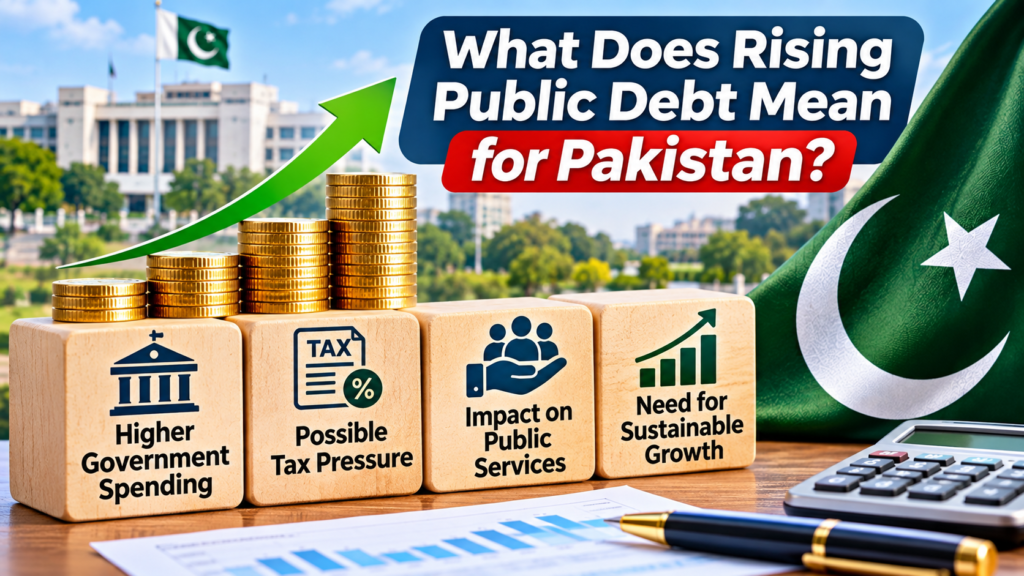
Government debt may sound like a distant financial issue, but its effects can reach households and businesses in several ways.
Pressure on the Government Budget
Large debt obligations can limit the money available for education, healthcare, infrastructure and other public services.
When a significant share of government revenue goes towards interest payments, fewer resources may remain for other priorities.
Taxes and Government Revenue
Governments may seek to increase revenue through tax reforms, improved tax collection or changes in existing tax policies.
These measures can affect individuals and businesses, depending on the type of taxes introduced or adjusted.
Interest Rates and Business Activity
Government borrowing from domestic financial markets can influence the availability and cost of financing.
If borrowing costs remain high, businesses may find it more expensive to finance expansion, purchase equipment or create new jobs.
Inflation and Economic Confidence
Debt alone does not automatically cause inflation. However, the way a government finances its spending and manages its financial obligations can influence economic stability, market confidence and currency expectations.
Responsible fiscal management is therefore important for protecting purchasing power and encouraging investment.
What Is the Government Doing to Manage Debt?
Pakistan’s debt management strategy involves controlling fiscal deficits, improving revenue collection and managing the structure of borrowing.
The government’s medium-term fiscal plans also aim to reduce the overall deficit gradually.
Several measures can support these objectives:
- Improving tax collection and broadening the tax base.
- Controlling unnecessary government expenditure.
- Maintaining a sustainable primary balance.
- Managing borrowing costs and repayment schedules.
- Encouraging exports and productive investment.
- Improving economic growth and government revenue.
A primary surplus occurs when government revenue exceeds expenditure before interest payments are included. Maintaining a sustainable primary surplus can help reduce the pressure created by existing debt.
However, lasting improvement requires consistent implementation rather than short-term financial adjustments.
Pakistan Public Debt Outlook: What Happens Next?
Pakistan’s future debt position will depend on several economic factors, including revenue growth, interest rates, exchange-rate stability, government spending and overall economic performance.
Rising Pakistan public debt can influence government spending, taxation and the country’s overall economic direction.
If economic activity improves and government revenue increases, the country may find it easier to manage its financial obligations.
On the other hand, weak revenue collection, higher borrowing costs or unexpected economic shocks could create additional pressure.
The key challenge is not simply to reduce borrowing. Pakistan also needs to ensure that borrowed money supports productive activities that strengthen the economy and generate future revenue.
Investments in infrastructure, energy, education, technology and export-oriented industries can contribute to long-term growth when planned and managed effectively. Managing Pakistan public debt effectively will require stronger revenue collection, sustainable growth and disciplined government spending.
Frequently Asked Questions (FAQs)
1. What is Pakistan’s total public debt in 2026?
Pakistan’s public debt alone reached approximately Rs86.7 trillion by the end of June 2026. The broader public and publicly guaranteed debt figure stood at Rs90.98 trillion.
2. Why did Pakistan’s debt increase by Rs6.2 trillion?
The increase reflects government borrowing and changes in outstanding financial obligations during FY2026. Budget financing needs, domestic borrowing and external financing all contribute to the overall debt position.
3. What is the difference between public debt and publicly guaranteed debt?
Public debt refers to government borrowing and obligations included in the official public debt measure. Publicly guaranteed debt includes certain obligations of other entities for which the government has provided a guarantee.
4. How much of Pakistan’s public debt is domestic?
Domestic public debt stood at approximately Rs59.4 trillion by the end of June 2026, making it the larger component of the country’s Rs86.7 trillion public debt.
5. How much is Pakistan’s external public debt?
External public debt was approximately Rs27.3 trillion at the end of June 2026, according to the reported figures.
6. Why did Pakistan’s debt-to-GDP ratio decline despite rising debt?
The ratio declined because nominal GDP grew relative to the increase in debt. A country can have a larger debt stock but a lower debt-to-GDP ratio if its nominal economic output increases sufficiently.
7. Does rising government debt directly increase inflation?
Not necessarily. Inflation depends on several factors, including monetary conditions, supply and demand, exchange rates and government financing decisions. Rising debt can create economic pressure, but it does not automatically cause higher prices.
8. How can Pakistan reduce its debt burden?
Pakistan can improve debt sustainability through stronger tax collection, responsible government spending, sustainable economic growth, lower fiscal deficits and effective debt management.
9. What are interest payments on government debt?
Interest payments are the costs the government pays to lenders for borrowing money. These payments are part of government expenditure and can reduce the funds available for other public priorities.
10. Why is Pakistan’s public debt important for the economy?
Public debt affects government finances, borrowing costs, economic confidence and the resources available for public services and development. Managing it responsibly is important for long-term economic stability.
Final Thoughts
Pakistan’s latest debt figures highlight both the scale of the country’s financial obligations and the importance of careful economic management.
The increase to Rs90.98 trillion in public and publicly guaranteed debt is significant, but the decline in the debt-to-GDP ratio and the reduction in reported interest payments offer additional context.
The real challenge is to make sure that borrowing supports economic development rather than creating a cycle of rising repayment obligations.
For Pakistan, stronger revenue collection, productive investment, disciplined spending and sustainable growth will be essential to managing debt over the coming years. The future of Pakistan public debt will depend on how successfully the government balances borrowing with economic development. Keeping Pakistan public debt under control will be essential for improving investor confidence and supporting long-term economic stability.
Stay connected with NuvWire for the latest Pakistan business news, economic updates and financial developments.