
Pakistan wheat price 2026 is an important topic for farmers, flour mill owners and consumers after the federal government announced a wheat support price of Rs4,500 per maund (40 kilograms). On October 26, 2026, Federal Minister for National Food Security and Research Rana Tanveer Hussain said the government had finalised the price after consultations with provincial governments. The announcement is part of the government’s wider plan to strengthen food security, support farmers and improve wheat market stability.
The latest Pakistan wheat price 2026 announcement is important for understanding the government’s approach to agricultural support. Farmers should review the announced rate alongside their production costs and confirm the applicable procurement rules in their province.
Pakistan Government Announces Rs4,500 Wheat Price
The federal government has announced a wheat support price of Rs4,500 per 40 kilograms. The decision follows Prime Minister Shehbaz Sharif’s earlier announcement of an indicative wheat price for 2027, which was Rs1,000 higher than the previous year’s reference price of Rs3,500 per maund.
The government says the new rate is intended to give farmers a clearer price signal before the next wheat season and encourage domestic cultivation.
However, readers should understand the difference between a support or indicative price and the retail price of wheat. The announcement does not mean that wheat or flour will cost Rs4,500 per maund in every local market. Actual market prices and procurement arrangements can vary.
Why Has the Government Increased the Wheat Support Price?
Farmers across Pakistan face production expenses that include seeds, fertilisers, diesel, electricity, irrigation, labour and machinery. When selling prices do not cover these expenses, farmers may reduce investment in their crops or reconsider how much wheat to grow.
The government says the revised support price is intended to help farmers manage these costs and encourage wheat production.
The policy also aims to strengthen the domestic agricultural sector. Pakistan relies on wheat as a major staple food, so maintaining a dependable local supply is important for households, businesses and national food security.
Whether the announced price delivers the intended benefits will depend on implementation, crop yields, input costs and the prices farmers actually receive.
The Pakistan wheat price 2026 announcement gives farmers a reference point when planning their next crop. However, actual earnings will depend on production costs, crop yields, local market conditions and the procurement arrangements announced by the relevant authorities.
Government Plans Strategic Wheat Reserves of Six Million Tonnes
Alongside the wheat price announcement, the federal food security minister said the government planned to maintain strategic wheat reserves of up to six million metric tonnes.
According to the minister, the reserves are intended to help maintain uninterrupted supplies and protect the country against possible market disruptions.
He also stated that more than 1.3 million metric tonnes of wheat had been supplied to provincial governments from Pakistan Agricultural Storage and Services Corporation (PASSCO) stocks. The government said additional imports could be arranged according to provincial requirements and demand.
Strategic reserves can help authorities respond to supply interruptions. However, maintaining stocks does not automatically guarantee lower prices in every city. Distribution, storage, transportation and local market conditions also matter.
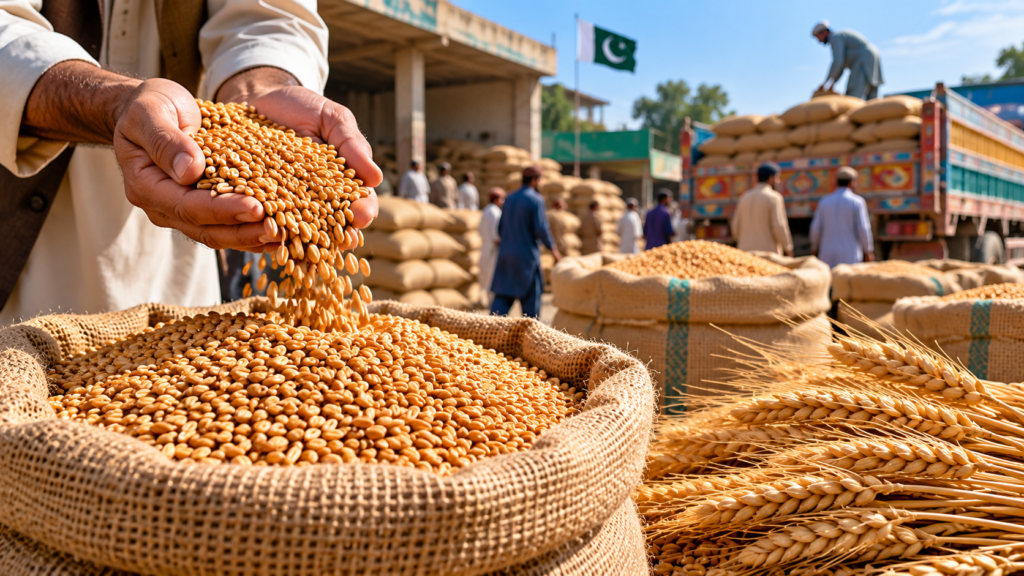
Will Wheat Prices Fall in Pakistan?
Many consumers want to know whether the government’s announcement will reduce wheat and flour prices. There is no guarantee of an immediate decline.
Retail prices depend on several factors, including the availability of wheat, milling expenses, transportation costs, energy prices, market margins and provincial decisions.
A support price designed to encourage farmers may improve production incentives, but it should not be confused with a price cap for consumers.
The minister said the government was monitoring market conditions and would take action against artificial shortages and unjustified price increases. The effect of those measures will depend on enforcement and the availability of supplies in local markets.
Consumers should check current market rates and official provincial notifications rather than assume the announced support price is the price they will pay for wheat or flour.
The Pakistan wheat price 2026 policy does not automatically determine the retail price of flour. Local supply, transportation expenses, milling costs and provincial market conditions will continue to influence what consumers pay.
Pakistan Wheat Price 2026: Latest Government Update
Pakistan Wheat Price 2026: What It Means for Farmers
The Rs4,500 per maund announcement provides farmers with a reference point as they plan for the next wheat-growing season. Before deciding how much to cultivate, farmers should calculate expected expenses and likely yields.
Important costs include:
- Quality seeds and fertilisers
- Land preparation and harvesting
- Irrigation and electricity
- Diesel, machinery and labour
- Transportation and storage
Farmers should also confirm how the support price will be implemented in their province. They should rely on official notifications for procurement locations, eligibility requirements, delivery arrangements and payment procedures.
A published support price alone does not confirm that every farmer can sell all their wheat to a government procurement centre at that rate.
How Could the Policy Affect Pakistan’s Food Security?
Wheat availability affects food security because wheat flour is a key part of the diet for many Pakistani households. A reliable domestic harvest can reduce pressure to import wheat when local production falls short.
The government’s approach combines the announced support price with strategic reserves and coordination among federal and provincial authorities.
If these measures are implemented effectively, they may help improve supply planning and encourage farmers to continue growing wheat. However, outcomes will also depend on weather, water availability, crop diseases, input prices and the efficiency of the supply chain.
Clear communication from the relevant authorities will be important for farmers, traders and consumers.
What Should Farmers and Consumers Watch Next?
Several developments will help determine the impact of Pakistan’s wheat price policy:
- Provincial implementation: Watch for official notices explaining how the support price will be applied.
- Wheat cultivation: Sowing and crop conditions will help indicate whether domestic production is on track.
- Market prices: Local wheat and flour rates will show how supply and demand are changing.
- Government reserves: Updates on stock levels and distribution can provide insight into supply management.
- Production costs: Fertiliser, fuel, electricity and irrigation expenses will influence farmers’ profitability.
Following official announcements is the best way to distinguish confirmed policy changes from rumours or unverified claims on social media.
Anyone following the Pakistan wheat price 2026 update should monitor official notifications from federal and provincial authorities. These updates can clarify support-price implementation, wheat procurement procedures and changes in local market rates.
Frequently Asked Questions
What is the announced Pakistan wheat price for 2026?
The federal government announced a support price of Rs4,500 per 40 kilograms, or one maund, in October 2026. The announced price relates to the upcoming wheat season and the government’s indicative support-price policy.
Is Rs4,500 the fixed retail price of wheat?
No. It should not be treated as a universal retail price. Local wheat prices and government procurement arrangements may differ.
How much wheat does the government plan to keep in reserve?
The federal food security minister announced a strategic reserve target of up to six million metric tonnes.
Will the new wheat price make flour cheaper?
Not necessarily. Flour prices also depend on wheat availability, milling, transport, energy expenses and local market conditions.
Where can I check the latest Pakistan wheat price 2026?
Check official government announcements and your provincial food department’s notifications. Local grain-market rates may differ from the announced support price, so confirm current prices before making a purchase or sale.
Where can farmers get official wheat policy information?
Farmers should consult Pakistan’s Ministry of National Food Security and Research and their provincial agriculture or food departments for official notices and implementation details.
Readers can follow the latest business news and economic developments on NuvWire to understand how government policies affect farmers, markets and consumers. For more updates, explore our coverage of latest business news, latest Pakistan news and more useful updates.
For the latest Pakistan wheat price 2026 developments, farmers and consumers should follow official government notifications and check local market rates before making financial decisions.
Conclusion
Pakistan’s wheat price announcement of Rs4,500 per maund is a significant government policy development for farmers and the country’s food supply. The federal government says the measure is intended to encourage cultivation, support growers and strengthen strategic wheat reserves.
The actual results will depend on how the policy is implemented, the costs farmers face and the availability of wheat across the country. Farmers should confirm provincial procurement arrangements, while consumers should continue checking local market rates for accurate price information.