Pakistan Winter Smog 2026 has once again become a serious environmental and public health concern, particularly across Punjab. As temperatures fall, cities such as Lahore, Multan, Faisalabad, Gujranwala, and other urban centres face increasing pressure from polluted air, vehicle emissions, industrial smoke, and agricultural activities.
Although authorities have strengthened anti-smog operations and introduced additional pollution-control measures, the problem remains difficult to manage. Recent air-quality reports show that pollution levels can change significantly from one day to another, making winter smog an ongoing challenge for millions of residents.
The growing concern is not limited to visibility or uncomfortable weather. Prolonged exposure to polluted air can affect breathing, worsen existing health conditions, and create additional risks for children and older people.
Pakistan Winter Smog 2026 highlights the growing need for stronger environmental policies and effective pollution-control strategies. Reducing harmful emissions is essential to protecting public health.
Pakistan Winter Smog 2026: Why Is Air Pollution Increasing?

Winter is traditionally one of the most difficult seasons for air quality in Pakistan. During colder months, atmospheric conditions can prevent polluted air from dispersing properly.
When winds become weak and the atmosphere remains relatively stable, pollutants accumulate closer to the ground. This creates the thick layer of haze commonly known as smog.
Several factors contribute to the problem:
1. Vehicle Emissions
Road traffic is one of the major sources of urban air pollution. Cars, motorcycles, buses, trucks, and other vehicles release harmful gases and fine particles into the atmosphere.
Older vehicles, poorly maintained engines, and low-quality fuel can increase emissions. Growing traffic volumes also make the problem more difficult to control in major cities.
2. Industrial Smoke
Factories and industrial facilities can release pollutants through their production processes and fuel consumption.
Industries that operate without proper emission-control equipment can contribute significantly to poor air quality. Regular inspections and compliance with environmental standards are therefore essential.
3. Agricultural Crop Residue Burning
After harvesting, some farmers burn leftover crop material to clear their fields quickly for the next planting season.
This practice produces large amounts of smoke and fine particulate matter. During winter, these emissions can contribute to severe pollution across agricultural and urban regions.
4. Brick Kilns and Construction Dust
Traditional brick kilns, construction activities, road dust, and uncovered building materials can also increase airborne pollution.
Without proper controls, these sources add to the existing pollution burden, particularly in densely populated areas.
5. Waste Burning
Burning household garbage, plastic, leaves, and other waste in open areas releases harmful pollutants.
Although this practice may appear small at an individual level, repeated burning across neighbourhoods can contribute to poor local air quality.
One of the biggest challenges associated with Pakistan Winter Smog 2026 is the combination of vehicle emissions, industrial smoke, and agricultural burning.
Pakistan Winter Smog 2026 is becoming a major concern as several pollution sources combine with unfavourable winter weather conditions.
New Anti-Pollution Measures in Punjab During 2026
The Punjab government has increased its efforts to tackle winter smog through monitoring, enforcement, and field operations.
Recent measures reported during November 2026 include the following:
1. Rapid-Response Teams Against Crop Burning
Punjab has introduced 67 rapid-response units supported by approximately 750 officers to tackle agricultural residue fires.
According to recent reporting, these teams are expected to reach reported fire locations within 10 to 15 minutes. Authorities have also announced financial penalties and legal action against farmers who burn crop residue.
2. Vehicle Emission Inspections
Authorities are increasing checks on vehicles that produce excessive smoke.
Vehicle owners are being encouraged to maintain their engines, obtain required fitness certification, and avoid unnecessary emissions.
3. Industrial and Brick Kiln Inspections
Environmental teams are inspecting industrial facilities and brick kilns to identify violations of pollution-control regulations.
Businesses that fail to meet environmental requirements can face fines, sealing orders, or other legal action.
4. Anti-Smog Guns and Water Sprinkling
Water sprinkling and anti-smog guns are being used in selected areas to help control airborne dust and some suspended particles.
However, these methods should not be considered a permanent solution. Reducing pollution at its source remains far more important.
5. Public Awareness Campaigns
Authorities are encouraging residents, schools, businesses, and farmers to participate in pollution-control activities.
People are being advised not to burn garbage, leaves, plastic, or agricultural waste in open spaces.
The success of Pakistan Winter Smog 2026 control efforts will depend on consistent enforcement of environmental regulations and public cooperation. Controlling Pakistan Winter Smog 2026 requires stronger environmental monitoring and consistent action against pollution sources.

How Does Winter Smog Affect Human Health?
Air pollution is more than an environmental problem. It can directly affect the health and daily lives of people exposed to polluted air.
Fine particles, especially PM2.5, are particularly concerning because they are small enough to travel deep into the respiratory system.
Possible health effects include:
- Coughing and throat irritation.
- Breathing difficulties.
- Eye irritation and watery eyes.
- Worsening asthma symptoms.
- Increased respiratory problems.
- Greater health risks for people with existing heart or lung conditions.
Children, older adults, pregnant women, and people with respiratory or cardiovascular conditions may be especially vulnerable.
People experiencing severe breathing difficulties, chest pain, or other worrying symptoms should seek medical attention rather than relying on home remedies.
Learn more about the health effects of air pollution through the World Health Organization’s air pollution resources.
During Pakistan Winter Smog 2026, people should pay particular attention to air quality because prolonged exposure to polluted air can increase health risks. The health impact of Pakistan Winter Smog 2026 is particularly concerning for children, elderly people, and individuals with respiratory conditions.
Pakistan Air Quality Situation in November 2026
Recent reports highlight how quickly air quality can change across Pakistan.
On November 12, Lahore recorded an AQI reading of 394 during the evening, placing it in the hazardous category under the US AQI scale. Other locations, including Multan, also experienced high pollution readings.
A separate analysis published in November found that Lahore’s average PM2.5 concentration was approximately eight times the World Health Organization’s recommended guideline during the period examined.
However, pollution levels are not identical across cities or throughout the day. Weather conditions, wind speed, rainfall, traffic, and local emissions can all influence readings.
Residents should therefore check reliable local air-quality monitoring services before making outdoor plans
Residents can monitor local pollution levels using IQAir’s real-time air quality monitoring platform.
For more information about the worsening air pollution situation, read our detailed report on Lahore Smog Crisis 2026: AQI Reaches 394 as Air Pollution Worsens.
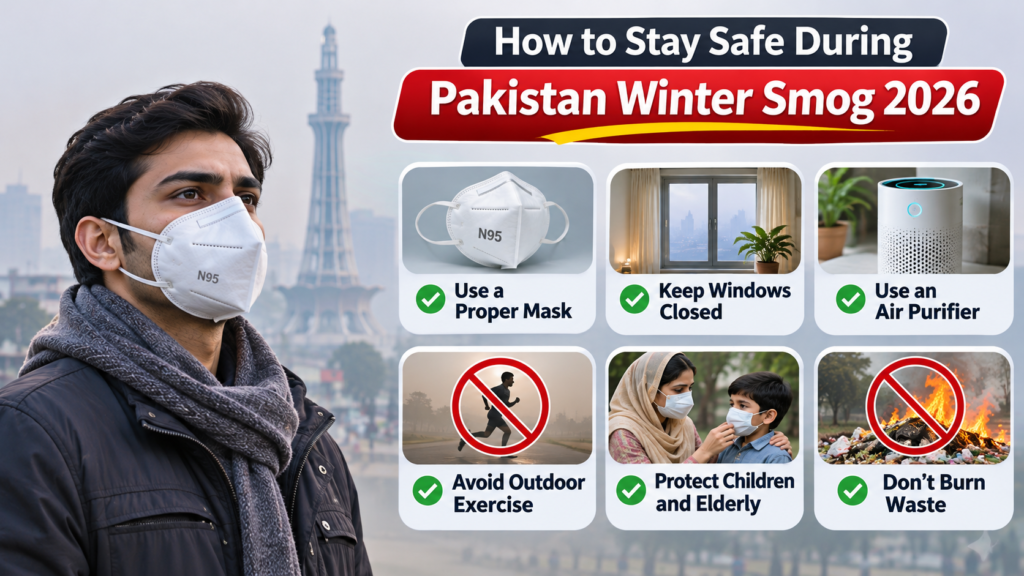
How Can People Protect Themselves From Winter Smog?
While government action is important, individuals can also take practical steps to reduce their exposure to polluted air.
1. Check Daily Air Quality
Use reliable air-quality monitoring platforms to check local pollution levels before going outside.
2. Wear a Suitable Protective Mask
When outdoor exposure is unavoidable during periods of high pollution, a well-fitting N95, KN95, or equivalent particulate respirator can help reduce exposure to fine particles.
Ordinary cloth masks may not provide the same level of protection.
3. Limit Outdoor Activities
Avoid unnecessary outdoor exercise, running, or prolonged physical activity when air pollution is high.
4. Keep Indoor Air Cleaner
Keep windows and doors closed when outdoor air quality is particularly poor, while ensuring appropriate indoor ventilation when conditions improve.
A properly sized HEPA air purifier can help reduce indoor airborne particles.
5. Protect Children and Older Adults
Pay particular attention to children, elderly family members, and people with asthma or other existing health conditions.
Follow medical advice and avoid exposing vulnerable family members to heavily polluted outdoor environments.
6. Avoid Burning Waste
Never burn plastic, household garbage, leaves, or other waste in open spaces. Report serious pollution violations to the relevant local authorities.
Taking preventive measures during Pakistan Winter Smog 2026 can help families reduce their exposure to harmful airborne particles.
Simple precautions can help families stay safer during Pakistan Winter Smog 2026, especially when outdoor air quality becomes unhealthy.
What More Should Pakistan Do to Control Smog?
Temporary anti-smog operations can provide some relief, but Pakistan needs a long-term strategy to improve air quality.
Some important priorities include:
- Expanding reliable air-quality monitoring networks.
- Improving public transportation and promoting cleaner vehicles.
- Enforcing industrial emission standards consistently.
- Supporting farmers with affordable crop-residue management equipment.
- Modernising brick kilns and industrial fuel systems.
- Improving waste collection and disposal facilities.
- Increasing public awareness about air pollution.
- Strengthening cooperation with neighbouring countries on regional air pollution.
The government, businesses, farmers, and ordinary citizens all have a role in reducing pollution.
For more information about global efforts to reduce air pollution, visit the United Nations Environment Programme.
Addressing Pakistan Winter Smog 2026 requires long-term planning, stronger environmental monitoring, and cooperation between government institutions and citizens. Public awareness and effective government policies will be essential to tackling Pakistan Winter Smog 2026 in the coming years.
Conclusion
Pakistan Winter Smog 2026 is a reminder that clean air cannot be achieved through short-term measures alone. Although Punjab has expanded its anti-pollution operations, vehicle emissions, industrial activity, agricultural burning, and other pollution sources require consistent attention.
Protecting public health must remain the priority. Stronger enforcement, cleaner transportation, better agricultural practices, and greater public participation can help Pakistan move towards healthier cities.
The challenge is significant, but meaningful progress is possible when environmental protection becomes a year-round responsibility rather than a seasonal campaign.
Frequently Asked Questions (FAQs)
1. What causes winter smog in Pakistan?
Winter smog is caused by a combination of vehicle emissions, industrial pollution, crop-residue burning, brick kiln smoke, construction dust, and waste burning. Cold weather and weak winds can trap pollutants near the ground.
2. Which Pakistani cities are affected by winter smog?
Lahore, Faisalabad, Gujranwala, Multan, and several other cities across Punjab can experience poor air quality during the winter season. Pollution levels vary depending on local conditions and weather.
3. What is PM2.5 and why is it dangerous?
PM2.5 refers to fine airborne particles measuring 2.5 micrometres or smaller. These particles can penetrate deep into the lungs and may contribute to respiratory and cardiovascular health problems.
4. What measures is Punjab taking to control smog in 2026?
Reported measures include rapid-response teams against crop burning, vehicle emission inspections, industrial and brick kiln checks, anti-smog operations, water sprinkling, and public awareness campaigns.
5. Which mask is best for protection against smog?
A properly fitted N95, KN95, or equivalent particulate respirator can help reduce exposure to fine airborne particles. The mask must fit securely to provide effective protection.
6. Is it safe to exercise outdoors during heavy smog?
Outdoor exercise is best avoided when air quality is unhealthy or worse. Physical activity increases breathing rates, which can increase the amount of polluted air inhaled.
7. How can families protect children from air pollution?
Families should monitor local air-quality reports, reduce outdoor activities during polluted periods, use suitable protective masks when necessary, and keep indoor air as clean as possible.
8. When does smog season usually occur in Pakistan?
Air pollution commonly becomes worse between October and February. However, pollution can occur throughout the year, depending on emissions, weather conditions, and local activities.
9. Can planting trees completely eliminate smog?
No. Trees can support healthier urban environments, but they cannot eliminate the major sources of air pollution. Controlling emissions from vehicles, industries, agriculture, and waste burning is essential.
10. Where can people check Pakistan’s air quality?
People can check air-quality information through IQAir, official environmental monitoring dashboards, and other reliable air-quality monitoring platforms. Readings should be checked regularly because conditions can change throughout the day.