
South Punjab drought alert 2026 has raised concerns among farmers, residents and local authorities after the Punjab Disaster Management Authority (PDMA) warned of possible worsening dry conditions in several districts. The warning comes as Pakistan prepares for a winter season in which below-normal rainfall is expected across southern Punjab from December 2026 to February 2027. Authorities have been directed to take precautionary steps to reduce the possible impact on agriculture, water supplies, livestock and vulnerable communities.
The alert follows a drought watch issued by the Pakistan Meteorological Department (PMD) on November 20, highlighting persistent rainfall shortages and prolonged dry spells across southern Pakistan. Although the situation requires attention, officials have described the warning as a precautionary measure rather than a declaration of a drought emergency.
1. Why Has PDMA Issued a South Punjab Drought Alert?
The PDMA Punjab issued its warning because of concerns that insufficient rainfall could continue during the coming winter months. According to reports published on November 24, the authority contacted relevant commissioners and district administrations, asking them to prepare for the possible effects of dry weather.
The concern is not limited to the amount of rain expected in the coming months. Earlier rainfall shortages and extended dry periods may already have reduced soil moisture in some agricultural areas.
When the land does not receive enough rain, crops can become more dependent on irrigation. This can increase pressure on canals, groundwater and other available water sources.
The purpose of the alert is to encourage departments to prepare early instead of waiting until water shortages become more serious.
The South Punjab drought alert 2026 highlights the importance of early preparation, especially for communities that depend heavily on agriculture and seasonal rainfall.
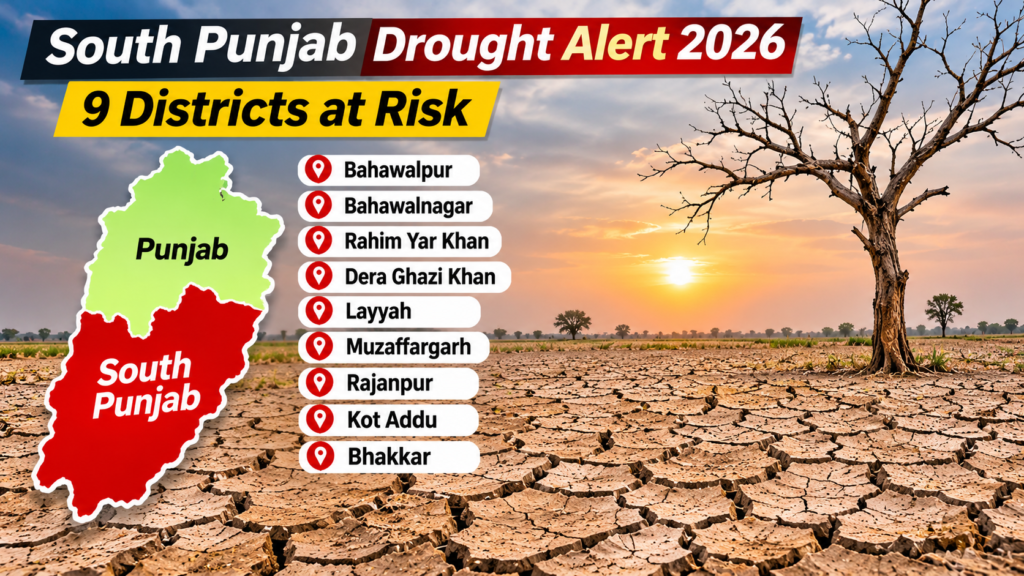
2. Which 9 Districts Are at Risk?
According to reports about the PDMA notification, nine districts have been identified for precautionary attention.
These districts are:
- Bahawalpur
- Bahawalnagar
- Rahim Yar Khan
- Dera Ghazi Khan
- Layyah
- Muzaffargarh
- Rajanpur
- Kot Addu
- Bhakkar
District administrations have been asked to coordinate with relevant departments and remain prepared for potential drought-related challenges.
It is important to understand that being included in the alert does not mean every area in these districts is already experiencing a severe drought. Conditions can differ between locations, depending on rainfall, soil moisture, irrigation access and local water supplies. The South Punjab drought alert 2026 places special attention on districts where prolonged dry conditions could create challenges for farming communities.
3. What Is the Weather Forecast for December 2026 to February 2027?
The PMD’s seasonal outlook indicates a likelihood of normal to below-normal rainfall across Sindh, Balochistan and southern Punjab during December 2026 to February 2027.
This forecast is important because winter rain can help restore soil moisture after the summer and monsoon seasons. It also supports agricultural activity during the Rabi growing season.
If rainfall remains limited, some areas may continue experiencing dry conditions. This could make it harder for rain-fed farmers to maintain suitable moisture levels for their crops.
However, a seasonal forecast is not a guarantee that every district will receive little or no rain. Actual weather conditions can change, and further updates from the meteorological department will be important.
The latest South Punjab drought alert 2026 also reminds residents that seasonal weather forecasts can change, making regular PMD updates important. Residents should follow the South Punjab drought alert 2026 updates to understand how changing rainfall patterns may affect their areas.
4. How Could the Rainfall Shortage Affect Farmers?
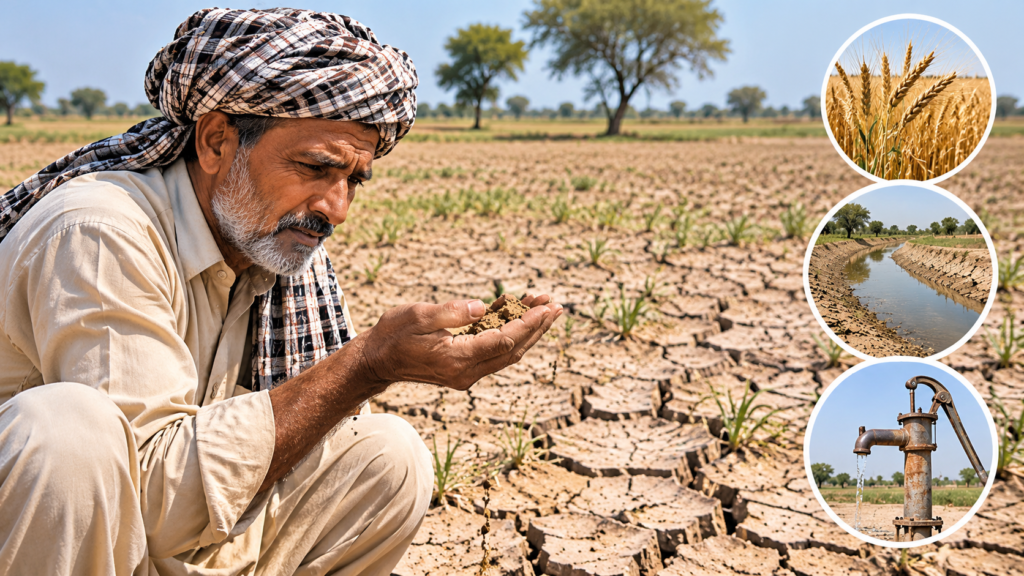
Agriculture is one of the main reasons the drought warning matters. Farmers depend on a combination of rainfall, canal water and groundwater to maintain their fields.
When rainfall is below normal, agricultural land may lose moisture. This can create additional challenges for farmers, particularly those who have limited access to irrigation.
Possible effects include:
- Increased demand for irrigation water.
- Higher costs for pumping groundwater.
- Moisture stress in crops.
- Difficulties maintaining healthy crop growth.
- Greater pressure on farmers in rain-fed areas.
Wheat is particularly important during the Rabi season. If dry conditions continue, farmers may need to pay closer attention to soil moisture and irrigation schedules.
The actual impact will depend on local rainfall, water availability, farming practices and the duration of dry conditions.
For farmers, the South Punjab drought alert 2026 is a reminder to monitor soil moisture and plan irrigation carefully during the Rabi season.
5. Could the Drought Risk Affect Water Supplies?
Yes. A prolonged rainfall shortage can place additional pressure on both surface water and groundwater resources.
Rainfall helps replenish soil moisture and contributes to the wider water cycle. When dry conditions continue, communities may become more dependent on existing water sources.
This can create difficulties for:
- Farmers who need water for irrigation.
- Rural households with limited water access.
- Livestock owners who depend on local water points.
- Communities already facing water-resource constraints.
The PMD has highlighted the possibility of reduced water availability for agricultural and domestic use if dry conditions persist.
For this reason, careful water management is important even before a shortage becomes severe.
Water conservation will remain an important part of the response to the South Punjab drought alert 2026, particularly in areas with limited water resources.
6. What Measures Has PDMA Asked Departments to Take?
The PDMA has directed relevant departments and district administrations to remain prepared and coordinate their activities.
Reports about the alert indicate that several government departments have been placed on notice, including:
- Local Government
- Agriculture
- Irrigation
- Environment
- Health
- Livestock
- Forestry
- Education
- Transport
- Rescue 1122
The authority has also stressed coordination between district administrations and emergency response teams.
The broader aim is to identify vulnerable communities, monitor changing conditions and make sure that assistance can be organised if the situation worsens.
Early preparation can help authorities respond more effectively, particularly in areas where farmers and livestock owners have limited resources.
Effective coordination is essential to manage the risks associated with the South Punjab drought alert 2026.
7. What Should Farmers Do to Reduce Drought Risk?
Farmers can take practical steps to manage water carefully and reduce unnecessary losses.
Some useful measures include:
Use irrigation efficiently: Farmers should avoid unnecessary watering and follow suitable irrigation schedules based on crop requirements and soil conditions.
Protect soil moisture: Mulching and other suitable soil-management practices can help reduce moisture loss.
Monitor crop conditions: Regular field inspections can help farmers identify signs of water stress early.
Avoid wasting groundwater: Water should be used carefully, especially in areas where groundwater resources are already under pressure.
Follow official agricultural advice: Farmers should check guidance from local agriculture and irrigation departments before making major changes to their farming plans.
These steps cannot replace rainfall, but they may help reduce the impact of dry conditions.
These practical steps can help farmers prepare for the possible effects of the South Punjab drought alert 2026.
8. What Does the Alert Mean for Ordinary Residents?
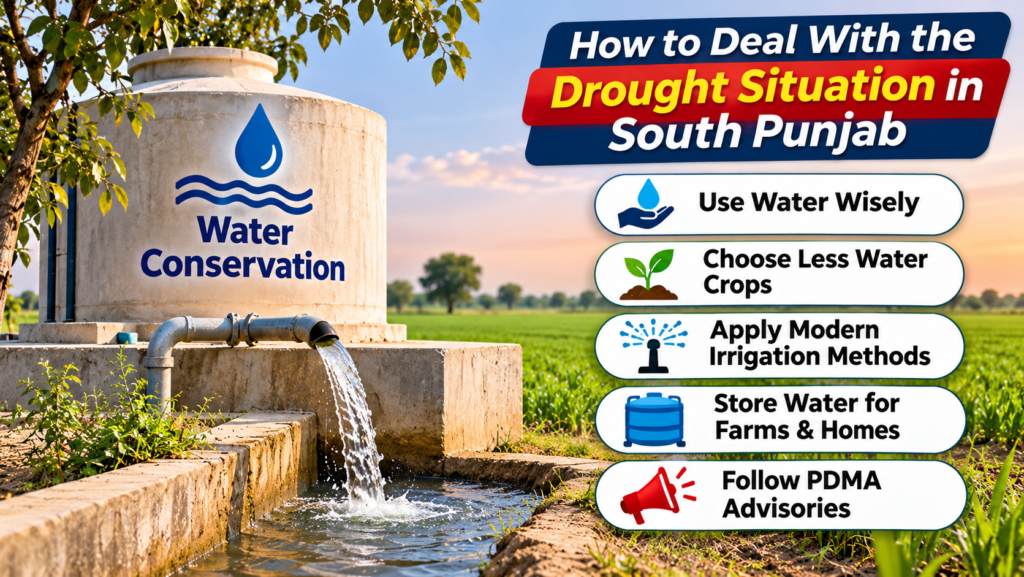
The warning is not only relevant to farmers. Households and communities may also need to pay attention to water conservation.
Residents can help by avoiding unnecessary water use, repairing leaking taps and storing water responsibly where local conditions require it.
People who depend on livestock should also monitor the availability of drinking water and animal feed.
Local authorities may provide additional instructions if conditions change. Residents should follow official announcements rather than relying on unverified social media claims.
9. When Will the Next Drought Update Be Issued?
The Pakistan Meteorological Department has indicated that its next update will be issued on December 5, 2026, through its monthly Drought Bulletin.
That update should provide further information about changing rainfall and drought conditions.
Until then, residents, farmers and local authorities should keep following official weather updates and precautionary guidance.
For more updates on Pakistan, government policies and regional developments, explore our latest stories in the Pakistan News section.
Conclusion
The South Punjab drought alert 2026 is an important warning for farmers, residents and government departments across the region. With nine districts identified for precautionary attention and below-normal rainfall possible during the coming winter months, early preparation will be important.
The situation should not be confused with a confirmed drought emergency. However, rainfall shortages can affect soil moisture, agricultural production and water availability if they continue.
Farmers can help reduce potential losses through efficient irrigation and careful water management, while authorities need to monitor vulnerable areas and keep emergency arrangements ready. The next PMD update on December 5 will provide a clearer picture of how the situation is developing. The South Punjab drought alert 2026 requires continued monitoring, responsible water use and cooperation between farmers, residents and government departments.
Frequently Asked Questions (FAQs)
1. Why has PDMA issued a South Punjab drought alert in 2026?
PDMA issued the alert because of concerns about continued dry conditions and the possibility of below-normal rainfall from December 2026 to February 2027. The authority has asked relevant departments to take precautionary measures.
2. Which nine districts are included in the South Punjab drought alert?
The nine districts reported are Bahawalpur, Bahawalnagar, Rahim Yar Khan, Dera Ghazi Khan, Layyah, Muzaffargarh, Rajanpur, Kot Addu and Bhakkar.
3. Is South Punjab officially declared a drought emergency?
No. The PMD’s November 20 Drought Watch advises precautionary preparedness for possible mild drought conditions. It is not a declaration of a drought emergency.
4. When could South Punjab receive below-normal rainfall?
The PMD seasonal outlook indicates a likelihood of normal to below-normal rainfall in southern Punjab from December 2026 to February 2027.
5. How could drought conditions affect wheat crops?
Insufficient rainfall can reduce soil moisture and increase the need for irrigation. If water is not available when required, crop growth and development may face additional stress.
6. What should farmers do during a possible drought?
Farmers should use irrigation efficiently, protect soil moisture, monitor their crops and follow advice from local agriculture and irrigation departments.
7. Can the drought risk affect drinking water?
Prolonged dry conditions can put pressure on water resources used by households and farms. The actual impact will depend on local water supplies and how long dry conditions continue.
8. When will Pakistan receive the next drought update?
The PMD has indicated that its next update will be issued on December 5, 2026, through its monthly Drought Bulletin.
9. Where can residents check official drought and weather updates?
Residents can check the Pakistan Meteorological Department website at https://weather.gov.pk/ and follow official updates from PDMA Punjab for local alerts and guidance.