
Eating well does not have to mean spending more money on groceries. With a little planning and a few simple ingredients, you can prepare satisfying meals at home, reduce food waste, and make your busy week easier. The secret is learning how to plan meals around your budget instead of buying ingredients without a clear purpose.
Weekly meal prep on a budget is a practical approach to organizing your meals before the week begins. It helps you decide what to eat, make a focused shopping list, and use ingredients in more than one recipe. Whether you live alone, cook for a family, attend university, or work long hours, a simple meal preparation routine can help you manage both time and money.
You do not need expensive kitchen equipment or complicated recipes to get started. Here are seven straightforward steps to help you prepare affordable meals for the week.
One of the biggest benefits of weekly meal prep on a budget is that it helps you make better use of the groceries you already buy. By planning meals ahead, you can reduce unnecessary spending, prepare convenient portions, and avoid ordering expensive takeaway when you are short on time.
1. Set Your Weekly Food Budget First
Before choosing recipes, decide how much you can comfortably spend on food for the week. Your budget will depend on your location, household size, dietary needs, and the ingredients available in local stores.
Check what you already have in your refrigerator, freezer, and cupboards. You may have rice, pasta, lentils, canned beans, spices, or frozen vegetables that can form the basis of several meals.
Write down the amount you can spend and plan your meals around it. Avoid copying someone else’s grocery budget because food prices vary considerably between countries and even between neighborhoods.
A realistic budget gives you a clear starting point and helps prevent unnecessary purchases.
Planning weekly meal prep on a budget starts with knowing which foods offer the best value. Compare prices, choose seasonal produce, and use pantry staples you already own before adding more items to your grocery list.
2. Plan Your Meals Before Going Shopping
One of the easiest ways to overspend is to shop without knowing what you intend to cook. A weekly menu helps you buy only the ingredients you need.
Start by planning a few breakfasts, lunches, and dinners. You do not have to cook seven completely different dishes. Instead, choose meals that share ingredients but have different flavors.
For example, cooked chicken might be used in a rice bowl one day and a wrap the next. Roasted vegetables can accompany dinner and later become part of a lunch bowl.
This approach makes weekly meal prep on a budget easier because one shopping trip can support several meals rather than a collection of unrelated recipes.
Successful weekly meal prep on a budget starts with choosing meals that share ingredients. For example, beans, rice, and vegetables can be used in bowls, wraps, or simple homemade dinners, helping you prepare different meals without purchasing a long list of expensive ingredients.
3. Choose Affordable, Versatile Ingredients
The best budget ingredients are useful in multiple dishes, easy to prepare, and suitable for your household.
Consider building your shopping list around these options:
- Grains: Rice, oats, pasta, and whole-grain bread.
- Protein: Eggs, lentils, beans, chickpeas, tofu, or chicken when affordable.
- Vegetables: Carrots, cabbage, onions, seasonal produce, and frozen vegetables.
- Fruit: Bananas, apples, or other affordable seasonal choices.
- Flavor: Garlic, herbs, spices, lemon, and simple sauces.
You do not need to purchase everything on this list. Select a few ingredients that work together and fit your budget.
Compare unit prices when shopping, and check whether a larger package actually offers better value. Buy only quantities you can use before the food spoils.
4. Cook Ingredients in Batches
Batch cooking means preparing several portions of food in one session. It can reduce the number of times you need to cook during a busy week.
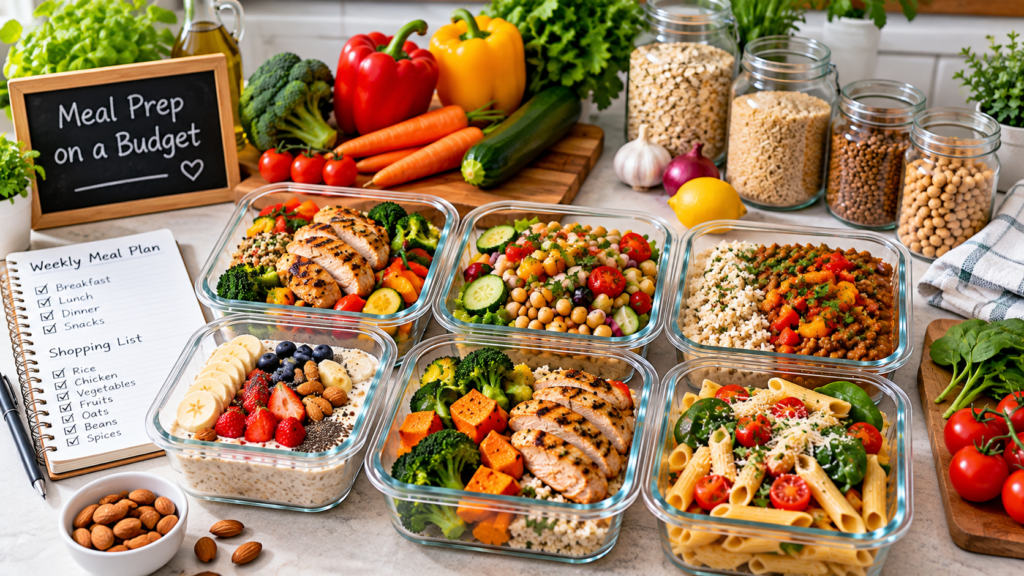
For example, you could cook a pot of rice, prepare lentils or beans, roast a tray of vegetables, and boil a few eggs. These ingredients can be combined in different ways throughout the week.
A simple preparation session might include:
- Rice with vegetables and beans.
- Lentil soup with bread.
- Vegetable and egg wraps.
- Chicken or chickpea bowls.
- Oatmeal with fruit for breakfast.
Season ingredients differently or add fresh toppings to keep meals from feeling repetitive. The goal is not to eat the same plate every day; it is to make several meals from a manageable set of ingredients.
5. Build a Simple Weekly Meal Prep Schedule
Meal preparation becomes easier when you give each task a specific time. Choose a day when you can shop, cook, and organize your food without rushing.
Here is an example schedule:
Saturday or Sunday: Check supplies, plan meals, shop, and prepare ingredients.
Monday and Tuesday: Use refrigerated meals and ingredients prepared for the first part of the week.
Wednesday: Check remaining food and prepare a quick fresh component if needed.
Thursday and Friday: Use suitable frozen portions, remaining ingredients, and simple meals that require minimal preparation.
Adjust this routine to suit your work schedule and local shopping days. You can also split preparation into two shorter sessions instead of doing everything at once.
The most effective routine is one you can repeat consistently without feeling overwhelmed.
A weekly meal prep on a budget routine does not need to take your entire weekend. Start with two or three basic recipes, prepare ingredients in batches, and keep your meal plan flexible enough to use leftovers before buying more food.
6. Store Food Safely and Reduce Waste
For additional food storage and leftover safety advice, consult the USDA Food Safety and Inspection Service. Its official food safety resources explain how to handle and store food safely at home, helping you make meal preparation both practical and safe.
Saving money is not helpful if prepared food spoils before you can eat it. Divide cooked food into clean, shallow containers and refrigerate or freeze it promptly.
As a general food-safety guideline, refrigerate perishable cooked food within two hours, or within one hour when the surrounding temperature exceeds 90°F (32°C). Keep your refrigerator at 40°F (4°C) or below.
Many cooked leftovers should be used within three to four days when properly refrigerated. Freeze portions intended for later in the week rather than keeping them in the refrigerator for too long. Reheat leftovers thoroughly to 165°F (74°C).
Label containers with the preparation date and use older portions first. Keep raw ingredients separate from cooked food, and follow safe thawing practices.
These small habits help protect your health while making your grocery budget go further.
7. Track Your Spending and Improve Your Plan
After the first week, review your grocery spending. Which ingredients were good value? What food remained unused? Which meals were easy to prepare, and which required too much time?
Use these answers to improve your next shopping list. If you repeatedly throw away fresh vegetables, buy smaller quantities or choose frozen alternatives. If you spend too much on snacks and convenience foods, plan a few easy options to keep at home.
You can also prepare a basic grocery list on your phone and reuse it each week, changing quantities according to your needs.
Over time, this routine can make meal planning more efficient. You will become better at estimating portions, recognizing good-value ingredients, and using what you already have.
A Sample Budget-Friendly Meal Prep Plan
Here is a simple example you can adapt to your preferences and local food prices.
| Meal | Affordable idea |
|---|---|
| Breakfast | Oatmeal with banana |
| Lunch | Rice, beans, and vegetables |
| Dinner | Lentil curry with rice or bread |
| Snack | Seasonal fruit or yogurt |
| Alternative meal | Egg and vegetable wrap |
This is a flexible starting point, not a fixed diet or a guaranteed cost estimate. Adjust portions and ingredients according to your nutritional needs, preferences, and budget. If you have specific dietary requirements, choose suitable alternatives.
To make weekly meal prep on a budget more effective, keep a record of your grocery expenses and the ingredients you actually use. Reviewing your spending each week can help you identify waste, choose better-value foods, and create a meal plan that suits your household.
If you are new to weekly meal prep on a budget, begin with just a few lunches and dinners rather than planning every meal at once. Once you find affordable recipes you enjoy, expand your routine gradually.
Final Thoughts
Preparing meals at home does not need to be expensive, complicated, or time-consuming. A realistic budget, a short shopping list, versatile ingredients, and safe storage habits can make your weekly routine much easier.
The key to weekly meal prep on a budget is consistency rather than perfection. Start with a few meals, learn which ingredients work best for you, and improve your plan as you go. Even small changes, such as planning before shopping and using leftovers thoughtfully, can help reduce waste and make your money go further.
With a little practice, weekly meal prep on a budget can become a simple habit that saves preparation time, limits food waste, and makes everyday meals easier to manage.
For more practical tips on everyday living, saving money, and building better habits, explore our Lifestyle articles on NuvWire.