
Grocery prices in Pakistan remain a major concern for households in 2026, even as the latest weekly inflation figures show a slight decline. Families continue to manage food expenses, utility bills and transportation costs while trying to stay within limited monthly budgets. The latest Pakistan Bureau of Statistics (PBS) data reveals an interesting picture: some essential items became cheaper during the latest week, but several important grocery products recorded significant increases compared with last year.
Understanding these price movements can help consumers make better shopping decisions and understand why a small decline in weekly inflation does not necessarily mean everyday shopping has become affordable.
The latest changes in grocery prices in Pakistan are affecting families differently, depending on their monthly income, shopping habits and the food items they purchase.
Latest Grocery Price and Inflation Update in Pakistan
According to the PBS report for the week ended November 19, 2026, Pakistan’s Sensitive Price Indicator (SPI) decreased by 0.65% compared with the previous week.
However, the same indicator was still 10.41% higher than a year earlier.
The weekly report monitors 51 essential items across 50 markets in 17 cities. It provides a useful picture of short-term changes in household expenses.
Here are some important findings:
- Weekly inflation decreased by 0.65%.
- Year-on-year inflation increased by 10.41%.
- Prices of 23 out of 51 monitored items increased.
- Prices of eight items decreased.
- Prices of 20 items remained unchanged.
These figures show why grocery expenses remain a concern even when the overall weekly indicator moves down.
Which Grocery Items Became More Expensive?

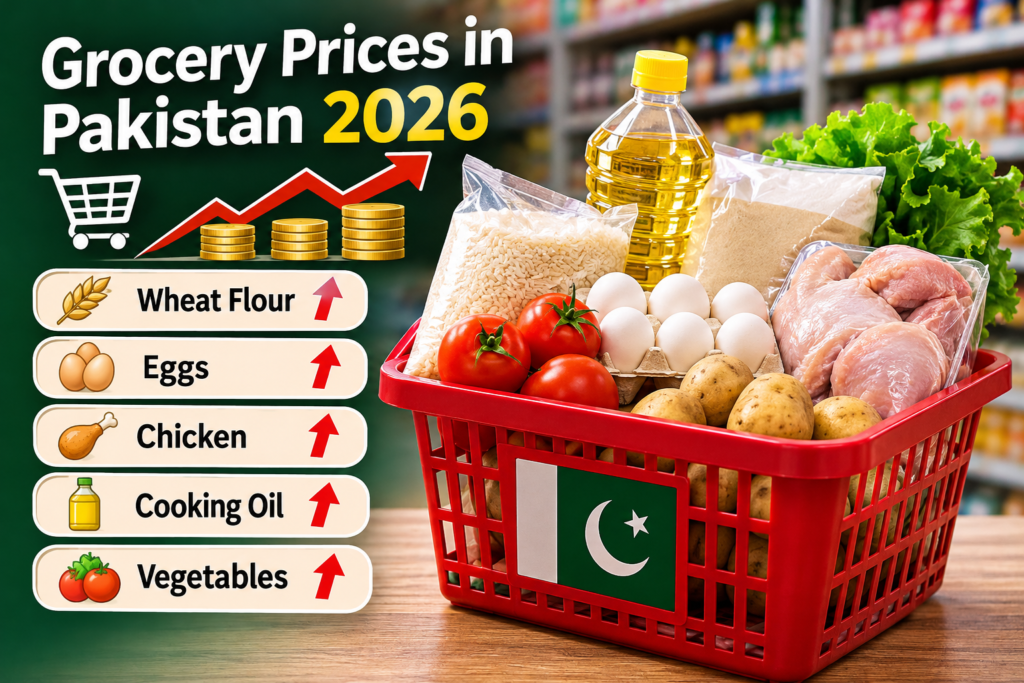
The latest PBS report recorded increases in several everyday products.
| Essential item | Average price on Nov 19, 2026 | Weekly change |
|---|---|---|
| Farm eggs (one dozen) | Rs297.01 | +8.84% |
| Potatoes (per kg) | Rs57.72 | +8.07% |
| Wheat flour (20kg bag) | Rs3,100.19 | +4.42% |
| Live broiler chicken (per kg) | Rs447.23 | +3.01% |
| Bananas (one dozen) | Rs126.97 | +1.74% |
| Garlic (per kg) | Rs418.07 | +0.62% |
| Vegetable ghee (2.5kg tin) | Rs1,593.12 | +0.54% |
These are national average prices reported by PBS, not guaranteed retail prices in every city or shop.
The increase in wheat flour is particularly important because flour is a basic household food item. Chicken and eggs are also common sources of protein for many families.
Why Are Grocery Prices in Pakistan Still High?
Understanding grocery prices in Pakistan requires looking at more than weekly inflation. Food availability, transportation expenses, seasonal demand and market conditions can all influence what consumers pay at local shops.
Several factors can influence the cost of everyday food products. The latest weekly statistics show price movements, but they do not independently establish the cause of every increase.
1. Food Supply and Seasonal Changes
Agricultural products can experience price changes because of harvesting seasons, weather conditions, supply availability and demand.
When supplies of a particular vegetable or food item become limited, market prices may increase. When supplies improve, prices can move in the opposite direction.
2. Transportation and Distribution Costs
Food products often travel from farms and production areas to wholesale markets, storage facilities and retail shops.
Transportation, fuel, storage and handling expenses can affect the final price consumers pay. The impact varies depending on the product and supply chain.
Transportation expenses can directly influence grocery prices in Pakistan, especially when essential food products travel long distances before reaching local markets.
3. Wheat and Flour Costs
Wheat flour is an essential part of many Pakistani households’ food budgets.
The PBS data showed that the average price of a 20kg wheat flour bag reached Rs3,100.19 on November 19, 2026, representing a 44.20% increase compared with the corresponding week last year.
Readers can also explore our earlier coverage of the Pakistan wheat price 2026 announcement to understand the government’s wheat support-price policy.
4. Energy and Business Expenses
Food businesses, retailers and suppliers depend on electricity, fuel, labour and other operating expenses.
Changes in these costs can create additional pressure on businesses. However, the effect on final grocery prices depends on market conditions and individual supply chains.
5. Inflation Does Not Mean Every Price Falls When It Slows
This is one of the most important points for consumers.
Inflation measures how quickly prices change over time. If inflation decreases, it does not automatically mean that grocery products return to their previous prices.
For example, if a product becomes more expensive over several months, a slower increase later does not reverse the earlier price rise.
That is why families may still feel financial pressure even when weekly inflation declines.
Which Grocery Items Became Cheaper?
Changes in grocery prices in Pakistan do not affect every food item equally. While some essential products become more expensive, seasonal vegetables and other items may become cheaper when market supplies improve.
The latest PBS report also recorded decreases in several important products.
| Item | Weekly price change |
|---|---|
| Tomatoes | -30.55% |
| Onions | -9.17% |
| Sugar | -0.07% |
| Pulse moong | -0.54% |
These reductions provided some short-term relief for consumers.
However, lower prices for selected items do not necessarily offset increases in other household essentials. Families purchase different combinations of products, so the effect varies from one household to another.
How Can Pakistani Families Manage Grocery Expenses?
Managing grocery prices in Pakistan starts with careful planning, comparing shop prices and choosing essential products according to the household budget.
Although consumers cannot control national inflation, a few practical habits may help households manage their shopping budgets.
1. Prepare a Weekly Shopping List
Plan meals before visiting the market. A shopping list can help reduce unnecessary purchases and make it easier to stay within a fixed budget.
2. Compare Prices Before Buying
Check prices at different shops and local markets. Even small differences can make a difference when buying groceries regularly.
3. Purchase Seasonal Vegetables
Seasonal vegetables may offer better value when supplies are readily available. Compare quality and prices before purchasing.
4. Reduce Food Waste
Store food properly and use products before they expire. Planning meals around available ingredients can reduce unnecessary spending.
5. Track Monthly Grocery Spending
Keep a simple record of grocery purchases. Reviewing weekly expenses can help identify which products are taking the largest share of the household budget.
For more practical household budgeting ideas, read our guide on the cost of living crisis in 2026.

What Should Consumers Expect in the Coming Weeks?
Food prices can continue to move up or down depending on supply, seasonal availability, transportation expenses and market conditions.
The latest PBS figures show that some products became cheaper while others recorded increases. Therefore, it would be inaccurate to assume that every grocery item is becoming more expensive at the same rate.
Consumers should follow official weekly price reports and compare them with actual prices in their local markets.
The Pakistan Bureau of Statistics publishes weekly Sensitive Price Indicator reports and monthly Consumer Price Index data. These official figures can help readers understand broader price movements.
Frequently Asked Questions (FAQs)
1. Why are grocery prices in Pakistan still high in 2026?
Grocery prices remain a concern because several essential products are still more expensive than they were a year earlier. Food supply, transportation, energy and other market conditions can influence individual prices.
2. What was Pakistan’s weekly inflation rate on November 19, 2026?
The PBS Sensitive Price Indicator decreased by 0.65% during the week ended November 19, 2026. Its year-on-year increase was 10.41%.
3. Which grocery item recorded the highest weekly increase?
Farm eggs recorded the highest increase among the listed grocery items, rising by 8.84% during the week.
4. Did wheat flour become more expensive in Pakistan?
Yes. The average price of a 20kg wheat flour bag reached Rs3,100.19 on November 19, 2026, which was 4.42% higher than the previous week.
5. Which food items became cheaper during the latest week?
Tomatoes, onions, sugar and pulse moong were among the items that recorded weekly price decreases.
6. Does lower inflation mean grocery prices will return to normal?
No. Lower inflation means prices are increasing more slowly or, in some cases, declining. It does not automatically reverse previous price increases.
7. Where can consumers check official grocery price updates in Pakistan?
Consumers can visit the Pakistan Bureau of Statistics website and review its weekly Sensitive Price Indicator reports for official price trends.
Conclusion
Grocery prices in Pakistan remain an important household concern in 2026. Although weekly inflation declined by 0.65% in the latest PBS report, the 10.41% year-on-year increase shows that price pressure has not disappeared.
Wheat flour, eggs, potatoes and chicken recorded weekly increases, while tomatoes and onions became cheaper. These mixed movements highlight why consumers should look beyond a single inflation figure when planning their monthly budgets.
Keeping track of grocery prices in Pakistan can help families compare market rates, plan weekly shopping and make better decisions about household spending.
Monitoring grocery prices in Pakistan regularly can help consumers identify changing costs and make smarter shopping choices.
Following official price reports, comparing local market rates and managing food waste can help families make more informed shopping decisions.
Stay connected with NuvWire for the latest Pakistan business, economy and everyday cost-of-living updates.