
Maulana Fazlur Rehman has announced nationwide protests after the Punjab administration imposed restrictions on his planned visit to Sargodha, creating fresh political tensions in Pakistan. The Jamiat Ulema-e-Islam-Fazl (JUI-F) chief has called on party workers across the country to organise demonstrations and block major highways in response to the restrictions and reported detentions of party leaders.
The development came on November 26, 2026, when JUI-F was preparing to hold a major public gathering in Sargodha. However, the district administration barred nine party leaders from entering or remaining in the district for 30 days. Police also detained several senior party figures ahead of the planned conference.
The situation has raised questions about political freedom, public gatherings, law enforcement and the relationship between opposition parties and the government.
Here is a detailed look at what happened and why the situation matters.
Why Did the Sargodha Controversy Begin?
The controversy started ahead of a JUI-F public gathering scheduled for November 26 in Sargodha.
The party had planned to organise a conference under the theme of protecting Pakistan’s Constitution and public rights. Senior leaders and supporters were expected to attend the event.
However, the district administration introduced restrictions shortly before the gathering.
According to a notification issued by the Sargodha deputy commissioner, nine JUI-F leaders were prohibited from entering, residing in or remaining in the district for 30 days, starting November 25.
The restrictions were imposed under Section 7(1) of the West Pakistan Maintenance of Public Order Ordinance, 1960, along with the relevant Punjab amendment.
The administration referred to a district police report and expressed concerns about possible public-order problems.
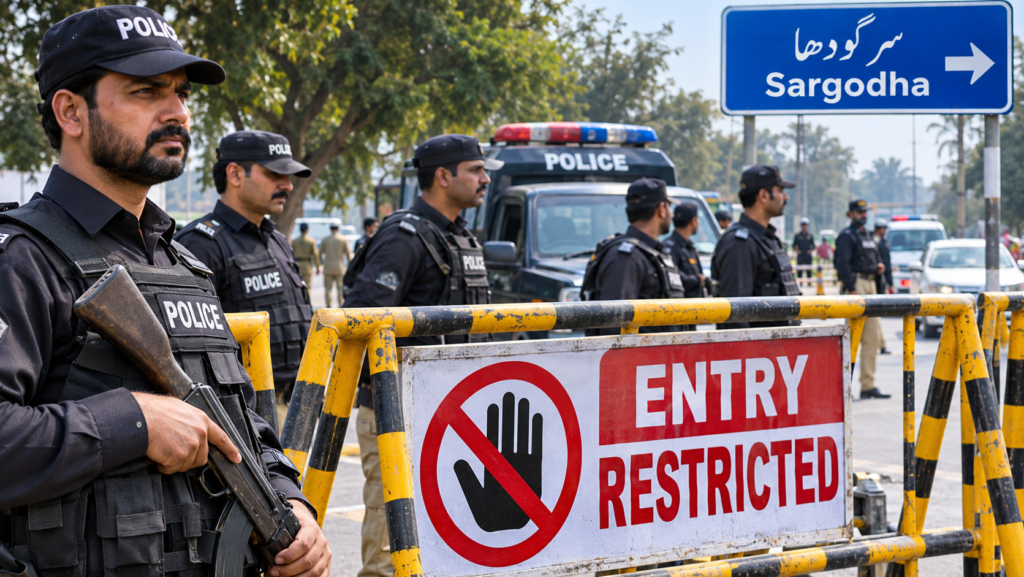
The notification alleged that the leaders’ speeches could create tensions, encourage unlawful gatherings and affect public security.
JUI-F, however, objected to the restrictions and maintained that its political gathering should be allowed to proceed.
For further details, read Dawn’s report on the Sargodha entry restrictions.
Maulana Fazlur Rehman Among Nine Leaders Facing Restrictions
Maulana Fazlur Rehman was included in the list of nine JUI-F leaders barred from entering Sargodha.
The other leaders named in the notification included:
- Maulana Naseer Ahmad Abrar
- Maulana Amjad Khan
- Professor Ghazanfar Aziz
- Maulana Safi Ullah
- Maulana Muhammad Noor Khan Hans
- Maulana Muhammad Zakria Shah
- Maulana Muhammad Yahya Abbasi
- Maulana Jamal Abdul Nasir
The restrictions were scheduled to remain in effect for 30 days from November 25.
The order created an immediate challenge for the party because its central leadership had planned to participate in the Sargodha conference.
The decision also affected political workers and supporters travelling from different parts of Punjab.
Maulana Fazlur Rehman Calls for Nationwide Protests
In a video message released on November 26, Maulana Fazlur Rehman announced a nationwide protest in response to the restrictions.
He urged JUI-F workers and supporters across Pakistan to come out and organise demonstrations.
His message referred to several regions, including Kohistan, Chitral, Badin, Turbat, Makran and Chaman.
He also called for major highways to be blocked as part of the protest response.
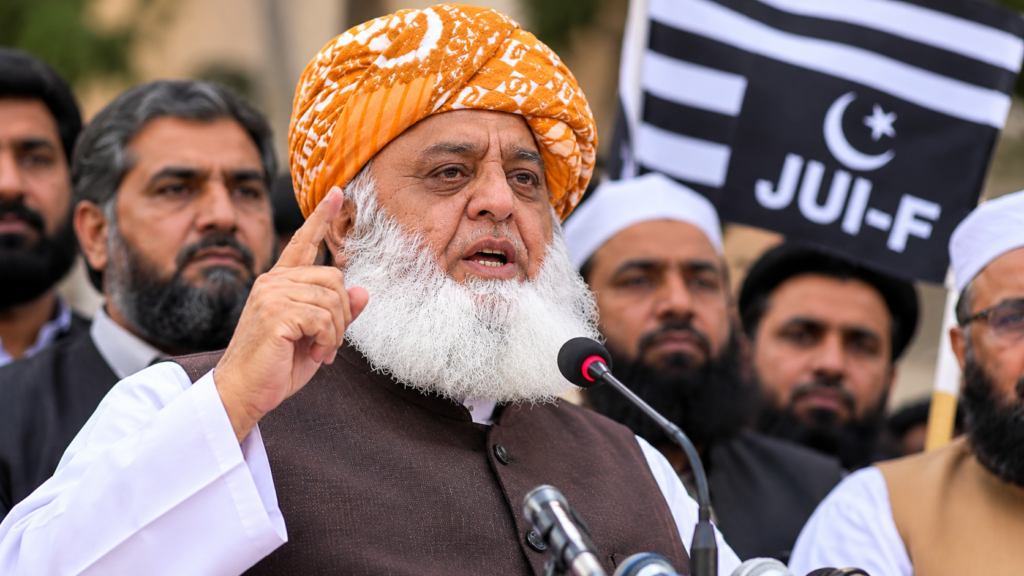
The announcement came after the party complained about road blockades, restrictions on political activities and the detention of its senior members.
Despite the administrative measures, the JUI-F chief said that the planned Sargodha conference had not been cancelled and that he remained determined to travel to the city.
His announcement added another dimension to the developing political situation, with possible effects on road movement and public activity in different areas.
JUI-F Leaders Detained Ahead of the Conference
The restrictions were accompanied by police action against several JUI-F leaders and workers.
According to a report published by Dawn on November 26, Maulana Abdul Ghafoor Haideri, Malik Awais and Maulana Amjad Khan were detained at a house in Sargodha.
Regional Police Officer Sohail Sukhera told Dawn that the individuals had been served notices for allegedly violating Section 144.
The police official stated that their movement had been restricted, rather than describing the action as a conventional arrest.
The police also reported that other party members had been detained.
Separately, an FIR was registered in connection with an alleged violation of restrictions on public gatherings in Khushab.
The party demanded the release of its detained leaders and questioned the legality of the actions.
JUI-F also indicated that it would seek legal intervention over the reported detentions.
Supporters of Maulana Fazlur Rehman say peaceful political activities should be protected under the law.
The latest announcement by Maulana Fazlur Rehman has brought renewed attention to political freedoms and public gatherings in Pakistan.
Read Dawn’s detailed report on the detention of senior JUI-F leaders.
What Is the Government’s Position?
The district administration has presented public safety and law and order as the main reasons behind the restrictions.
According to the official notification, authorities reviewed a police report that raised concerns about the possible impact of the leaders’ presence and speeches.
The administration argued that the situation could lead to unlawful gatherings and create security problems.
Section 144 had also been imposed across Sargodha Division, restricting public gatherings, rallies, processions and demonstrations for a specified period.
These measures were presented as steps to maintain public order during a politically sensitive period.
However, JUI-F has challenged the restrictions and argued that political gatherings and peaceful demonstrations are constitutional rights.
Article 16 of Pakistan’s Constitution recognises the right of citizens to assemble peacefully and without arms, subject to reasonable restrictions imposed by law in the interest of public order.
Readers can consult the Constitution of Pakistan and Article 16 on freedom of assembly.
The disagreement has placed public security concerns and political freedoms at the centre of the controversy.
Why Is Maulana Fazlur Rehman Criticising the Government?
The latest Sargodha dispute is part of a wider period of tension between JUI-F and the federal government.
Relations between the party leadership and government representatives have faced difficulties over political and constitutional issues.
The JUI-F chief has previously criticised government decisions concerning provincial rights and political arrangements in Khyber Pakhtunkhwa.
He has also expressed concerns about commitments made during political negotiations and the treatment of opposition parties.
For background on the wider political and constitutional debate surrounding Khyber Pakhtunkhwa, read NuvWire’s report: Pakistan Parliament Approves KP Emergency: 5 Key Facts You Should Know.
In recent weeks, disagreements between the party and government officials have become more visible through public statements and political exchanges.
The Sargodha restrictions have added another issue to these disagreements.
For JUI-F, the matter is not simply about attending one conference. The party has presented it as a question involving its ability to organise political activities and communicate with supporters.
The government, meanwhile, has referred to security and law-and-order considerations.
What Could Nationwide Protests Mean for Pakistan?
The announcement of demonstrations and possible highway blockades could have practical consequences for people across the country.
If protests take place in multiple cities, residents may experience traffic delays, diversions and interruptions to normal travel.
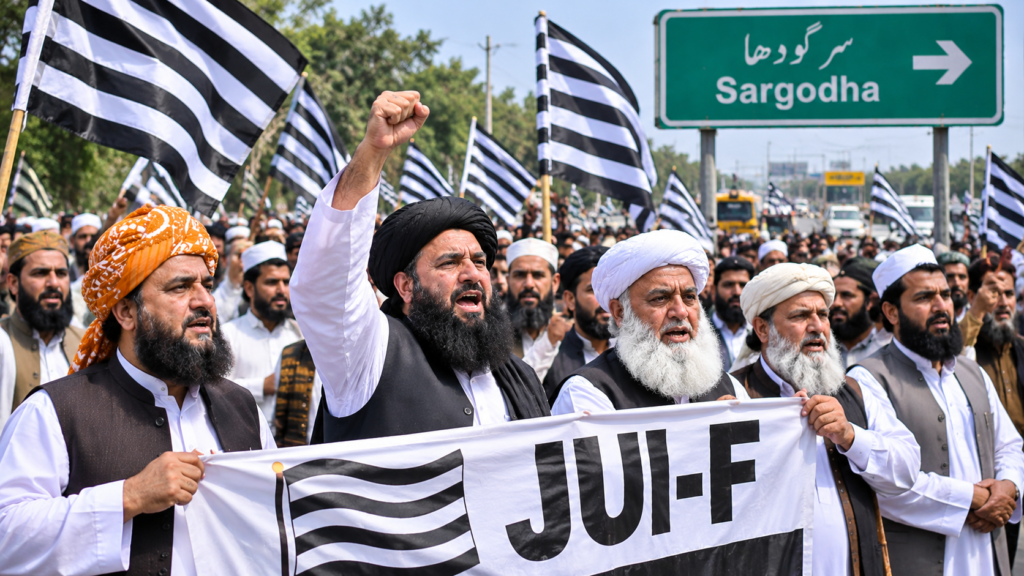
Transport companies, traders and commuters could also face difficulties if major roads remain blocked.
The situation may have several wider implications.
1. Transportation and Public Movement
Highway demonstrations can affect people travelling between major cities. Authorities may need to introduce alternative routes and traffic arrangements.
2. Political Tensions
The dispute could increase tensions between opposition parties and government institutions if both sides fail to find a peaceful way forward.
3. Business and Commercial Activities
Road closures may affect deliveries, transportation services and commercial operations, particularly if demonstrations continue for an extended period.
4. Legal and Constitutional Questions
The restrictions have brought attention to the balance between maintaining public order and protecting the constitutional right to peaceful assembly.
Courts may become involved if the party challenges the administrative decisions.
What Happens Next?
The coming days will be important for determining how the dispute develops.
Several questions remain unanswered:
- Will the Sargodha conference take place despite the restrictions?
- Will the detained JUI-F leaders be released?
- Will the party continue with its nationwide protest announcement?
- Will the administration reconsider the restrictions?
- Could negotiations reduce tensions between the government and JUI-F?
Maulana Fazlur Rehman has made it clear that his party intends to continue its political response.
The administration’s next decisions and any possible court proceedings could influence what happens next.
For now, the situation remains politically sensitive, and developments in Sargodha are being closely watched.
The coming days will be important for Maulana Fazlur Rehman and JUI-F as the political situation develops.
Final Thoughts
The Sargodha restrictions have created a fresh political dispute between JUI-F and the government at a time when relations are already strained.
Maulana Fazlur Rehman has responded by announcing nationwide protests and urging supporters to demonstrate against the administrative measures.
While the administration says its decisions are based on public safety concerns, JUI-F argues that the restrictions interfere with its political activities and constitutional rights.
The coming days will show whether the disagreement moves towards legal proceedings, political negotiations or further demonstrations.
For ordinary citizens, maintaining peaceful conditions, protecting public movement and ensuring that political disagreements are handled through lawful channels will remain important.
NuvWire will continue following this developing story and provide updates as further information becomes available.
Frequently Asked Questions (FAQs)
1. Why has Maulana Fazlur Rehman announced nationwide protests?
He announced nationwide protests on November 26, 2026, after the Sargodha administration restricted his entry into the district and JUI-F reported detentions of senior party leaders and workers.
2. Why was Maulana Fazlur Rehman banned from entering Sargodha?
The deputy commissioner issued a 30-day restriction under the Maintenance of Public Order law, citing concerns raised in a district police report about public security and possible law-and-order problems.
3. How long will the Sargodha entry restriction remain in effect?
The restriction took effect on November 25, 2026, and was scheduled to remain in force for 30 days.
4. Which JUI-F leaders were also restricted from entering Sargodha?
Eight other party leaders were named alongside the JUI-F chief, including Maulana Amjad Khan, Maulana Naseer Ahmad Abrar and Professor Ghazanfar Aziz.
5. Which JUI-F leaders were detained in Sargodha?
According to police reports published by Dawn, Maulana Abdul Ghafoor Haideri, Maulana Amjad Khan and Malik Awais were detained at a house in Sargodha. Police said their movement had been restricted.
6. What did Maulana Fazlur Rehman ask party workers to do?
He called on supporters across Pakistan to organise demonstrations and block major highways in response to the restrictions.
7. Will the JUI-F Sargodha conference take place?
The party maintained on November 26 that its planned conference had not been cancelled. However, administrative restrictions and security measures created uncertainty around the gathering.
8. What is Section 144 in Pakistan?
Section 144 is a legal provision used by authorities to restrict certain public activities, including gatherings and assemblies, for public-order or security reasons.
9. How could the protests affect ordinary citizens?
Demonstrations and highway blockades could cause traffic congestion, travel delays and interruptions to commercial transportation.
10. What is the latest position of Maulana Fazlur Rehman?
In his November 26 video message, he called for nationwide demonstrations and urged party supporters to protest against the restrictions imposed on JUI-F activities in Sargodha.